


Closure methods of the appendix stump for complications during laparoscopic appendectomy
- PMID: 29190038
- PMCID: PMC6486128
- DOI: 10.1002/14651858.CD006437.pub3
Closure methods of the appendix stump for complications during laparoscopic appendectomy
Abstract
Background: Laparoscopic appendectomy is amongst the most common general surgical procedures performed in the developed world. Arguably, the most critical part of this procedure is effective closure of the appendix stump to prevent catastrophic intra-abdominal complications from a faecal leak into the abdominal cavity. A variety of methods to close the appendix stump are used worldwide; these can be broadly divided into traditional ligatures (such as intracorporeal or extracorporeal ligatures or Roeder loops) and mechanical devices (such as stapling devices, clips, or electrothermal devices). However, the optimal method remains unclear.
Objectives: To compare all surgical techniques now used for appendix stump closure during laparoscopic appendectomy.
Search methods: In June 2017, we searched the Cochrane Central Register of Controlled Trials (CENTRAL; 2017, Issue 6) in the Cochrane Library, MEDLINE Ovid (1946 to 14 June 2017), Embase Ovid (1974 to 14 June 2017), Science Citation Index - Expanded (14 June 2017), China Biological Medicine Database (CBM), the World Health Organization International Trials Registry Platform search portal, ClinicalTrials.gov, Current Controlled Trials, the Chinese Clinical Trials Register, and the EU Clinical Trials Register (all in June 2017). We searched the reference lists of relevant publications as well as meeting abstracts and Conference Proceedings Citation Index to look for additional relevant clinical trials.
Selection criteria: We included all randomised controlled trials (RCTs) that compared mechanical appendix stump closure (stapler, clips, or electrothermal devices) versus ligation (Endoloop, Roeder loop, or intracorporeal knot techniques) for uncomplicated appendicitis.
Data collection and analysis: Two review authors identified trials for inclusion, collected data, and assessed risk of bias independently. We performed the meta-analysis using Review Manager 5. We calculated the odds ratio (OR) for dichotomous outcomes and the mean difference (MD) for continuous outcomes, with 95% confidence intervals (CIs).
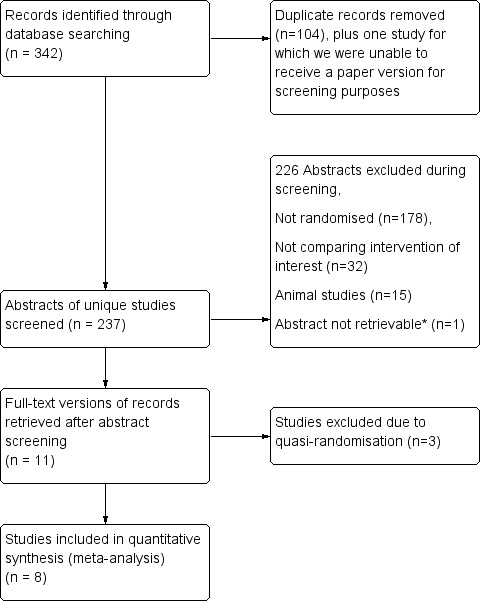
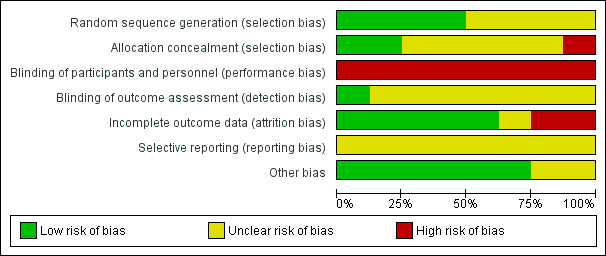
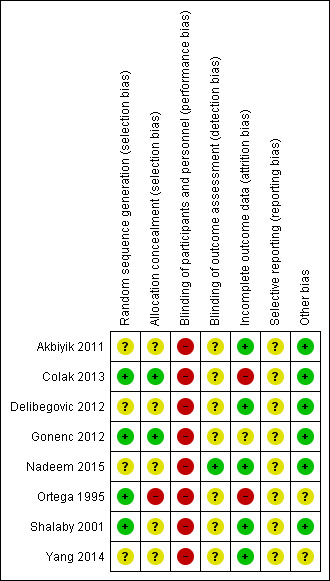
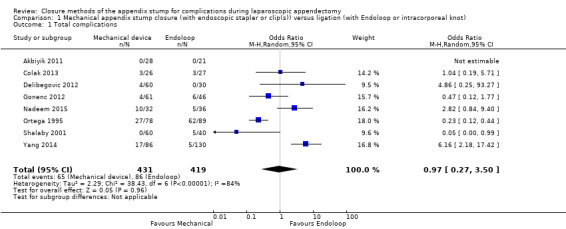
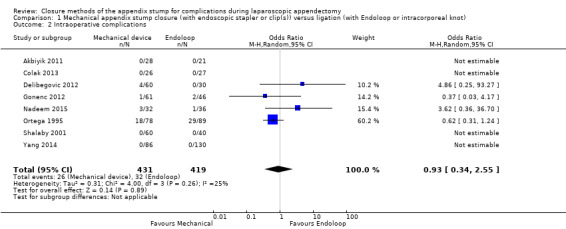
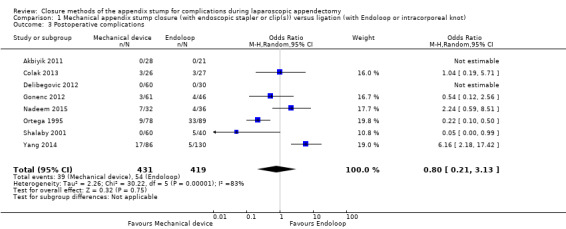
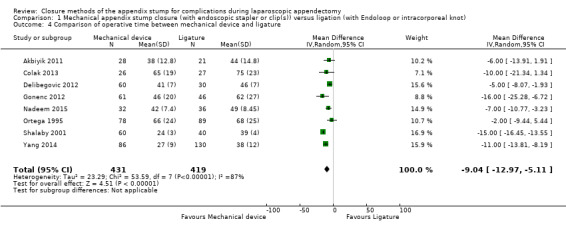
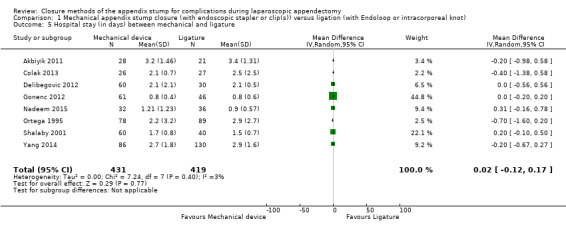
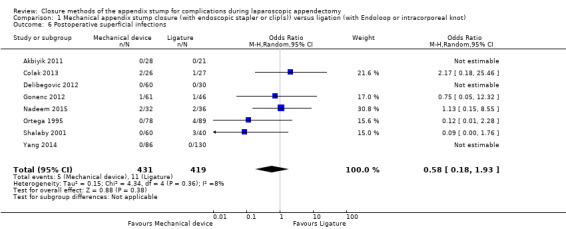
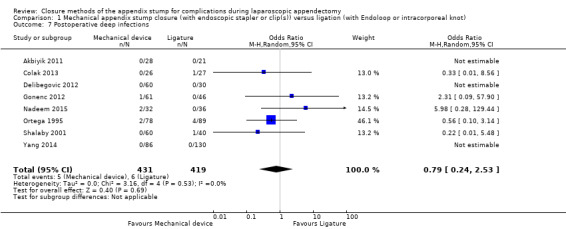
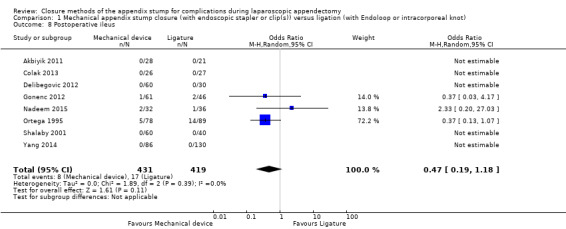
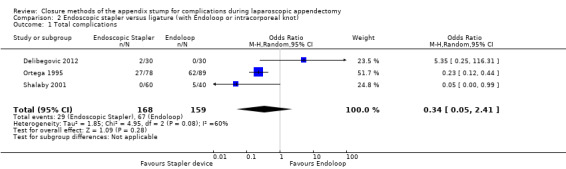
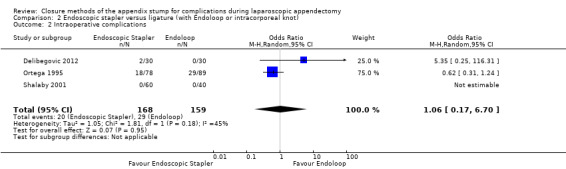
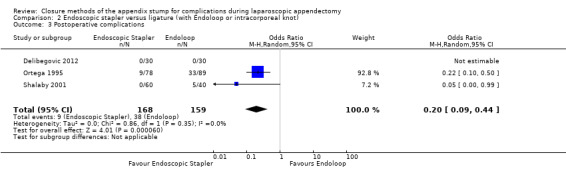
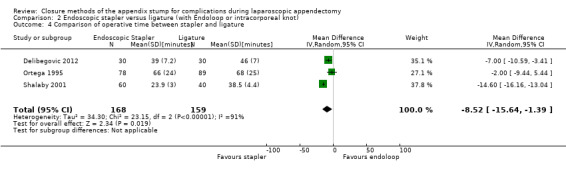
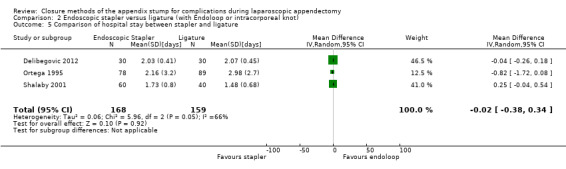
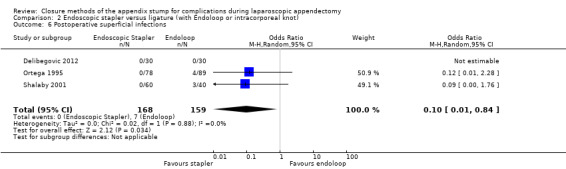
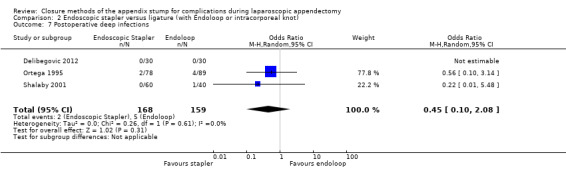
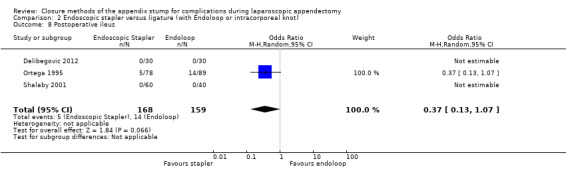
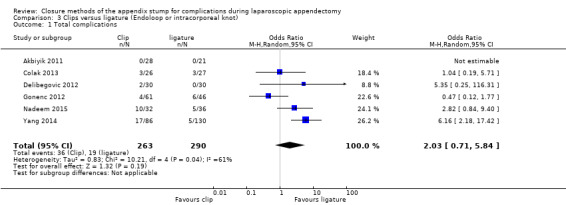
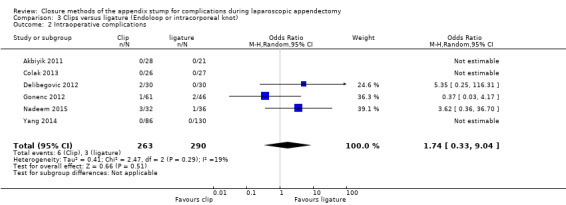
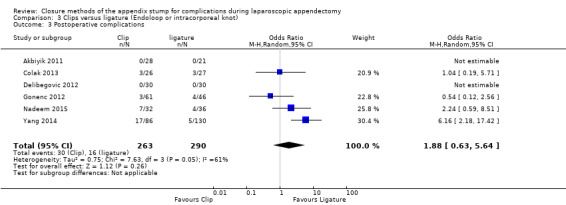
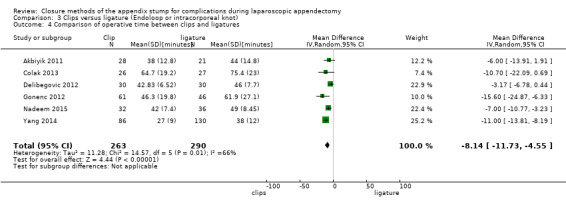
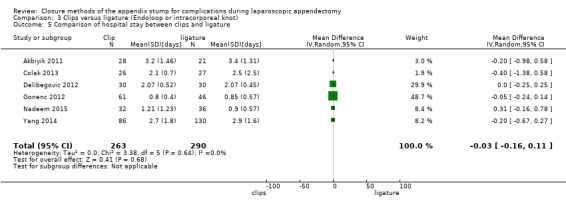
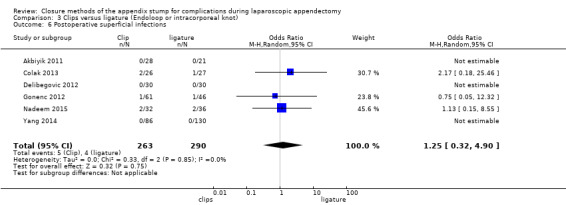
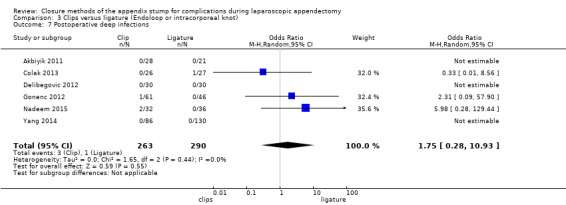
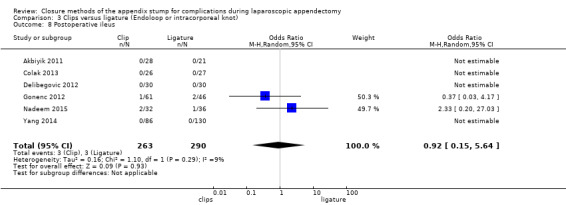
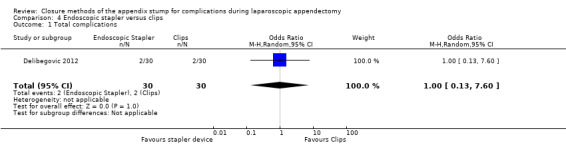
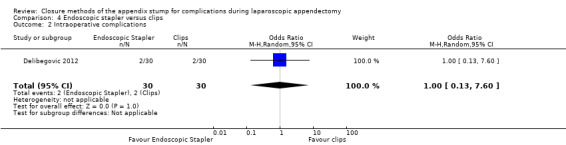
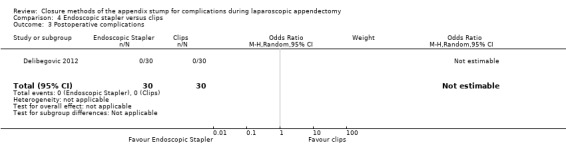
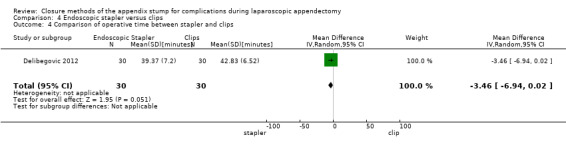
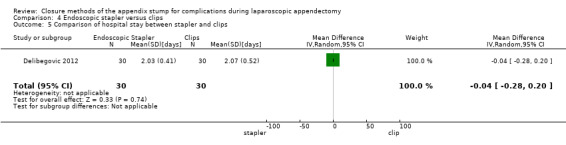
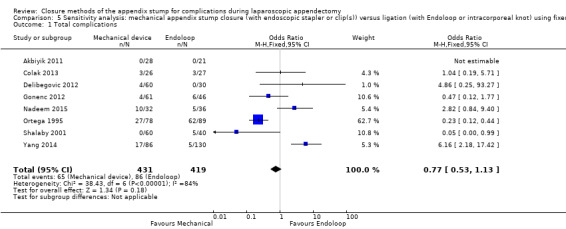
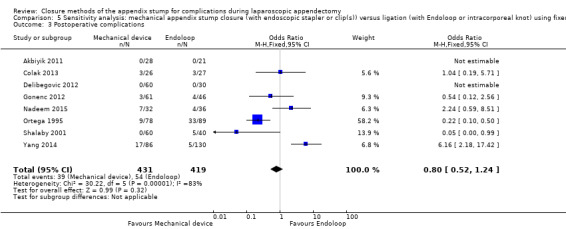
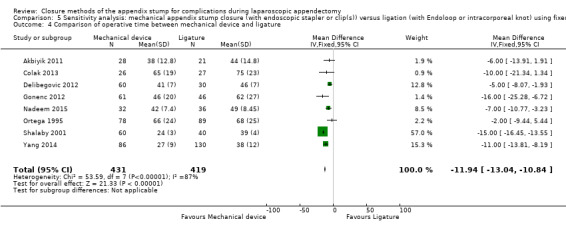
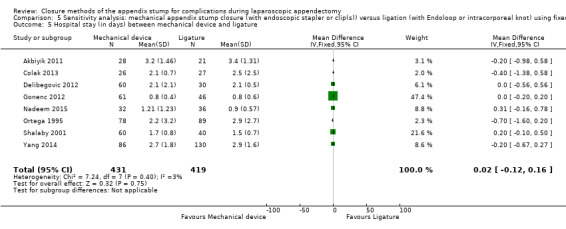
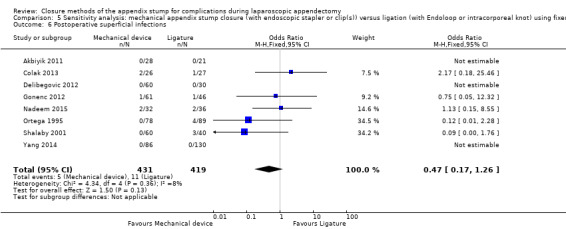
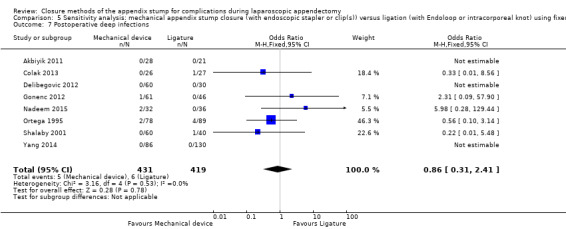
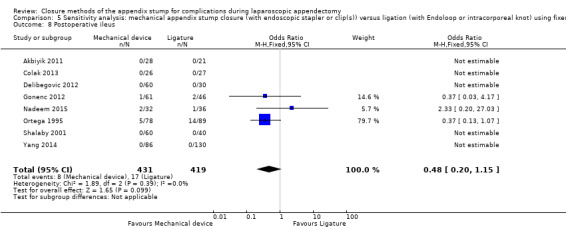
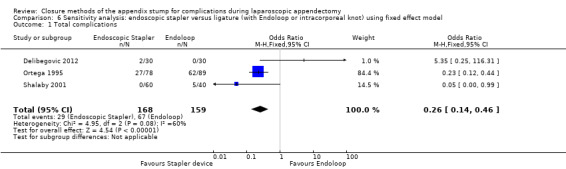
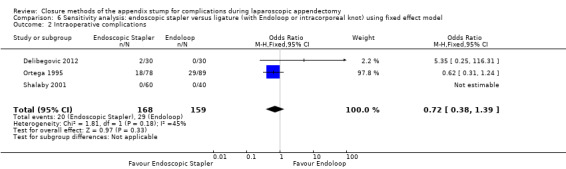
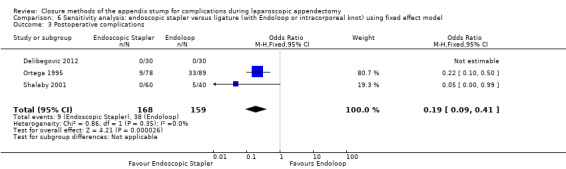
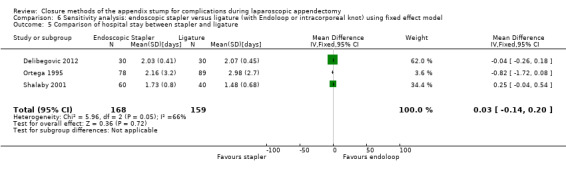
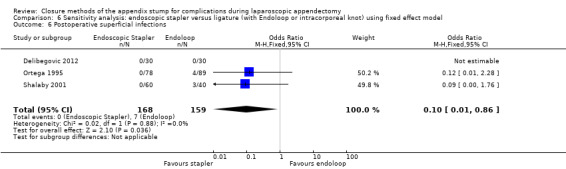
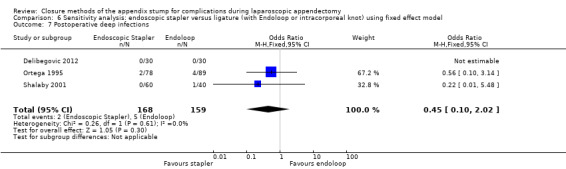
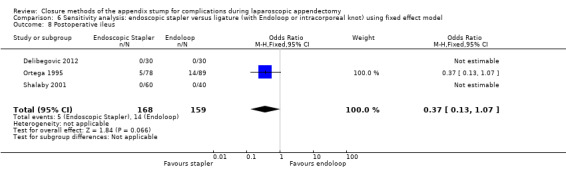
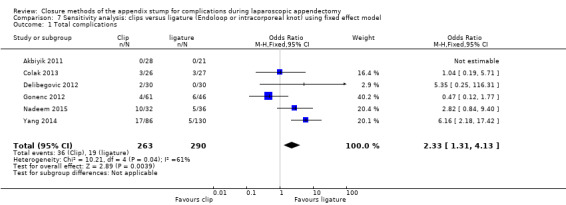
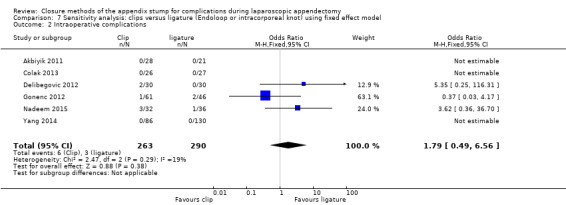
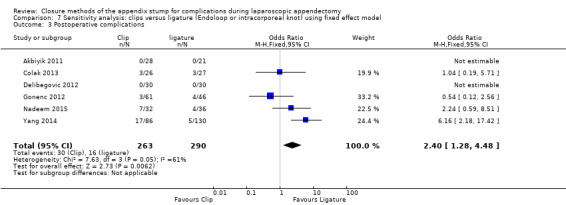
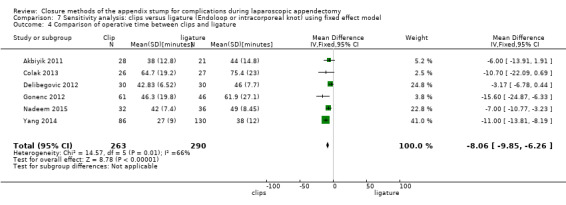
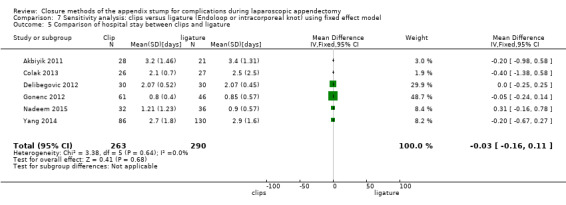
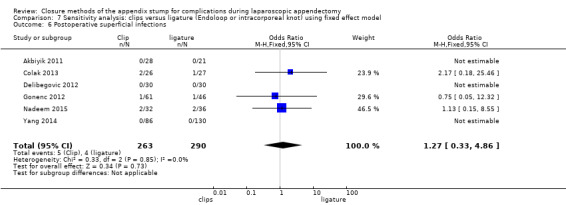
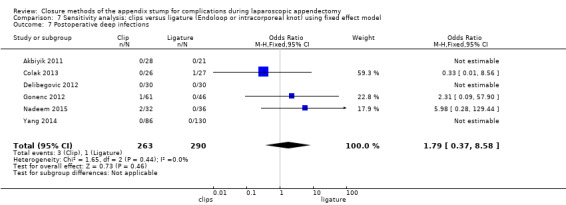
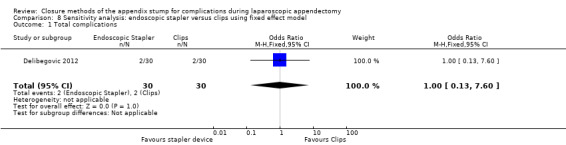
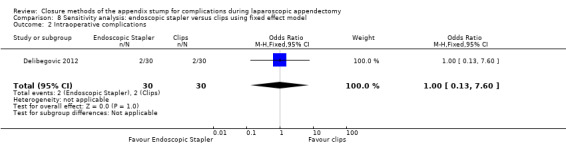
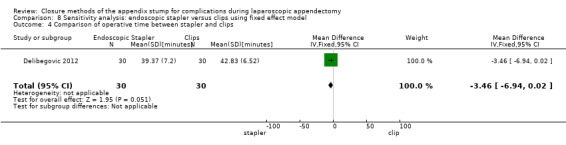
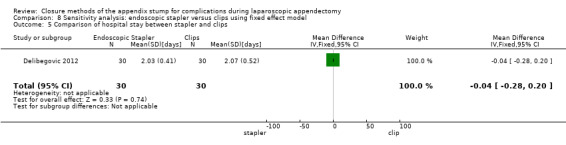
Main results: We included eight randomised studies encompassing 850 participants. Five studies compared titanium clips versus ligature, two studies compared an endoscopic stapler device versus ligature, and one study compared an endoscopic stapler device, titanium clips, and ligature. In our analyses of primary outcomes, we found no differences in total complications (OR 0.97, 95% CI 0.27 to 3.50, 8 RCTs, very low-quality evidence), intraoperative complications (OR 0.93, 95% CI 0.34 to 2.55, 8 RCTs, very low-quality evidence), or postoperative complications (OR 0.80, 95% CI 0.21 to 3.13, 8 RCTs, very low-quality evidence) between ligature and all types of mechanical devices. However, our analyses of secondary outcomes revealed that use of mechanical devices saved approximately nine minutes of total operating time when compared with use of a ligature (mean difference (MD) -9.04 minutes, 95% CI -12.97 to -5.11 minutes, 8 RCTs, very low-quality evidence). However, this finding did not translate into a clinically or statistically significant reduction in inpatient hospital stay (MD 0.02 days, 95% CI -0.12 to 0.17 days, 8 RCTs, very low-quality evidence). Available information was insufficient for reliable comparison of total hospital costs and postoperative pain/quality of life between the two approaches. Overall, evidence across all analyses was of very low quality, with substantial potential for confounding factors. Given the limitations of all studies in terms of bias and the low quality of available evidence, a clear conclusion regarding superiority of any one particular type of mechanical device over another is not possible.
Authors' conclusions: Evidence is insufficient at present to advocate omission of conventional ligature-based appendix stump closure in favour of any single type of mechanical device over another in uncomplicated appendicitis.
Conflict of interest statement
None known.
Figures



Update of
References
References to studies included in this review
Akbiyik 2011 {published data only}
-
- Akbiyik F, Senel E, Bayram‐Kabacam G, Demirkan H, Atayurt H, Tiryaki T. A comparison of polymer clips and Endoloop applications for securing the appendiceal stump during laparoscopic surgery in children. Surgical Laparoscopy Endoscopy & Percutaneous Techniques 2011;21(5):349‐52. - PubMed
Colak 2013 {published data only}
-
- Colak E, Kement M, Ozlem N, Mutlu T, Yildirim K, Gurer A, et al. A comparison of nonabsorbable polymeric clips and Endoloop ligatures for the closure of the appendicular stump in laparoscopic appendectomy: a prospective, randomized study. Surgical Laparoscopy, Endoscopy & Percutaneous Techniques 2013;23(3):255‐8. - PubMed
Delibegovic 2012 {published data only}
-
- Delibegovic S. The use of a single Hem‐o‐lok clip in securing the base of the appendix during laparoscopic appendectomy. Journal of Laparoendoscopic & Advanced Surgical Techniques. Part A 2012;22(1):85‐7. - PubMed
Gonenc 2012 {published data only}
-
- Gonenc M, Gemici E, Kalayci MU, Karabulut M, Turhan AN, Alis H. Intracorporeal knotting versus metal endoclip application for the closure of the appendiceal stump during laparoscopic appendectomy in uncomplicated appendicitis. Journal of Laparoendoscopic & Advanced Surgical Techniques. Part A 2012;22(3):231‐5. - PubMed
Nadeem 2015 {published data only}
-
- Nadeem M, Khan SM, Ali S, Shafiq M, Elahi MW, Abdullah F, et al. Comparison of extracorporeal knot‐tying suture and endoclips in laparoscopic appendiceal stump closure in uncomplicated acute appendicitis. Surgical Endoscopy and Other Interventional Techniques 2015;2(29):S528.
Ortega 1995 {published data only}
-
- Ortega AE, Hunter JG, Peters JH, Swanstrom LL, Schirmer B, Laparoscopic Appendectomy Study Group. A prospective, randomized comparison of laparoscopic appendectomy with open appendectomy. American Journal of Surgery 1995;169:208‐13. - PubMed
Shalaby 2001 {published data only}
-
- Shalaby R, Arnos A, Desoky A, Samaha AH. Laparoscopic appendectomy in children: evaluation of different techniques. Surgical Laparoscopy, Endoscopy & Percutaneous Techniques 2001;11:22‐7. - PubMed
Yang 2014 {published data only}
-
- Yang X, Si R, Qu K. Comparison study of two approaches for treatment of the appendicular stump during laparoscopic appendectomy. Journal of Laparoscopic Surgery 2014;19(8):610‐2.
References to studies excluded from this review
Ates 2012 {published data only}
-
- Ates M, Dirican A, Ince V, Ara C, Isik B, Yilmaz S. Comparison of intracorporeal knot‐tying suture (polyglactin) and titanium endoclips in laparoscopic appendiceal stump closure: a prospective randomized study. Surgical Laparoscopy, Endoscopy & Percutaneous Techniques 2012;22(3):226‐31. - PubMed
Beldi 2004 {published data only}
-
- Beldi G, Muggli K, Helbling C, Schlumpf R. Laparoscopic appendectomy using Endoloops: a prospective, randomized clinical trial. Surgical Endoscopy 2004;18:749‐50. - PubMed
Sucullu 2009 {published data only}
-
- Sucullu I, Filiz AI, Kurt Y, Yilmaz I, Yildiz M. The effects of LigaSure on the laparoscopic management of acute appendicitis: "LigaSure assisted laparoscopic appendectomy". Surgical Laparoscopy, Endoscopy & Percutaneous Techniques 2009;19(4):333‐5. - PubMed
References to studies awaiting assessment
Lv 2016 {published data only}
Sadat‐Safavi 2016 {published data only}
-
- Sadat‐Safavi SA, Nasiri S, Shojaiefard A, Jafari M, Abdehgah AG, Notash AY, et al. Comparison of the effect of stump closure by endoclips versus Endoloop on the duration of surgery and complications in patients under laparoscopic appendectomy: a randomized clinical trial. Journal of Research in Medical Sciences 2016;21:87. - PMC - PubMed
Additional references
Addiss 1990
-
- Addiss DG, Shaffer N, Fowler BS, Tauxe RV. The epidemiology of appendicitis and appendectomy in the United States. American Journal of Epidemiology 1990;132(5):910‐25. - PubMed
Andersen 2005
Andreu‐Ballester 2009
-
- Andreu‐Ballester JC, González‐Sánchez A, Ballester F, Almela‐Quilis A, Cano‐Cano MJ, Millan‐Scheiding M, et al. Epidemiology of appendectomy and appendicitis in the Valencian community (Spain), 1998‐2007. Digestive Surgery 2009;26(5):406‐12. - PubMed
Beldi 2006
-
- Beldi G, Vorburger SA, Bruegger LE, Kocher T, Inderbitzin D, Candinas D. Analysis of stapling versus Endoloops in appendiceal stump closure. British Journal of Surgery 2006;93:1390‐3. - PubMed
Buckius 2011
-
- Buckius MT, McGrath B, Monk J, Grim R, Bell T, Ahuja V. Changing epidemiology of acute appendicitis in the United States: study period 1993–2008. Journal of Surgical Research 2011;7(17):1‐6. - PubMed
Daniell 1991
-
- Daniell JF, Gurley LD, Kurtz BR, Chambers JF. The use of an automatic stapling device for laparoscopic appendectomy. Obstetrics and Gynecology 1991;78:721‐3. - PubMed
Deeks 2011
-
- Deeks JJ, Higgins JP, Altman DG, editors. Chapter 9: Analysing data and undertaking meta‐analyses. In: Higgins JP, Green S, editors. Cochrane Handbook for Systematic Reviews of Interventions Version 5.1.0 (updated March 2011). The Cochrane Collaboration, 2011. Available from www.handbook.cochrane.org..
Delibegovic 2009
-
- Delibegovic S, Matovic E. Hem‐o‐lok plastic clips in securing of the base of the appendix during laparoscopic appendectomy. Surgical Endoscopy 2009;23:2851–4. - PubMed
Egger 1997
Hanssen 2007
Higgins 2011
-
- Higgins JP, Green S, editors. Cochrane Handbook for Systematic Reviews of Interventions Version 5.1.0 (updated March 2011). The Cochrane Collaboration, 2011. Available from handbook.cochrane.org.
Higgins 2011a
-
- Higgins JP, Deeks JJ, Altman DG, editors. Chapter 16: Special topics in statistics. In: Higgins JP, Green S, editors. Cochrane Handbook for Systematic Reviews of Interventions Version 5.1.0 (updated March 2011). The Cochrane Collaboration, 2011. Available from www.handbook.cochrane.org..
Higgins 2011b
-
- Higgins JP, Deeks JJ, editors. Chapter 7: Selecting studies and collecting data. In: Higgins JP, Green S, editors. Cochrane Handbook for Systematic Reviews of Interventions Version 5.1.0 (updated March 2011). The Cochrane Collaboration, 2011. Available from www.handbook.cochrane.org..
Higgins 2011c
-
- Higgins JP, Altman DG, Sterne JAC, editors. Chapter 8: Assessing risk of bias in included studies. In: Higgins JP, Green S, editors. Cochrane Handbook for Systematic Reviews of Interventions Version 5.1.0 (updated March 2011). The Cochrane Collaboration, 2011. Available from www.handbook.cochrane.org..
Houben 1998
-
- Houben F, Willmen HR. Simplified appendectomy without stump embedding. Experiences of 20 years conventional and 5 years laparoscopic application [Vereinfachte Appendektomie ohne Stumpfversenkung. Erfahrungen aus 20‐jähriger konventioneller und 5‐jähriger laparoskopischer Anwendung.]. Chirurg 1998;69:66‐71. - PubMed
Hue 2012
Kazemier 2006
-
- Kazemier G, Hof KH, Saad S, Bonjer HJ, Sauerland S. Securing the appendiceal stump in laparoscopic appendectomy: evidence for routine stapling?. Surgical Endoscopy 2006;20:1473‐6. - PubMed
Klaiber 1994
-
- Klaiber C, Wagner M, Metzger A. Various stapling techniques in laparoscopic appendectomy: 40 consecutive cases . Surgical Laparoscopy & Endoscopy 1994;4:205‐9. - PubMed
Klima 1996
-
- Klima S, Schyra B. Technique and significance of stump management for outcome of laparoscopic appendectomy. Langenbecks Archieves für Chirugie Supplement Kongressband 1996;113:556‐8. - PubMed
Klima 1998
-
- Klima S. Appendix stump closure in laparoscopic appendectomy [Bedeutung der Appendixstumpfversorgung bei derlaparoskopischen Appendektomie]. Zentralblatt für Chirurgie 1998;123(Suppl 4):90–3. - PubMed
Krisher 2001
-
- Krisher SL, Browne A, Dibbins A, Tkacz N, Curci M. Intra‐abdominal abscess after laparoscopic appendectomy for perforated appendicitis. Archives of Surgery 2001;136:438‐41. - PubMed
Lange 1993
-
- Lange J, Zünd MR, Nägeli J. Prospective randomised study: Roeder knot vs Endo‐GIA for laparoscopic appendectomy [Prospektiv randomisierte Studie: Roederschlinge versus Endo‐GIA bei der laparoskopischen Appendektomie [abstract]]. Minerva Invasive Chirugie 1993;2(Suppl 1):8.
Lee 2010
Newell 1992
-
- Newell DJ. Intention‐to‐treat analysis: implications for quantitative and qualitative research. International Journal of Epidemiology 1992;21(5):837‐41. - PubMed
Partecke 2010
-
- Partecke LI, Kessler W, Bernstorff W, Diedrich S, Heidecke CD, Patrzyk M. Laparoscopic appendectomy using a single polymeric clip to close the appendicular stump. Langenbecks Archives für Surgery 2010;395(8):1077–82. - PubMed
Pelosi 1992
-
- Pelosi MA, Pelosi MA 3rd. Laparoscopic appendectomy using a single umbilical puncture (minilaparoscopy). Journal of Reproductive Medicine 1992;37(7):588. - PubMed
Peng 2012
-
- Peng S, Cheng Y, Zhang Y, Zhou J, Liao Y, Cheng N, Kazemier G, Sauerland S, Zhou ZG. Appendix stump closure during laparoscopic appendectomy. Cochrane Database of Systematic Reviews 2012, Issue 12. [DOI: 10.1002/14651858.CD006437] - DOI
Pieper 1982
-
- Pieper R, Kager L. The incidence of acute appendicitis and appendectomy. An epidemiological study of 971 cases. Acta Chirurgica Scandinavica 1982;148(1):45‐9. - PubMed
Rehman 2011
RevMan 2014 [Computer program]
-
- The Nordic Cochrane Centre, The Cochrane Collaboration. Review Manager (RevMan). Version 5.3. Copenhagen: The Nordic Cochrane Centre, The Cochrane Collaboration, 2014.
Röder 1918
-
- Röder H. On the technique for healing tonsillar disease [Die Technik der Mandelgesundungsbestrebungen]. Aerztl Rundschau 1918;57:169‐71.
Sajid 2009
-
- Sajid MS, Rimple J, Cheek E, Baig MK. Use of endo‐GIA versus endo‐loop for securing the appendicular stump in laparoscopic appendicectomy: a systematic review. Surgical Laparoscopy, Endoscopy & Percutaneous Techniques 2009;19(1):11‐5. - PubMed
Sauerland 2010
Schier 1998
-
- Schier F. Laparoscopic appendectomy with 1.7‐mm instruments. Pediatric Surgery International 1998;14(1):142–3. - PubMed
Schünemann 2011
-
- Schünemann HJ, Oxman AD, Vist GE, Higgins JPT, Deeks JJ, Glasziou P, et al. on behalf of the Cochrane Applicability and Recommendations Methods Group. Chapter 12: Interpreting results and drawing conclusions. In: Higgins JP, Green S, editors. Cochrane Handbook for Systematic Reviews of Interventions Version 5.1.0 (updated March 2011). The Cochrane Collaboration, 2011. Available from www.handbook.cochrane.org..
Shaikh 2015
-
- Shaikh FM, Bajwa R, McDonnell CO. Management of appendiceal stump in laparoscopic appendectomy ‐ clips or ligature: a systematic review and meta‐analysis. Journal of Laparoendoscopic & Advanced Surgical Technigues. Part A 2015;25(1):21‐7. - PubMed
Shimi 1994
-
- Shimi SM, Lirici M, Vander Velpen G, Cuschieri A. Comparative study of the holding strength of slipknots using absorbable and nonabsorbable ligature materials. Surgical Endoscopy 1994;8:1285‐91. - PubMed
Sterne 2011
-
- Sterne JAC, Egger M, Moher D, editors. Chapter 10: Addressing reporting biases. In: Higgins JP, Green S, editors. Cochrane Handbook for Systematic Reviews of Intervention. Version 5.1.0 (updated March 2011). The Cochrane Collaboration, 2011. Available from www.cochrane‐handbook.org..
Wilms 2011
Yang 2015
-
- Yang XJ, Si RH, Ma BQ, Qu KP, Gao P. Comparison study of two approaches for treatment of the appendicular stump during laparoscopic appendectomy. European Surgery ‐ Acta Chirurgica Austriaca 2015;47:S64‐S65.
Publication types
MeSH terms
LinkOut - more resources
Full Text Sources
Other Literature Sources
Medical
