Metabolic reprogramming of human CD8+ memory T cells through loss of SIRT1
- PMID: 29191913
- PMCID: PMC5748845
- DOI: 10.1084/jem.20161066
Metabolic reprogramming of human CD8+ memory T cells through loss of SIRT1
Abstract
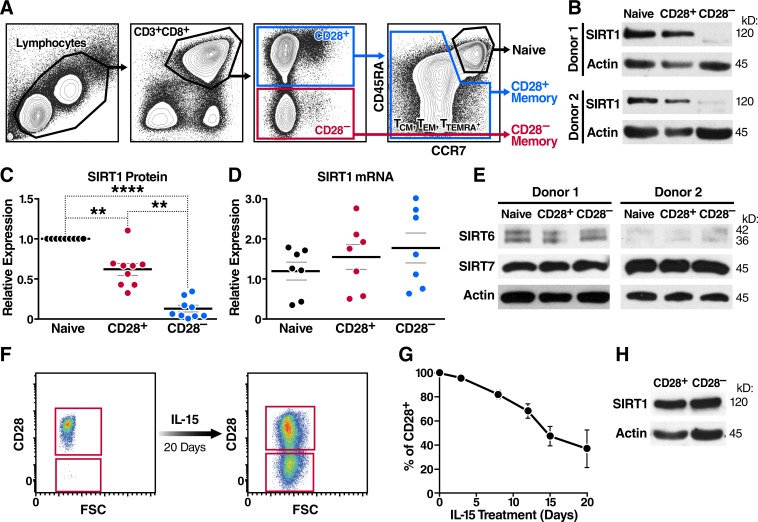
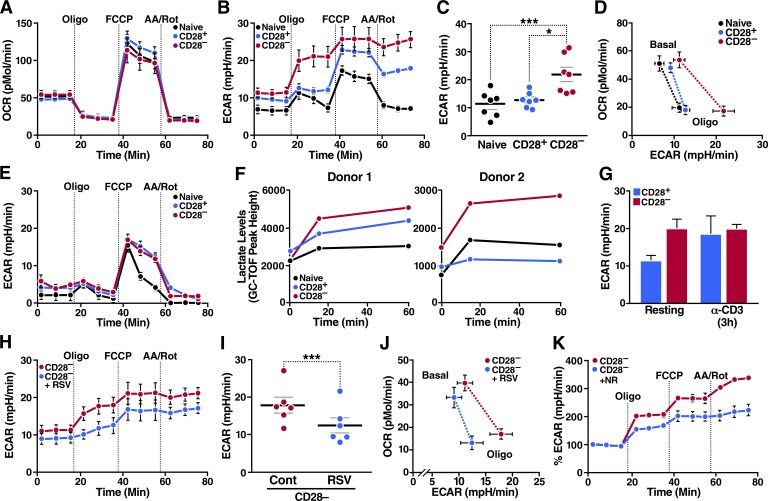
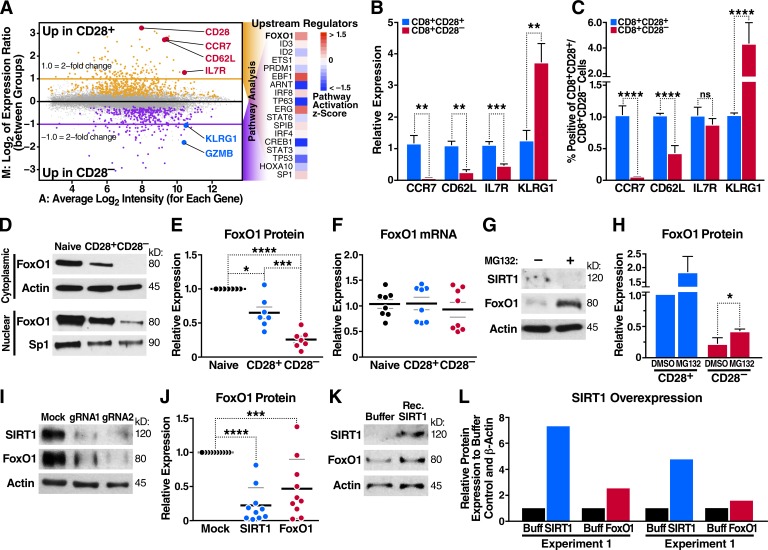
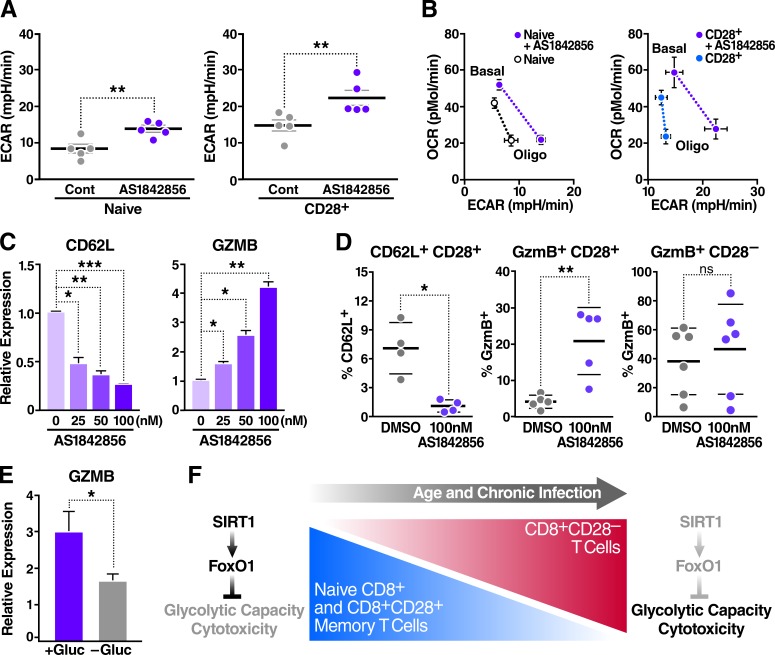
The expansion of CD8+CD28- T cells, a population of terminally differentiated memory T cells, is one of the most consistent immunological changes in humans during aging. CD8+CD28- T cells are highly cytotoxic, and their frequency is linked to many age-related diseases. As they do not accumulate in mice, many of the molecular mechanisms regulating their fate and function remain unclear. In this paper, we find that human CD8+CD28- T cells, under resting conditions, have an enhanced capacity to use glycolysis, a function linked to decreased expression of the NAD+-dependent protein deacetylase SIRT1. Global gene expression profiling identified the transcription factor FoxO1 as a SIRT1 target involved in transcriptional reprogramming of CD8+CD28- T cells. FoxO1 is proteasomally degraded in SIRT1-deficient CD8+CD28- T cells, and inhibiting its activity in resting CD8+CD28+ T cells enhanced glycolytic capacity and granzyme B production as in CD8+CD28- T cells. These data identify the evolutionarily conserved SIRT1-FoxO1 axis as a regulator of resting CD8+ memory T cell metabolism and activity in humans.
© 2018 Jeng et al.
Figures
References
-
- Azuma M., Phillips J.H., and Lanier L.L.. 1993. CD28- T lymphocytes. Antigenic and functional properties. J. Immunol. 150:1147–1159. - PubMed
Publication types
MeSH terms
Substances
Grants and funding
LinkOut - more resources
Full Text Sources
Other Literature Sources
Molecular Biology Databases
Research Materials
Miscellaneous