Review
. 2018 Jul:84:11-27.
doi: 10.1016/j.metabol.2017.11.017. Epub 2018 Jan 9.

Circadian regulation of glucose, lipid, and energy metabolism in humans

Affiliations
Review

Circadian regulation of glucose, lipid, and energy metabolism in humans

Eleonora Poggiogalle et al. Metabolism. 2018 Jul.

Abstract

The circadian system orchestrates metabolism in daily 24-hour cycles. Such rhythms organize metabolism by temporally separating opposing metabolic processes and by anticipating recurring feeding-fasting cycles to increase metabolic efficiency. Although animal studies demonstrate that the circadian system plays a pervasive role in regulating metabolism, it is unclear how, and to what degree, circadian research in rodents translates into humans. Here, we review evidence that the circadian system regulates glucose, lipid, and energy metabolism in humans. Using a range of experimental protocols, studies in humans report circadian rhythms in glucose, insulin, glucose tolerance, lipid levels, energy expenditure, and appetite. Several of these rhythms peak in the biological morning or around noon, implicating earlier in the daytime is optimal for food intake. Importantly, disruptions in these rhythms impair metabolism and influence the pathogenesis of metabolic diseases. We therefore also review evidence that circadian misalignment induced by mistimed light exposure, sleep, or food intake adversely affects metabolic health in humans. These interconnections among the circadian system, metabolism, and behavior underscore the importance of chronobiology for preventing and treating type 2 diabetes, obesity, and hyperlipidemia.

Keywords: Circadian; Circadian misalignment; Diurnal rhythm; Meal timing.


Conflict of interest statement

Conflicts of Interest: None.

Figures

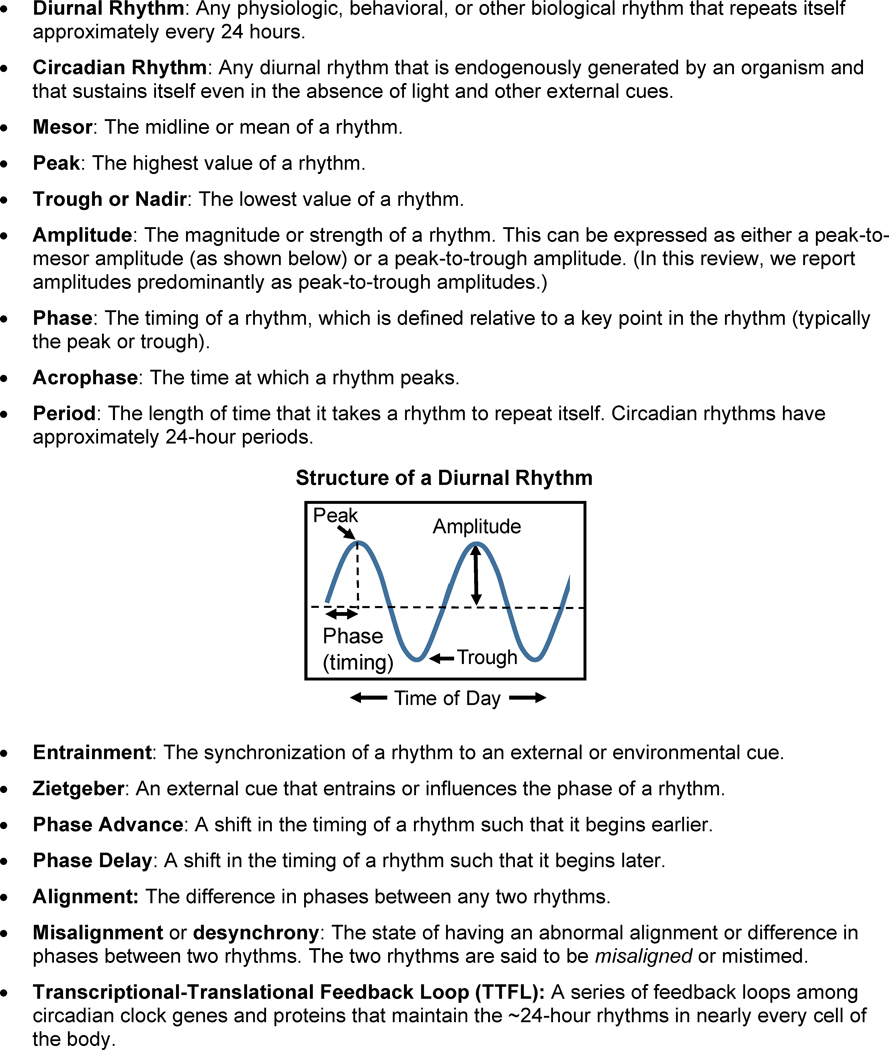
Figure 1
Figure 1
Diurnal Rhythms Glossary.
Figure 2
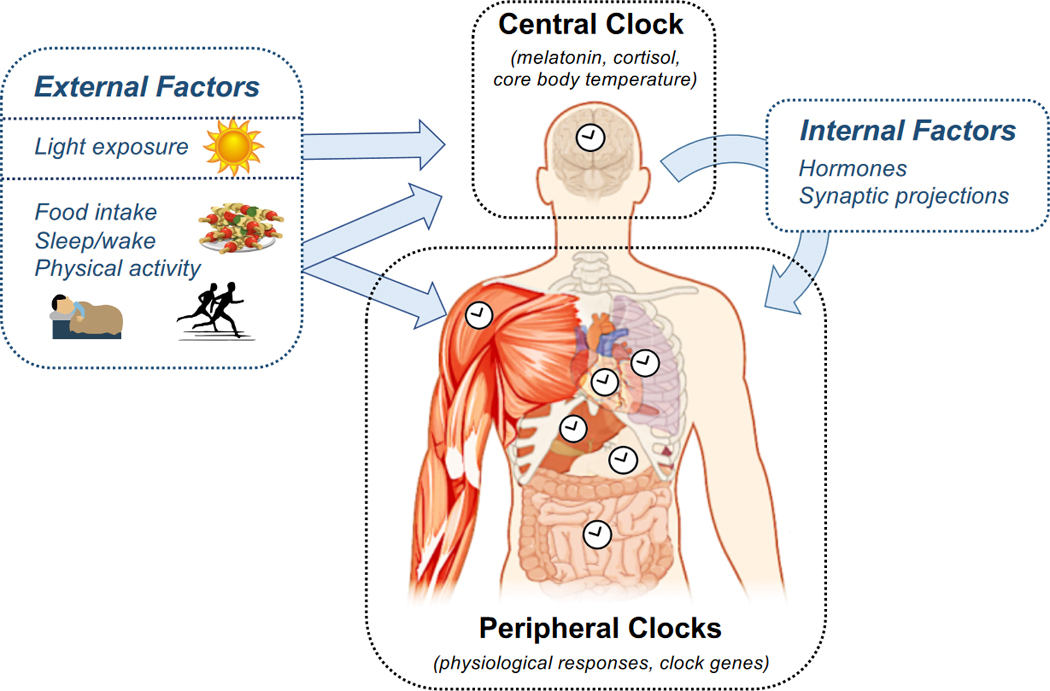
Figure 2. The Architecture of the Circadian System
The circadian system comprises a central clock, which is located in the SCN of the hypothalamus, and a series of peripheral clocks located in tissues throughout the body. The central clock is entrained primarily by light, and its rhythm is measured through frequent sampling of melatonin, cortisol, or core body temperature. The central clock affects the phases and amplitudes of peripheral clocks through hormones and synaptic projections. The peripheral clocks are entrained by a combination of these signals from the central clock and external factors, most notably the timing of food intake. Peripheral clock rhythms are measured in humans either by directly measuring the rhythm in a physiologic variable or by measuring the expression of clock genes. Overall, daily rhythms in metabolism are produced by the central and peripheral clocks working in concert.
Figure 3
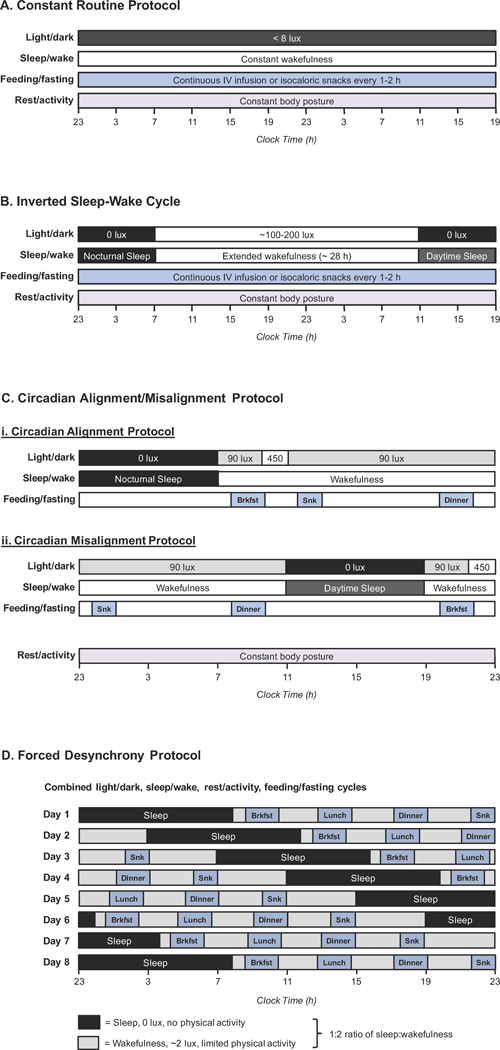
Figure 3. Four Protocols for Investigating Circadian Rhythms in Humans
(A) The Constant Routine Protocol involves a greater than 24-hour period of constant wakefulness wherein all external factors (including light, posture, feeding, and temperature) are kept constant. This protocol allows reconstruction of the entire circadian rhythm but does not enable investigation of circadian misalignment. (B) The Inverted Sleep-Wake Cycle involves periods of nocturnal and daytime sleep, separated by a prolonged period of wakefulness. Feeding and posture are typically kept constant throughout the protocol, but light levels are set to match changes in sleep/wakefulness. This protocol provides insight into both circadian and behavioral cycles. (C) The Circadian Alignment/Misalignment Protocol includes two subprotocols: the alignment protocol with daytime behavioral cycles occurring as they would normally, and a misaligned protocol, with those identical behavioral cycles occurring during the biological night. Light levels are varied, and participants eat normal meals and snacks. While this protocol does not allow reconstruction of the underlying circadian rhythm, it does reveal how much a diurnal rhythm is influenced by the circadian phase (i.e., the time of day), circadian misalignment, and behavioral factors. (D) The Forced Desynchrony Protocol involves following 20- or 28-day hour days for typically 1–2 weeks to cycle through different alignments between circadian rhythms and behavioral rhythms. Light levels during wakefulness are kept very low, and participants consume normal meals and snacks. Mathematical procedures are then used to extract the underlying circadian versus behavioral components of the diurnal rhythm. This protocol also reveals the impact of circadian misalignment on biologic endpoints.
Figure 4
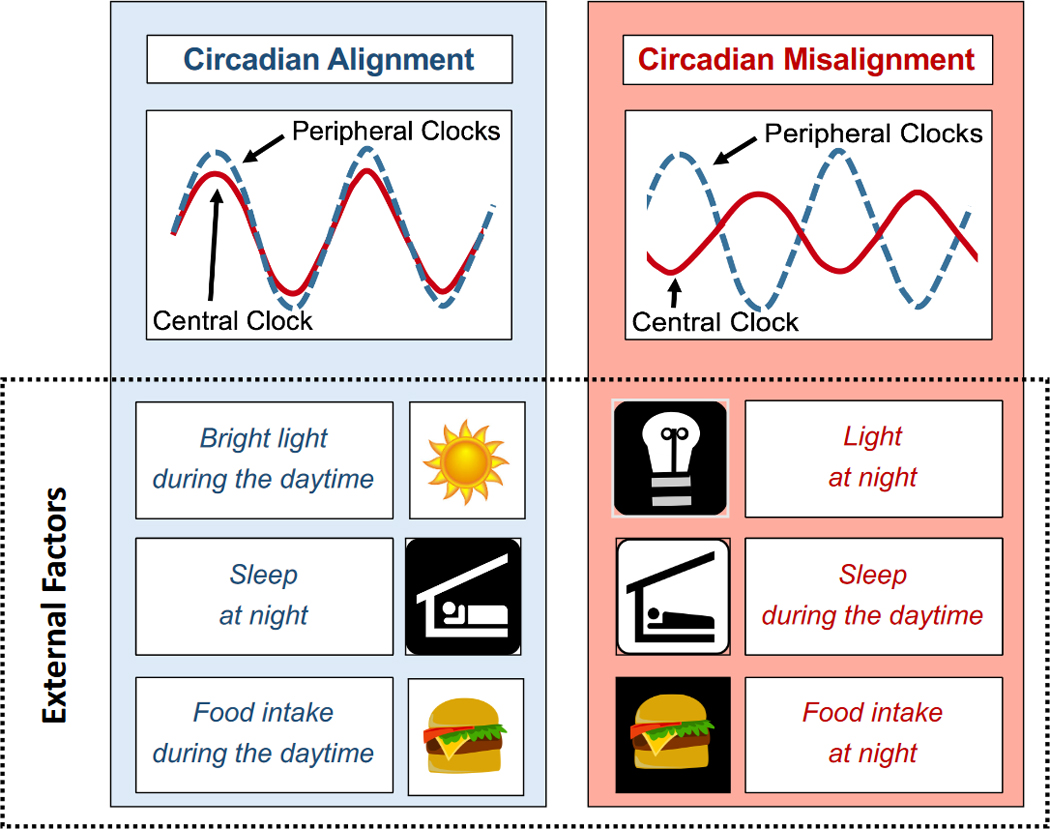
Figure 4. Circadian Alignment vs. Misalignment
Shown above is a schematic representation of circadian alignment between central and peripheral clocks (left panel) versus misalignment (right panel). Bright light exposure during the daytime, food intake during the daytime, and sleeping during the biological night promote circadian alignment between the central and peripheral clocks. Conversely, light exposure or food intake in the evening/at night, or sleeping during the daytime, misaligns the two clock systems and leads to metabolic dysfunction.

References

    1. Panda S. Circadian physiology of metabolism. Science. 2016;354(6315):1008–1015. - PMC - PubMed
    1. Gerhart-Hines Z, Lazar MA. Circadian metabolism in the light of evolution. Endocr Rev. 2015;36(3):289–304. - PMC - PubMed
    1. Marcheva B, et al. Circadian clocks and metabolism. Handb Exp Pharmacol. 2013;(217):127–55. - PMC - PubMed
    1. Balsalobre A, et al. Resetting of circadian time in peripheral tissues by glucocorticoid signaling. Science. 2000;289(5488):2344–7. - PubMed
    1. Jordan SD, Lamia KA. AMPK at the crossroads of circadian clocks and metabolism. Mol Cell Endocrinol. 2013;366(2):163–9. - PMC - PubMed

Publication types