


Burnout, Moral Distress, Work-Life Balance, and Career Satisfaction among Hematopoietic Cell Transplantation Professionals
- PMID: 29196079
- PMCID: PMC8096490
- DOI: 10.1016/j.bbmt.2017.11.015
Burnout, Moral Distress, Work-Life Balance, and Career Satisfaction among Hematopoietic Cell Transplantation Professionals
Abstract
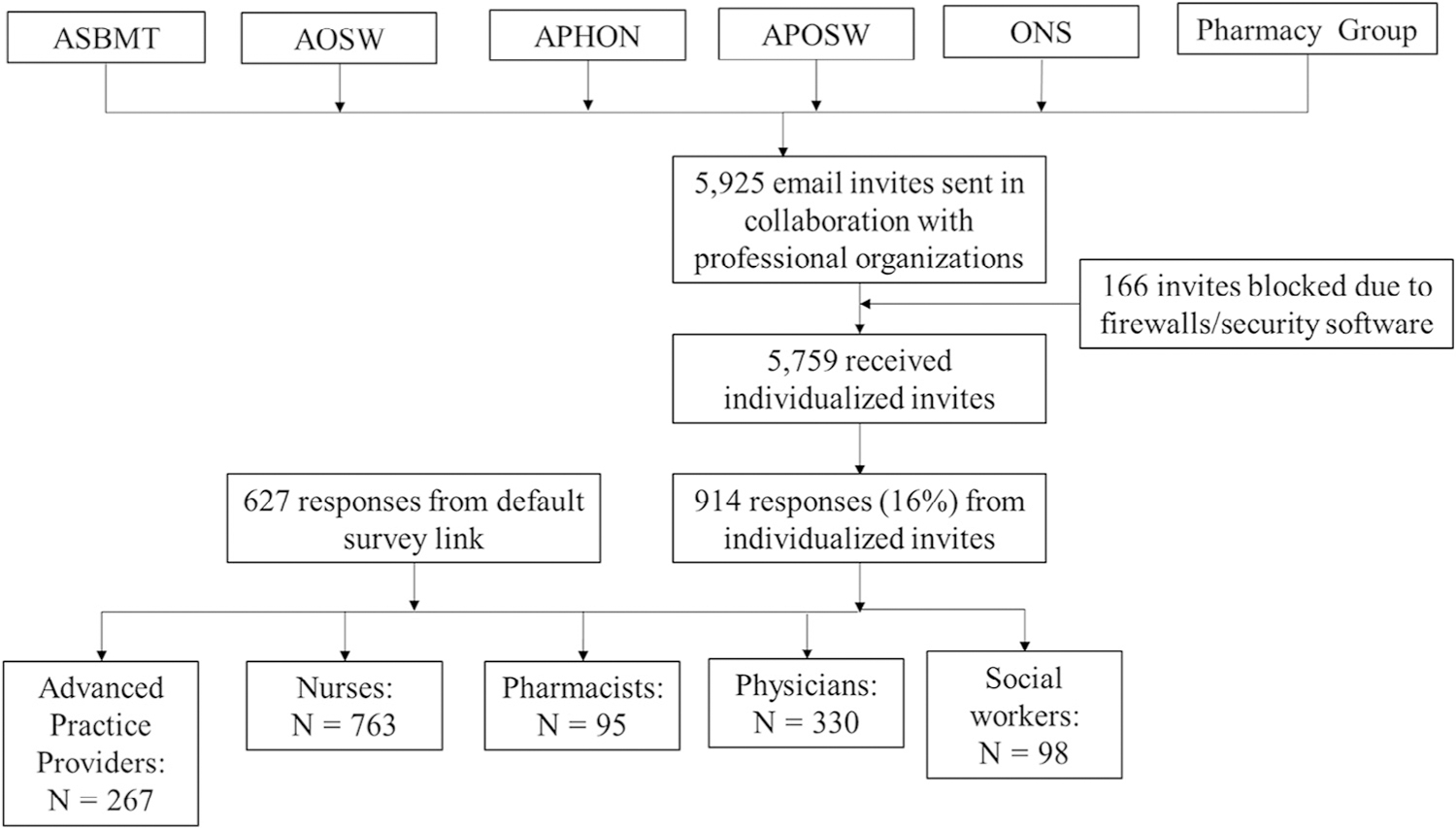
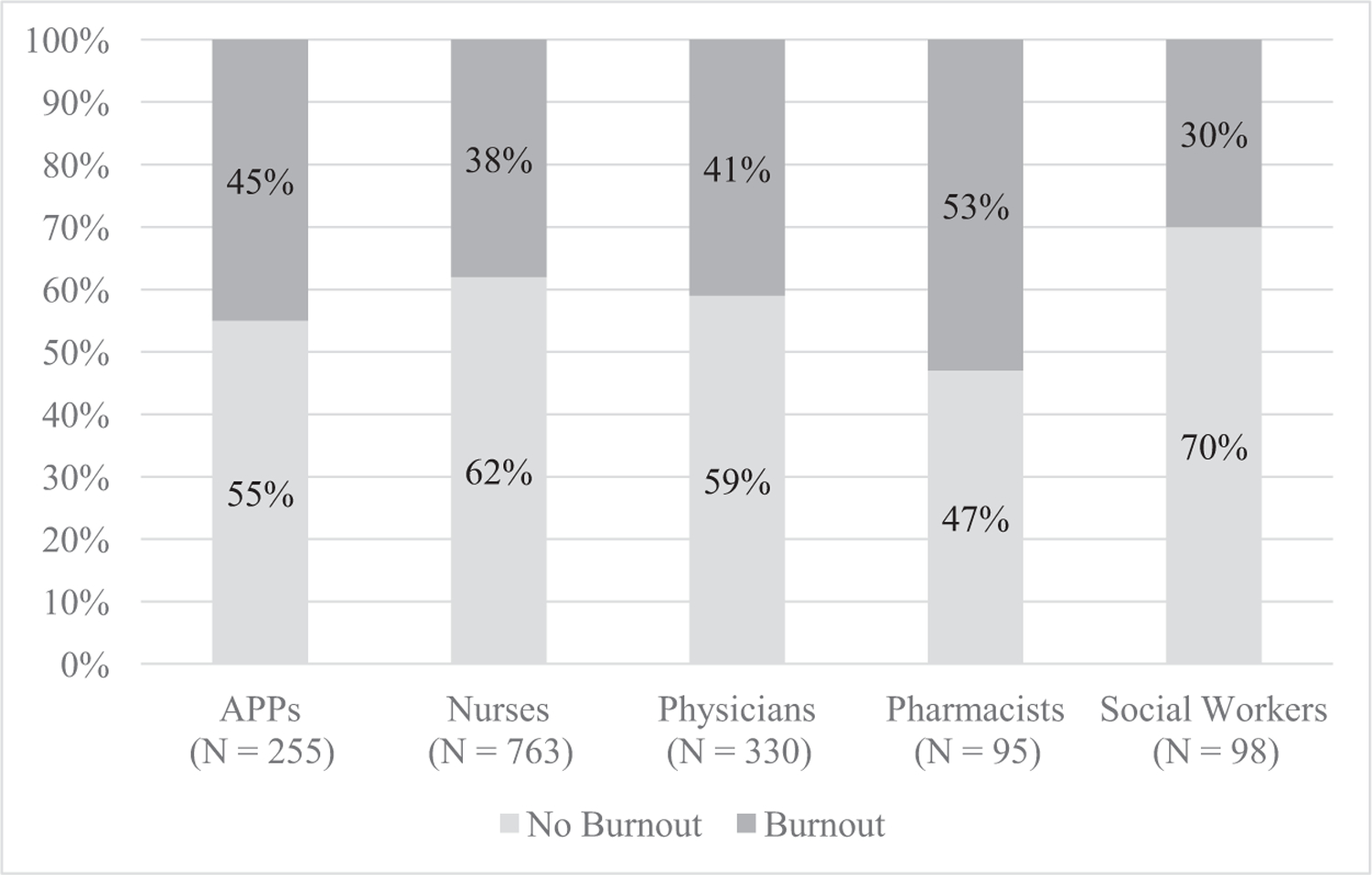
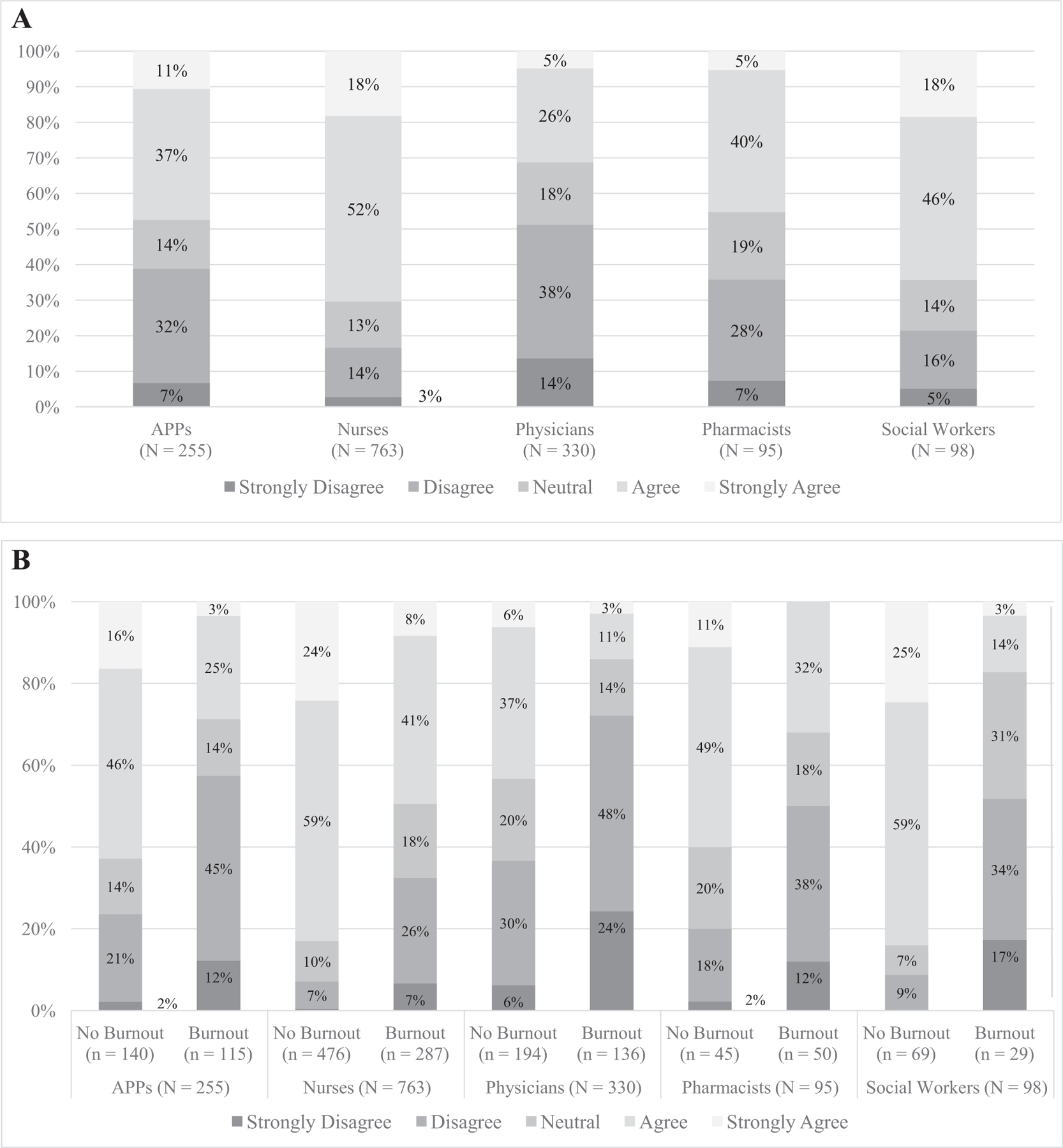
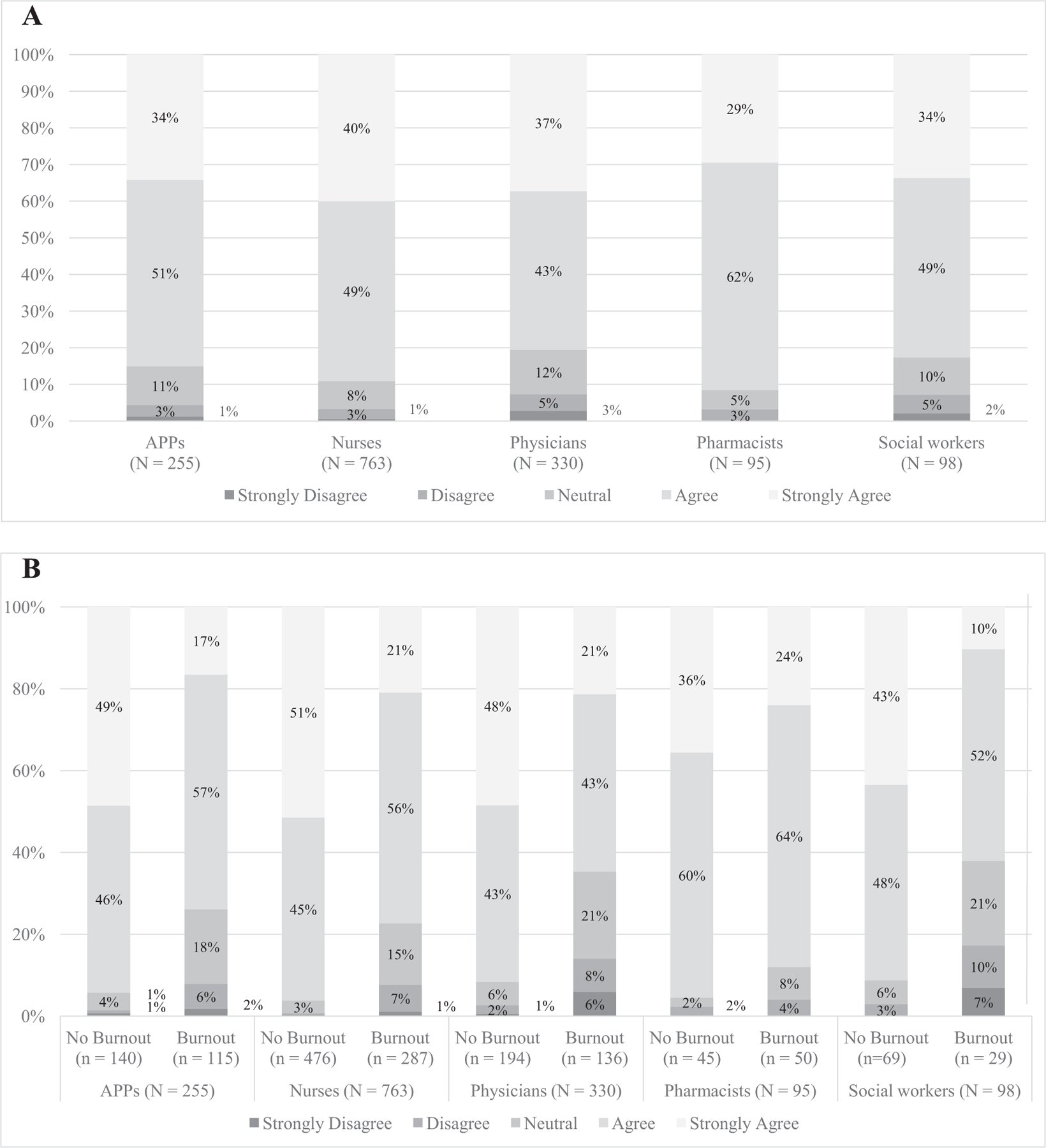
A projected shortage of hematopoietic cell transplantation (HCT) health professionals was identified as a major issue during the National Marrow Donor Program/Be The Match System Capacity Initiative. Work-related distress and work-life balance were noted to be potential barriers to recruitment/retention. This study examined these barriers and their association with career satisfaction across HCT disciplines. A cross-sectional, 90-item, web-based survey was administered to advanced practice providers, nurses, physicians, pharmacists, and social workers in 2015. Participants were recruited from membership lists of 6 professional groups. Burnout (measured with the Maslach Burnout Inventory subscales of emotional exhaustion and depersonalization) and moral distress (measured by Moral Distress Scale-Revised) were examined to identify work-related distress. Additional questions addressed demographics, work-life balance, and career satisfaction. Of 5759 HCT providers who received an individualized invitation to participate, 914 (16%) responded; 627 additional participants responded to an open link survey. Significant differences in demographic and practice characteristics existed across disciplines (P < .05). The prevalence of burnout differed across disciplines (P < .05) with an overall prevalence of 40%. Over one-half of pharmacists had burnout, whereas social workers had the lowest prevalence at less than one-third. Moral distress scores ranged from 0 to 336 and varied by discipline (P < .05); pharmacists had the highest mean score (62.9 ± 34.8) and social workers the lowest (42.7 ± 24.4). In multivariate and univariate analyses, variables contributing to burnout varied by discipline; however, moral distress was a significant contributing factor for all providers. Those with burnout were more likely to report inadequate work-life balance and a low level of career satisfaction; however, overall there was a high level of career satisfaction across disciplines. Burnout, moral distress, and inadequate work-life balance existed at a variable rate in all HCT disciplines, yet career satisfaction was high. These results suggest specific areas to address in the work environment for HCT health professionals, especially the need for relief of moral distress and a greater degree of personal time. As the creation of healthy work environments is increasingly emphasized to improve quality care and decrease costs, these findings should be used by HCT leadership to develop interventions that mitigate work-related distress and in turn foster recruitment and retention of HCT providers.
Keywords: Burnout; Career satisfaction; Hematopoietic cell transplantation; Moral distress; Work–life balance.
Copyright © 2017 The American Society for Blood and Marrow Transplantation. Published by Elsevier Inc. All rights reserved.
Conflict of interest statement
Figures
References
-
- Majhail NS, Murphy EA, Denzen EM, et al. The National Marrow Donor Program’s Symposium on Hematopoietic Cell Transplantation in 2020: a health care resource and infrastructure assessment. Biol Blood Marrow Transplant 2012;18:172–182. - PubMed
-
- Burns LJ, Gajewski JL, Majhail NS, et al. Challenges and potential solutions for recruitment and retention of hematopoietic cell transplantation physicians: the National Marrow Donor Program’s System Capacity Initiative Physician Workforce Group report. Biol Blood Marrow Transplant 2014;20:617–621. - PubMed
-
- Aycock N, Boyle D. Interventions to manage compassion fatigue in oncology nursing. Clin J Oncol Nurs 2009;13:183–191. - PubMed
MeSH terms
Grants and funding
LinkOut - more resources
Full Text Sources
Other Literature Sources
Medical
Research Materials
