Neurobehavioral Impairment and CPAP Treatment Response in Mild-Moderate Obstructive Sleep Apneas
- PMID: 29198304
- PMCID: PMC5734892
- DOI: 10.5664/jcsm.6878
Neurobehavioral Impairment and CPAP Treatment Response in Mild-Moderate Obstructive Sleep Apneas
Abstract
Study objectives: The degree of neurobehavioral impairment and treatment response in mild-moderate obstructive sleep apnea (OSA) compared to that of an appropriate control group are unclear. This study compared neurobehavioral function and response to continuous positive airway pressure (CPAP) treatment in patients with mild to moderate OSA with those of a non-sleep apneic community sample of similar demography.
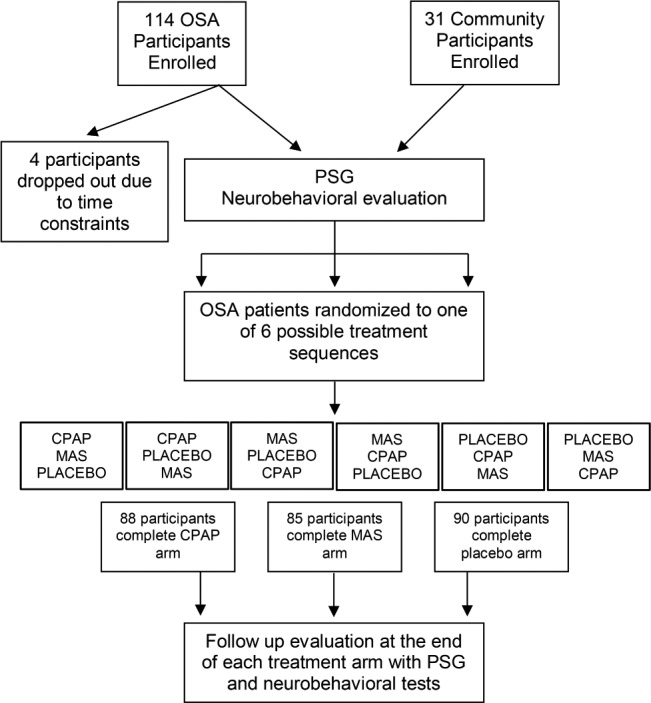
Methods: One hundred ten patients with OSA and 31 asymptomatic community dwellers underwent overnight polysomnography and neurobehavioral testing. Participants with OSA (n = 88) were treated with CPAP for 3 months, and repeat evaluations were performed at the end of the treatment period.
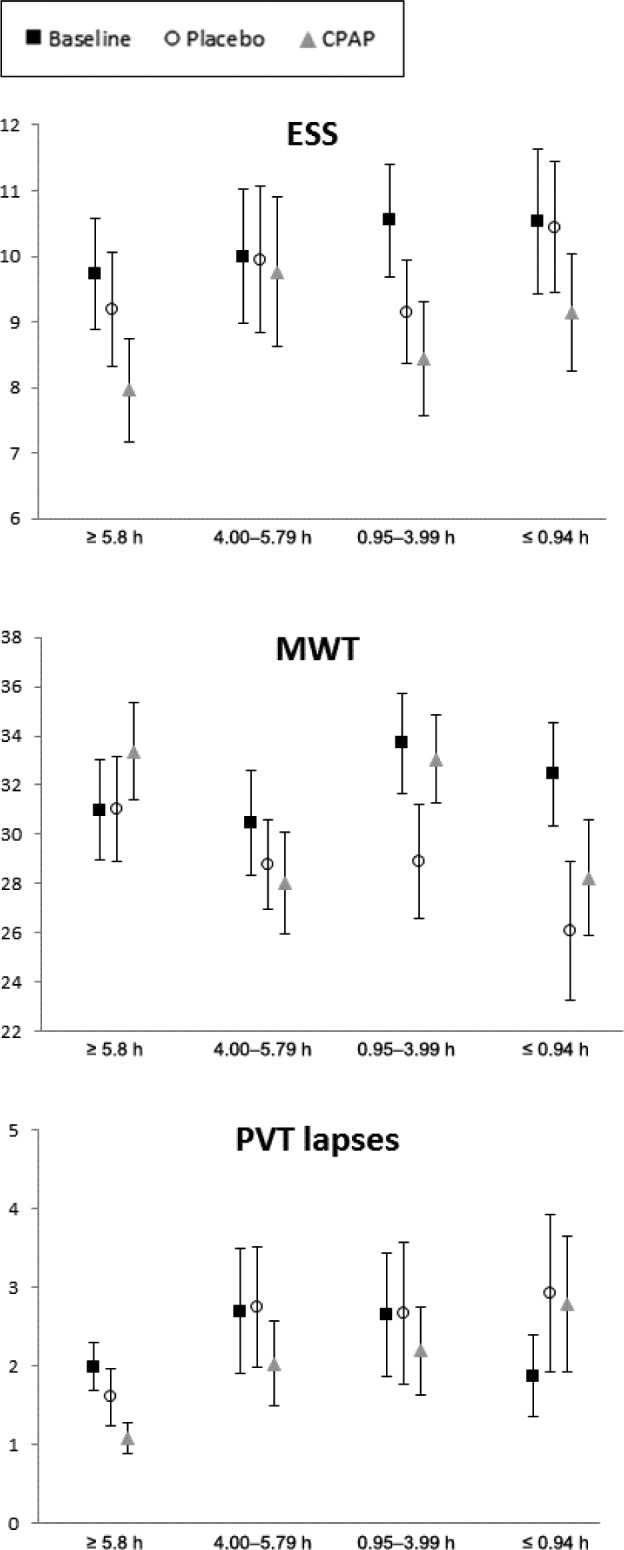
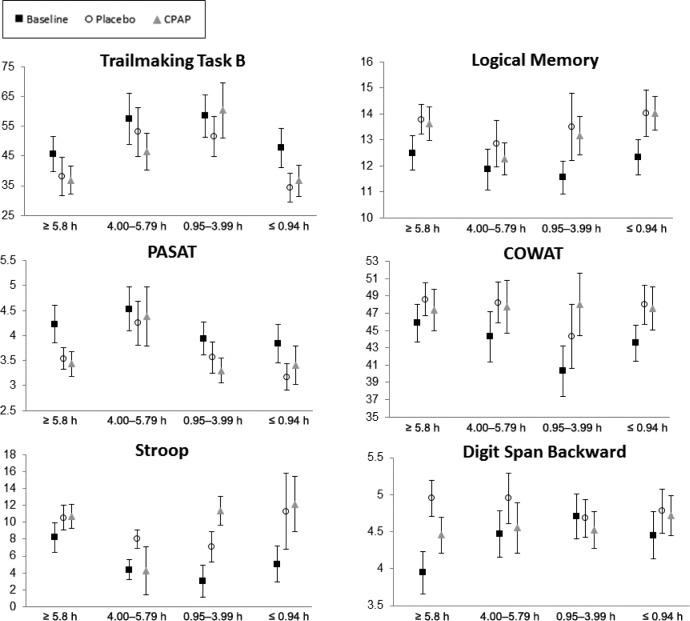
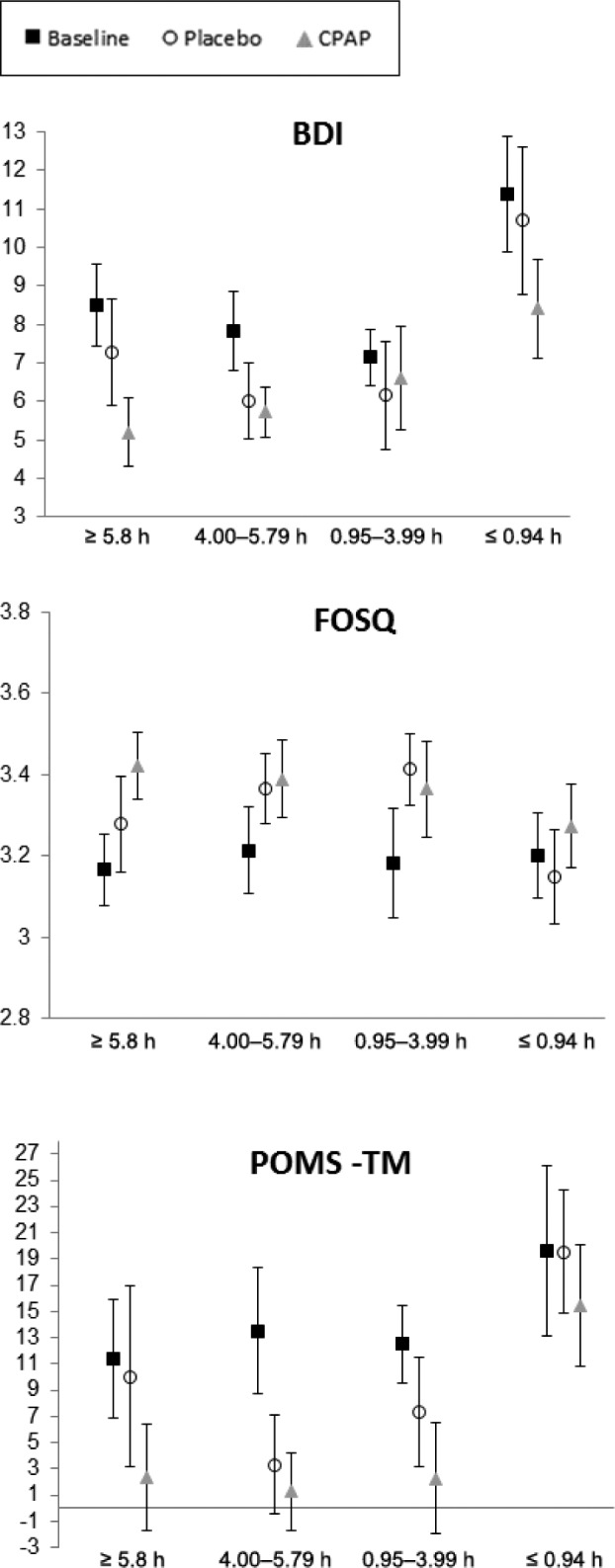
Results: Compared to the community sample, participants with OSA were significantly sleepier, had impaired mood and quality of life, and showed decrements in neuropsychological function, specifically psychomotor function, working memory and vigilance. Some neuropsychological and mood outcomes were normalized with CPAP, but significant decrements persisted in most outcomes even in those participants with adequate device usage.
Conclusions: Patients with mild to moderate OSA have significant neurobehavioral morbidity. During "gold standard" treatment, normal function was not achieved, even with adequate device usage. CPAP efficacy for improving sleepiness and neuropsychological function in this milder end of the OSA spectrum may be poor, which may affect CPAP adherence. These findings suggest that there may be neurological changes related to OSA that do not respond to CPAP treatment, the etiology of which requires further investigation.
Keywords: continuous positive airway pressure; neuropsychological function; obstructive sleep apnea; quality of life; sleepiness.
© 2018 American Academy of Sleep Medicine
Figures
References
-
- Bedard MA, Montplaisir J, Richer F, Rouleau I, Malo J. Obstructive sleep apnea syndrome: pathogenesis of neuropsychological deficits. J Clin Exp Neuropsychol. 1991;13(6):950–964. - PubMed
-
- Engleman H, Kingshott R, Martin S, Douglas NJ. Cognitive function in the sleep apnea/hypopnea syndrome (SAHS) Sleep. 2000;23(Suppl 4):S102–S108. - PubMed
-
- Kim HC, Young T, Matthews CG, Weber SM, Woodward AR, Palta M. Sleep-disordered breathing and neuropsychological deficits. A population-based study. Am J Respir Crit Care Med. 1997;156(6):1813–1819. - PubMed
-
- Naegele B, Thouvard V, Pepin J, et al. Deficits of cognitive executive functions in patients with sleep apnea syndrome. Sleep. 1995;18(1):43–52. - PubMed
Publication types
MeSH terms
LinkOut - more resources
Full Text Sources
Other Literature Sources