


Fanconi Anemia Signaling and Cancer
- PMID: 29198440
- PMCID: PMC5819365
- DOI: 10.1016/j.trecan.2017.10.005
Fanconi Anemia Signaling and Cancer
Abstract
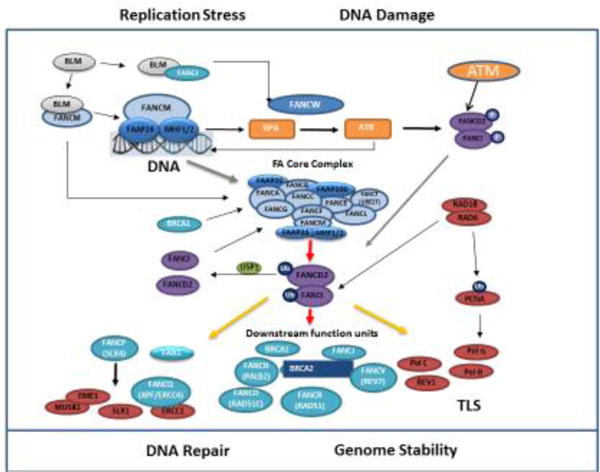
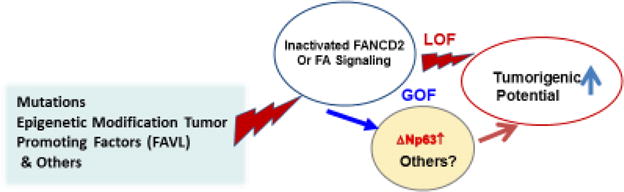
The extremely high cancer incidence associated with patients suffering from a rare human genetic disease, Fanconi anemia (FA), demonstrates the importance of FA genes. Over the course of human tumor development, FA genes perform critical tumor-suppression roles. In doing so, FA provides researchers with a unique genetic model system to study cancer etiology. Here, we review how aberrant function of the 22 FA genes and their signaling network contributes to malignancy. From this perspective, we will also discuss how the knowledge discovered from FA research serves basic and translational cancer research.
Keywords: ATM/ATR; Fanconi anemia signaling; cancer; genome instability; tumor development and resistance.
Copyright © 2017 Elsevier Inc. All rights reserved.
Figures

References
-
- Bogliolo M, Surralles J. Fanconi anemia: a model disease for studies on human genetics and advanced therapeutics. Curr Opin Genet Dev. 2015;33:32–40. - PubMed
-
- Ceccaldi R, Sarangi P, D’Andrea AD. The Fanconi anaemia pathway: new players and new functions. Nat Rev Mol Cell Biol. 2016;17(6):337–49. - PubMed
-
- Inano S, et al. RFWD3-Mediated Ubiquitination Promotes Timely Removal of Both RPA and RAD51 from DNA Damage Sites to Facilitate Homologous Recombination. Mol Cell. 2017;66(5):622, 634 e8. - PubMed
Publication types
MeSH terms
Substances
Grants and funding
LinkOut - more resources
Full Text Sources
Other Literature Sources
Research Materials
Miscellaneous
