


Post-Disaster Fertility: Hurricane Katrina and the Changing Racial Composition of New Orleans
- PMID: 29200546
- PMCID: PMC5703431
- DOI: 10.1007/s11111-017-0273-3
Post-Disaster Fertility: Hurricane Katrina and the Changing Racial Composition of New Orleans
Abstract
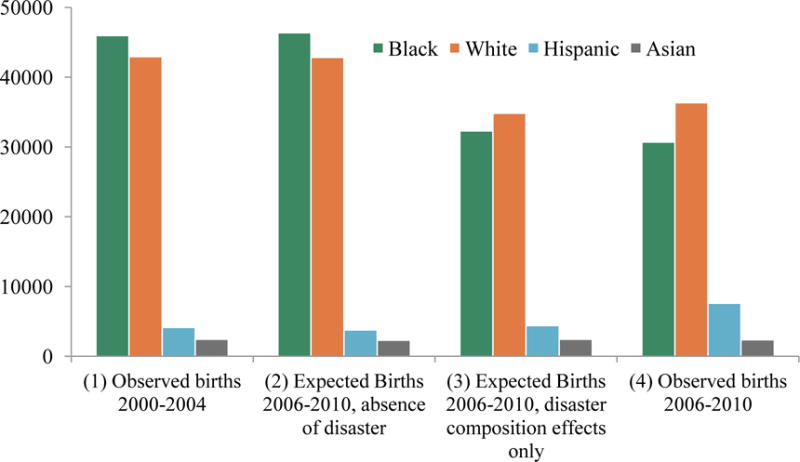
Large-scale climate events can have enduring effects on population size and composition. Natural disasters affect population fertility through multiple mechanisms, including displacement, demand for children, and reproductive care access. Fertility effects, in turn, influence the size and composition of new birth cohorts, extending the reach of climate events across generations. We study these processes in New Orleans during the decade spanning Hurricane Katrina. We combine census data, ACS data, and vital statistics data to describe fertility in New Orleans and seven comparison cities. Following Katrina, displacement contributed to a 30% decline in birth cohort size. Black fertility fell, and remained 4% below expected values through 2010. By contrast, white fertility increased by 5%. The largest share of births now occurs to white women. These fertility differences-beyond migration-driven population change-generate additional pressure on the renewal of New Orleans as a city in which the black population is substantially smaller in the disaster's wake.
Figures
References
-
- Allison PD. Fixed effects regression models. Vol. 160. SAGE publications; 2009.
-
- American Anthropological Association. Statement on race 1998
-
- Barreca A, Deschenes O, Guldi M. Maybe Next Month? Temperature Shocks, Climate Change, and Dynamic Adjustments in Birth Rates. National Bureau of Economic Research Working Paper No 21681 2015
-
- Berger D. Constructing crime, framing disaster: Routines of criminalization and crisis in Hurricane Katrina. Punishment & Society. 2009;11(4):491–510.
-
- Bourdieu P. Identity and Representation: Elements for a Critical Reflection on the Idea of Region. In: Thompson John., editor. Language and Symbolic Power. Cambridge, MA: Harvard University Press; 1993.
Grants and funding
LinkOut - more resources
Full Text Sources
Other Literature Sources