Effect of Different Cooking Methods on Histamine Levels in Selected Foods
- PMID: 29200758
- PMCID: PMC5705351
- DOI: 10.5021/ad.2017.29.6.706
Effect of Different Cooking Methods on Histamine Levels in Selected Foods
Abstract
Background: Histamine in food is known to cause food poisoning and allergic reactions. We usually ingest histamine in cooked food, but there are few studies about the influence of cooking method on the histamine level.
Objective: The purpose of this study was to determine the influence of cooking methods on the concentration of histamine in foods.
Methods: The foods chosen were those kinds consumed frequently and cooked by grilling, boiling, and frying. The histamine level of the food was measured using enzyme-linked immunosorbent assay.
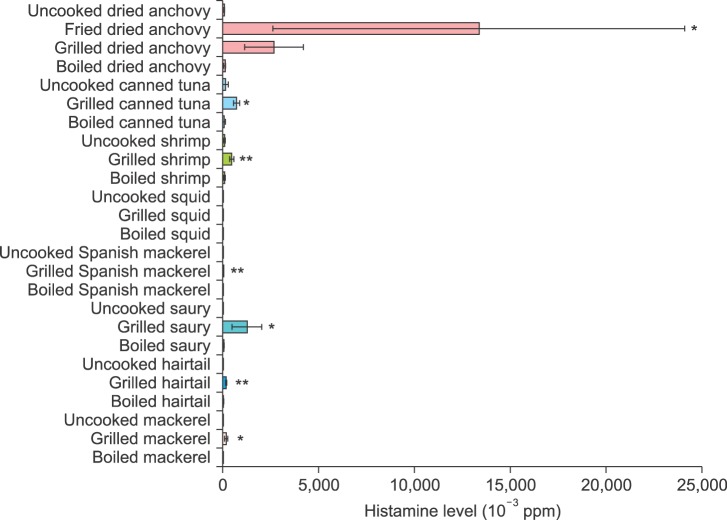
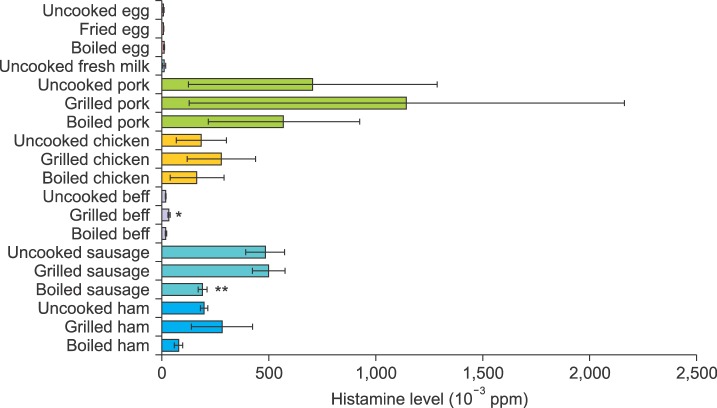
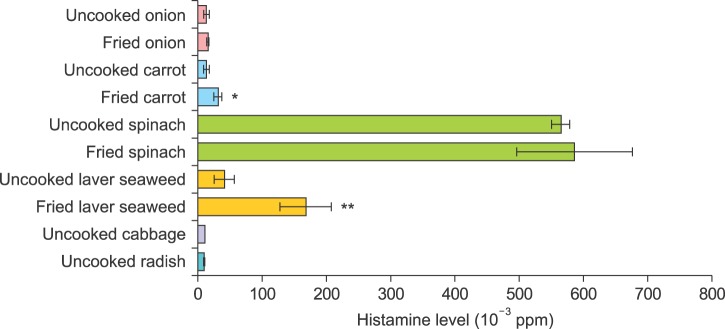
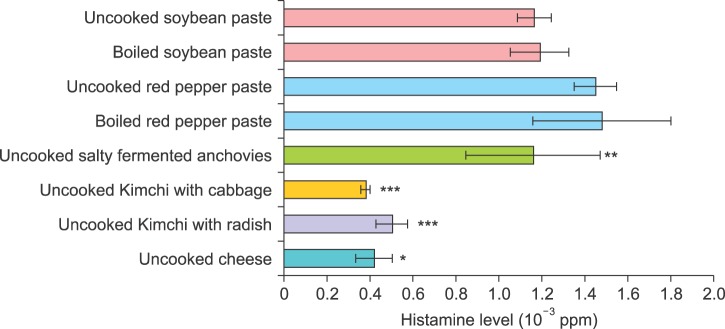
Results: Grilled seafood had higher histamine levels than raw or boiled seafood. For meat, grilling increased the histamine level, whereas boiling decreased it. For eggs, there was not much difference in histamine level according to cooking method. Fried vegetables had higher histamine levels than raw vegetables. And fermented foods didn't show much difference in histamine level after being boiled.
Conclusion: The histamine level in food has changed according to the cooking method used to prepare it. Frying and grilling increased histamine level in foods, whereas boiling had little influence or even decreased it. The boiling method might be helpful to control the effect of histamine in histamine-sensitive or susceptible patients, compared with frying and grilling.
Keywords: Biogenic amines; Food; Histamine.
Conflict of interest statement
CONFLICTS OF INTEREST: The authors have nothing to disclose.
Figures
References
-
- Fogel WA, Lewinski A, Jochem J. Histamine in food: is there anything to worry about. Biochem Soc Trans. 2007;35:349–352. - PubMed
-
- Bodmer S, Imark C, Kneubühl M. Biogenic amines in foods: histamine and food processing. Inflamm Res. 1999;48:296–300. - PubMed
-
- Taylor SL. Histamine food poisoning: toxicology and clinical aspects. Crit Rev Toxicol. 1986;17:91–128. - PubMed
-
- Taylor SL, Stratton JE, Nordlee JA. Histamine poisoning (scombroid fish poisoning): an allergy-like intoxication. J Toxicol Clin Toxicol. 1989;27:225–240. - PubMed
-
- Maintz L, Novak N. Histamine and histamine intolerance. Am J Clin Nutr. 2007;85:1185–1196. - PubMed
LinkOut - more resources
Full Text Sources
Other Literature Sources