


Trends in contraceptive practices among women in reproductive age at a health facility in Ghana: 2011-2013
- PMID: 29201392
- PMCID: PMC5675057
- DOI: 10.1186/s40834-016-0010-9
Trends in contraceptive practices among women in reproductive age at a health facility in Ghana: 2011-2013
Erratum in
-
Erratum to: Volume 1, Contraception and Reproductive Medicine.Contracept Reprod Med. 2016 Apr 14;1:6. doi: 10.1186/s40834-016-0017-2. eCollection 2016. Contracept Reprod Med. 2016. PMID: 29205232 Free PMC article.
Abstract
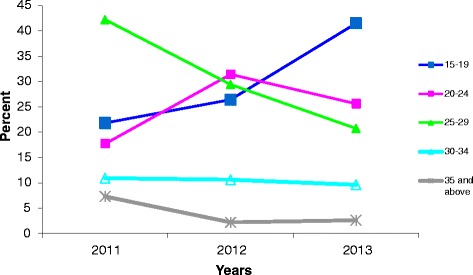
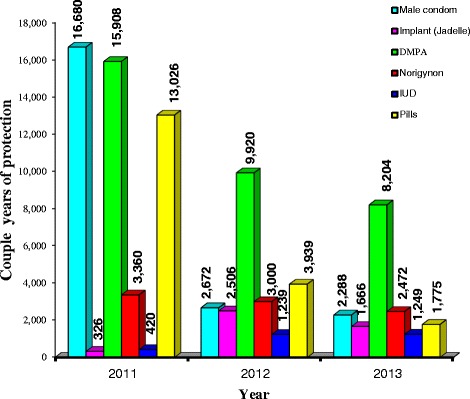
Background: There is dearth of information on contraceptive use among women in reproductive age in Ghana over time. This study sought to examine the trends in contraceptive practices among women in reproductive age in a health facility in Ghana in terms of acceptor rates, age at first reporting and couple-years of protection.
Methods: The contraceptive data of women were extracted from the registry of a health facility for a three-year period from 2011 to 2013. Graphs and tables were used to present the trends in the use of various contraceptive methods for the study period.
Results: Depot Medroxyprogesterone Acetate (Depo-Provera) was the most accepted contraceptive method as well as the most protective method against unwanted pregnancies for the three-year period. However, male condom, estradiol valerate/norethindrone enanthate (Norigynon) and pills were the lowest among all the contraceptives used by women for the study period in terms of acceptance, while intra-uterine device had the lowest couple-years of protection.
Conclusions: Some contraceptive methods have been consistently under-utilised by women in the catchment area and needed to be promoted to improve upon the contraceptive use rate.
Keywords: Ghana; Trends; contraceptive; health facility; reproductive age.
Figures
References
-
- World Health Organisation . The World Health Report 2013: Research for universal health coverage. Geneva: WHO; 2013.
-
- United Nations Population Fund . State of the world population 2004. The Cairo consensus at ten: population, reproductive health and the global effort to end poverty. New York: UNFPA; 2004.
-
- World Health Organisation . Making pregnancy safer: Annual report 2007. Geneva: WHO; 2008.
-
- Institute G. Contraceptive use in the United States. New York: GI. 2013.
LinkOut - more resources
Full Text Sources
Other Literature Sources
