


A novel approach to postpartum contraception: a pilot project of Pediatricians' role during the well-baby visit
- PMID: 29201396
- PMCID: PMC5693541
- DOI: 10.1186/s40834-016-0018-1
A novel approach to postpartum contraception: a pilot project of Pediatricians' role during the well-baby visit
Abstract
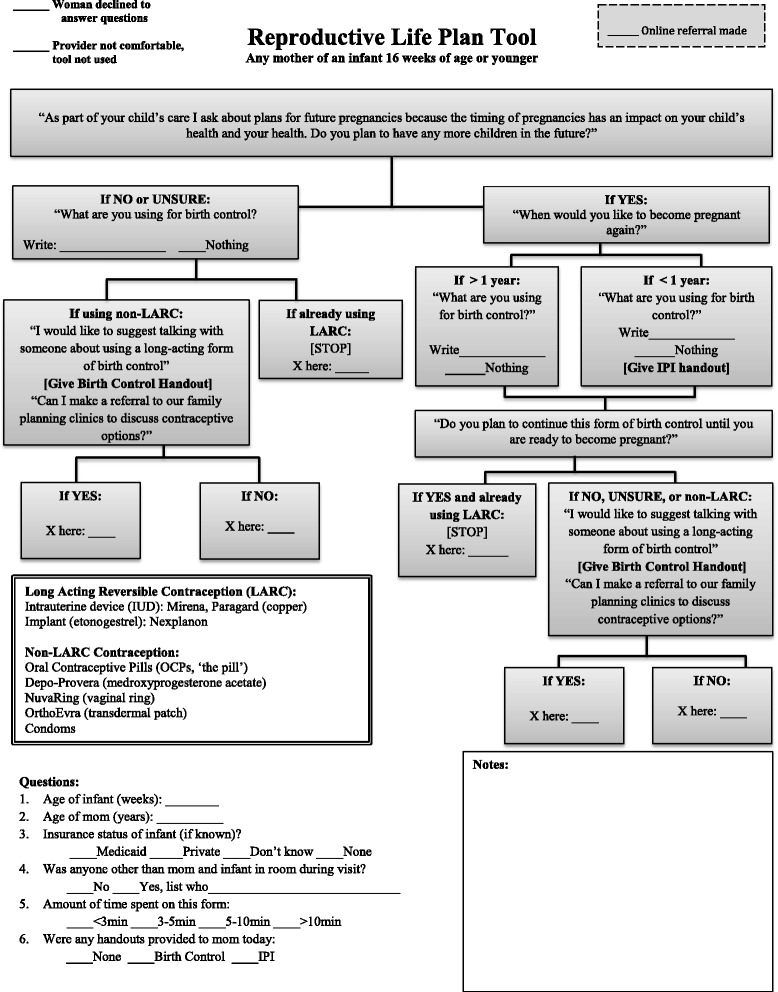
Background: Postpartum women are at high risk of unintended pregnancy as many do not receive timely postpartum contraception. Utilization of routine postpartum care varies widely. Conversely, the Well-Baby Visit (WBV) for newborns is highly utilized and provides an opportunity to discuss contraception with mothers. This project aimed to test the feasibility and acceptability of having pediatric residents administer a simplified Reproductive Life Plan Tool (RLPT) with postpartum women during routine infant care.
Methods: Pediatric resident physicians used the RLPT with mothers of infants 16-weeks of age or less during WBVs. The RLPT prompts physicians to ask general questions about women's contraceptive needs and offer referral services for mothers who desire contraception services. Residents participated in a feedback session and survey to assess acceptance and perceived feasibility of using the RLPT during routine care.
Results: Pediatric residents completed 50 RLPTs. Seventeen percent of eligible women accepted a referral to contraception services. During feedback sessions, pediatric residents (n = 18) reported comfort implementing the intervention and acceptance of the RLPT for discussing contraception. Concerns included limited time during the WBV and the potential to shift focus away from infant. On a post-intervention survey (n = 14), 92.9 % of physicians reported comfort in using the RLPT, and 71.4 % reported that the tool was easily understood although findings were varied regarding ease of implementing a RLPT in practice.
Conclusions: Findings indicate that use of the RLPT is generally feasible during routine infant care and acceptable to pediatric resident physicians with recognition of challenges to implementation. Acceptance of a referral was low among postpartum women in this pilot study.
Keywords: Contraception; Intervention; Pediatric Care; Postpartum; Well-Baby Visit.
Figures
References
-
- Chu S, Callaghan W, Shapiro-Mendoza C. Postpartum care visits--11 states and New York City, 2004. MMWR. 2007;56(50):1312–6. - PubMed
LinkOut - more resources
Full Text Sources
Other Literature Sources
