Lung neuroendocrine tumors: pathological characteristics
- PMID: 29201447
- PMCID: PMC5690953
- DOI: 10.21037/jtd.2017.01.59
Lung neuroendocrine tumors: pathological characteristics
Abstract
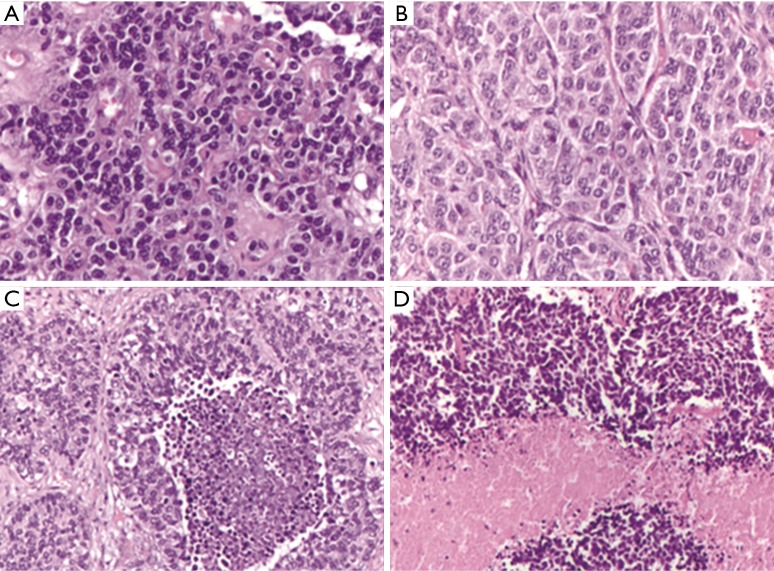
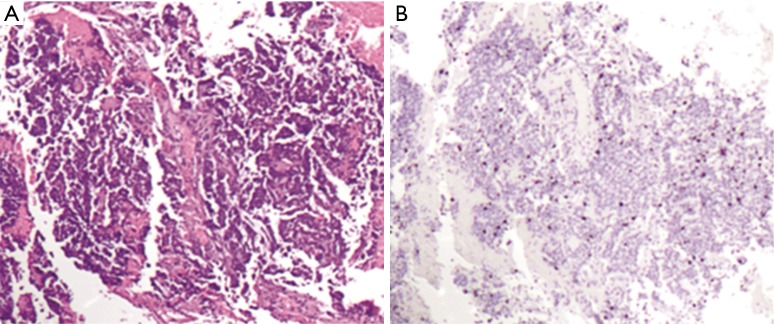
Lung neuroendocrine tumors (NETs) are a heterogeneous family of neoplasms comprising four histologic types, namely typical and atypical carcinoid (TC and AC), large-cell neuroendocrine and small cell carcinoma (SCC). Classification criteria include the number of mitoses per 2 mm2, the occurrence and extent of necrosis, cytological and histological features and immunohistochemistry for neuroendocrine markers. The classification system and the diagnostic workflow of lung NETs are apparently easy to apply and well established. However, several unresolved issues still exist in classification and pathological characterization of these tumors, probably because inter-observer diagnostic reproducibility remains disappointing, likely due to inconsistency in recognizing necrosis, mitoses and cytological details, especially in small biopsy or cytological materials. Furthermore, the lack of strong prognostic and grading criteria leads to the incomplete interpretation of some rare intermediate entities that stand in between AC and large cell neuroendocrine carcinoma (LCNEC) categories.
Keywords: Neuroendocrine; carcinoid; classification; grading; small cell carcinoma (SCC).
Conflict of interest statement
Conflicts of Interest: The authors have no conflicts of interest to declare.
Figures
References
-
- Travis WD, Brambilla E, Burke AP, et al. WHO Classification of Tumours of the Lung, Pleura, Thymus and Heart. World Healt Organization Classification Tumours. Fourth edition. Lyon: IARC Press, 2015. - PubMed
-
- Travis WD, Brambilla E, Müller-Hermelink HK, et al. World Health Organization Classification of Tumours. Pathology and Genetics of Tumours of the Lung, Pleura, Thymus and Heart. World Healt Organization Classification Tumours 7. Lyon: IARC Press, 2004.
Publication types
LinkOut - more resources
Full Text Sources
Other Literature Sources
Research Materials