


Traumatic exposures, posttraumatic stress disorder, and cognitive functioning in World Trade Center responders
- PMID: 29201993
- PMCID: PMC5700827
- DOI: 10.1016/j.trci.2017.09.001
Traumatic exposures, posttraumatic stress disorder, and cognitive functioning in World Trade Center responders
Abstract
Introduction: This study examined whether World Trade Center (WTC)-related exposures and posttraumatic stress disorder (PTSD) were associated with cognitive function and whether WTC responders' cognition differed from normative data.
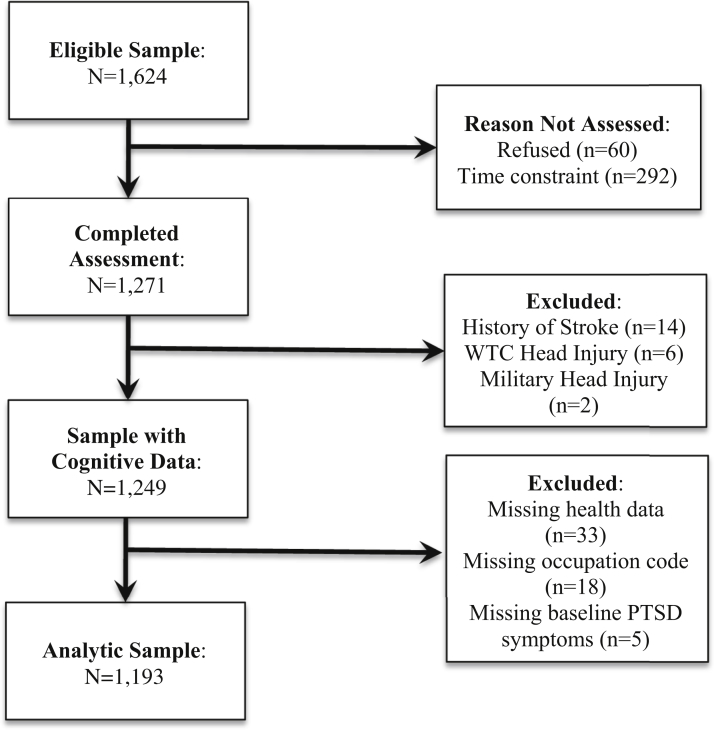
Methods: A computer-assisted neuropsychological battery was administered to a prospective cohort study of 1193 WTC responders with no history of stroke or WTC-related head injuries. Data were linked to information collected prospectively since 2002. Sample averages were compared to published norms.
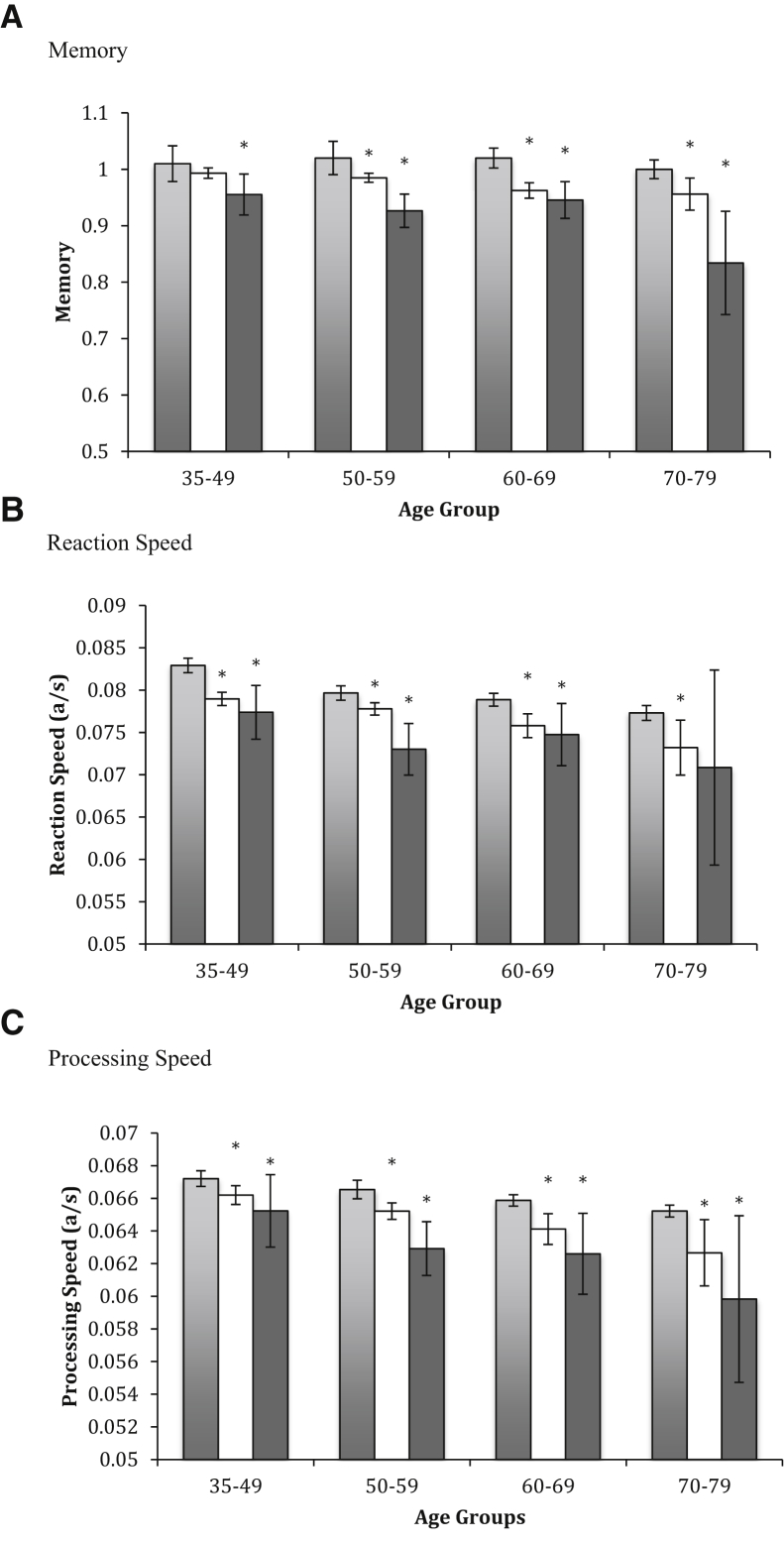
Results: Approximately 14.8% of sampled responders had cognitive dysfunction. WTC responders had worse cognitive function compared to normative data. PTSD symptom severity and working >5 weeks on-site was associated with lower cognition.
Discussion: Results from this sample highlight the potential for WTC responders to be experiencing an increased burden of cognitive dysfunction and linked lowered cognitive functioning to physical exposures and to PTSD. Future research is warranted to understand the extent to which cognitive dysfunction is evident in neural dysfunction.
Keywords: Cognitive dysfunction; Particulate exposure; Posttraumatic stress disorder; Trauma; World Trade Center.
Figures
References
-
- McKhann G.M., Knopman D.S., Chertkow H., Hyman B.T., Jack C.R., Jr., Kawas C.H. The diagnosis of dementia due to Alzheimer's disease: recommendations from the National Institute on Aging-Alzheimer's Association workgroups on diagnostic guidelines for Alzheimer's disease. Alzheimers Dement. 2011;7:263–269. - PMC - PubMed
-
- Alzheimer's Association Alzheimer's disease: facts and figures. Alzheimer's Dement. 2014;8:131–168. - PubMed
-
- Heron M. Deaths: Leading Causes for 2013. National vital statistics reports: from the Centers for Disease Control and Prevention, National Center for Health Statistics. Natl Vital Stat Syst. 2016;65:1–14. - PubMed
-
- Alzheimer's Association 2016 Alzheimer's disease facts and figures. Alzheimers Dement. 2016;12:459–509. - PubMed
-
- Richards M., Deary I.J. A life course approach to cognitive capability. In: Kuh D., Cooper R., Hardy R., Richards M., Ben-Shlomo Y., editors. A Life Course Approach to Healthy Ageing. Oxford University Press; Oxford: 2014. pp. 32–45.
Grants and funding
LinkOut - more resources
Full Text Sources
Other Literature Sources