


Isolated psychosis during exposure to very high and extreme altitude - characterisation of a new medical entity
- PMID: 29202898
- PMCID: PMC6088769
- DOI: 10.1017/S0033291717003397
Isolated psychosis during exposure to very high and extreme altitude - characterisation of a new medical entity
Abstract
Background: Psychotic episodes during exposure to very high or extreme altitude have been frequently reported in mountain literature, but not systematically analysed and acknowledged as a distinct clinical entity.
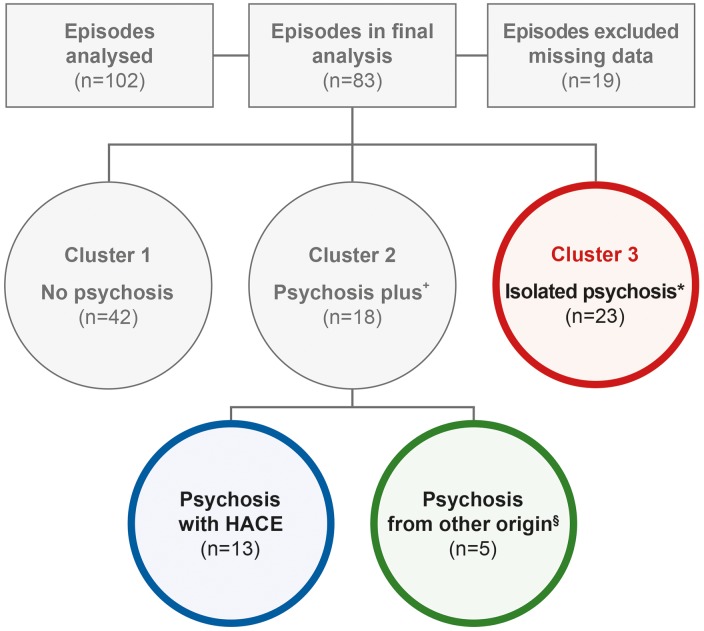
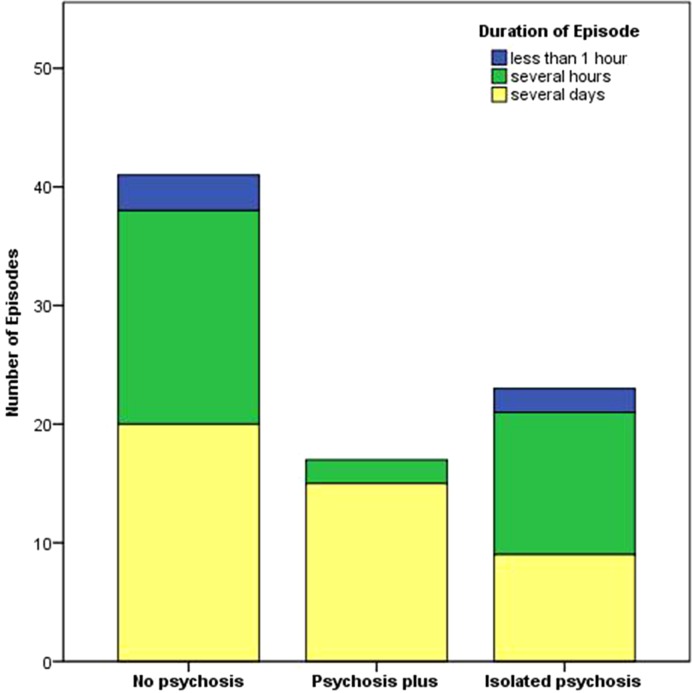
Methods: Episodes reported above 3500 m altitude with possible psychosis were collected from the lay literature and provide the basis for this observational study. Dimensional criteria of the Diagnostic and Statistical Manual of Mental Disorders were used for psychosis, and the Lake Louise Scoring criteria for acute mountain sickness and high-altitude cerebral oedema (HACE). Eighty-three of the episodes collected underwent a cluster analysis to identify similar groups. Ratings were done by two independent, trained researchers (κ values 0.6-1).FindingsCluster 1 included 51% (42/83) episodes without psychosis; cluster 2 22% (18/83) cases with psychosis, plus symptoms of HACE or mental status change from other origins; and cluster 3 28% (23/83) episodes with isolated psychosis. Possible risk factors of psychosis and associated somatic symptoms were analysed between the three clusters and revealed differences regarding the factors 'starvation' (χ2 test, p = 0.002), 'frostbite' (p = 0.024) and 'supplemental oxygen' (p = 0.046). Episodes with psychosis were reversible but associated with near accidents and accidents (p = 0.007, odds ratio 4.44).
Conclusions: Episodes of psychosis during exposure to high altitude are frequently reported, but have not been specifically examined or assigned to medical diagnoses. In addition to the risk of suffering from somatic mountain illnesses, climbers and workers at high altitude should be aware of the potential occurrence of psychotic episodes, the associated risks and respective coping strategies.
Keywords: Acute mountain sickness; altitude; high altitude cerebral oedema; psychosis; schizophrenia.
Figures
References
-
- American Psychiatric Association (2013) Diagnostic and Statistical Manual of Mental Disorders. Arlington, VA: American Psychiatric Publishing.
-
- Barch DM, Bustillo J, Gaebel W, Gur R, Heckers S, Malaspina D, Owen MJ, Schultz S, Tandon R, Tsuang M, Van Os J and Carpenter W (2013) Logic and justification for dimensional assessment of symptoms and related clinical phenomena in psychosis: relevance to DSM-5. Schizophrenia Research 150, 15–20. - PubMed
-
- Basnyat B (2002) Delirium at high altitude. High Altitude Medicine & Biology 3, 69–71. - PubMed
-
- Basnyat B, Subedi D, Sleggs J, Lemaster J, Bhasyal G, Aryal B and Subedi N (2000) Disoriented and ataxic pilgrims: an epidemiological study of acute mountain sickness and high-altitude cerebral edema at a sacred lake at 4300 m in the Nepal Himalayas. Wilderness & Environmental Medicine 11, 89–93. - PubMed
Publication types
MeSH terms
LinkOut - more resources
Full Text Sources
Other Literature Sources
Medical
