


Trends in adolescent mental health during economic upturns and downturns: a multilevel analysis of Swedish data 1988-2008
- PMID: 29203524
- PMCID: PMC5800351
- DOI: 10.1136/jech-2017-209784
Trends in adolescent mental health during economic upturns and downturns: a multilevel analysis of Swedish data 1988-2008
Abstract
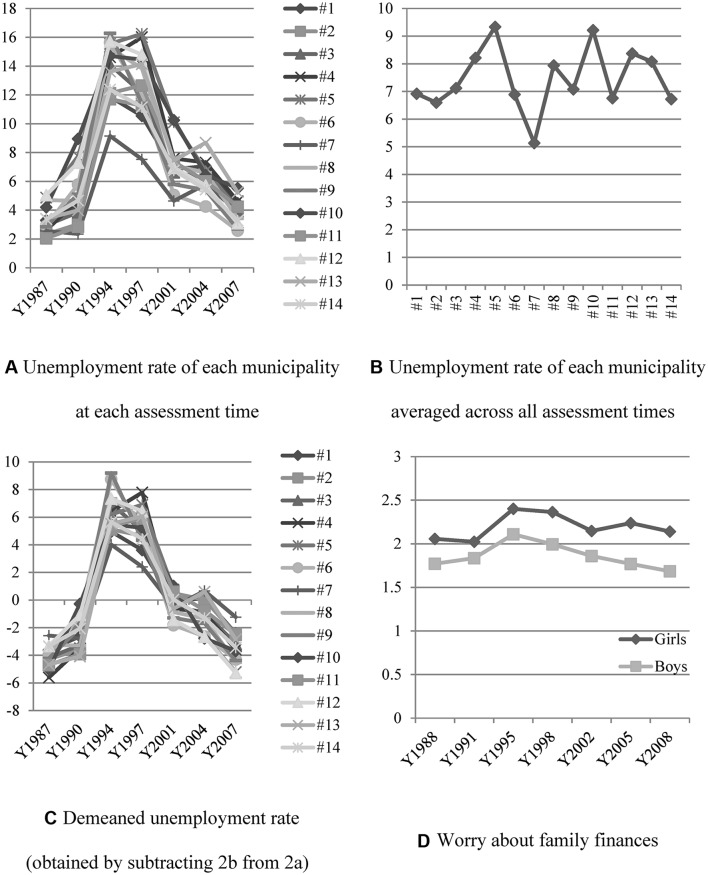
Background: A long-term trend of increasing mental health problems among adolescents in many Western countries indicates a great need to investigate if and how societal changes have contributed to the reported increase. Using seven waves of repeated cross-sectional data collected between 1988 and 2008 in Sweden, the current study examined if economic factors at the societal level (municipality unemployment rate) and at the individual level (worry about family finances), and their interaction could explain a secular trend in mental health problems.
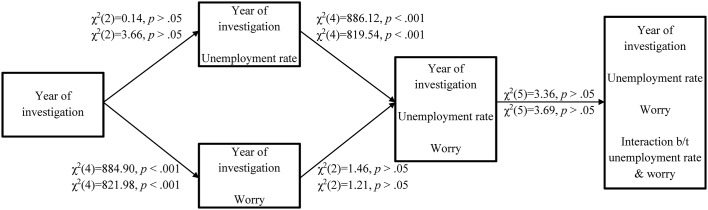
Methods: Participants were 17 533 students of age 15-16 years (49.3% girls), from 14 municipalities in a county of Sweden. Data on adolescents' mental health (psychosomatic problems) and worry about family finances were obtained using a self-report questionnaire. A series of multilevel regression analyses were conducted in order to explain the trends in adolescents' mental health.
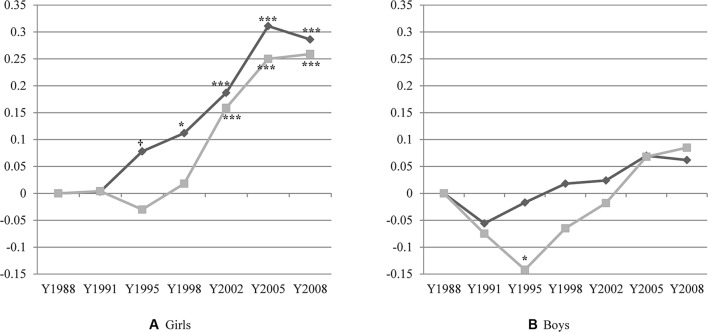
Results: The results indicated that the individual-level predictor (worry about family finances) significantly explained the increasing rates of adolescents' psychosomatic problems. This was particularly the case during the mid-1990s, which was characterised by a severe recession in Sweden with high unemployment rates. For example, after accounting for adolescents' worry, a significant increase in psychosomatic symptoms between 1988 and 1998 among girls (b=0.112, P<0.05) disappeared (b=0.018, P>0.05) and a non-significant decrease between 1988 and 1995 among boys (b=-0.017, P>0.05) became significant (b=-0.142, P<0.05). Neither municipality unemployment rate nor its interaction with adolescents' worry explained psychosomatic problems.
Conclusions: The findings demonstrate the effects of adolescents' worry about family finances on a secular trend in mental health problems during an economically bleak period of time. The study highlights the need for repeated measurements including a large number of time points over a long time period in order to analyse time-specific putative explanatory factors for trends in adolescent mental health problems.
Keywords: mental health; multilevel modelling; psychosocial factors; public health; unemployment.
© Article author(s) (or their employer(s) unless otherwise stated in the text of the article) 2018. All rights reserved. No commercial use is permitted unless otherwise expressly granted.
Conflict of interest statement
Competing interests: None declared.
Figures
References
Publication types
MeSH terms
LinkOut - more resources
Full Text Sources
Other Literature Sources
Medical
