


Internalization of a polysialic acid-binding Escherichia coli bacteriophage into eukaryotic neuroblastoma cells
- PMID: 29203765
- PMCID: PMC5715158
- DOI: 10.1038/s41467-017-02057-3
Internalization of a polysialic acid-binding Escherichia coli bacteriophage into eukaryotic neuroblastoma cells
Abstract
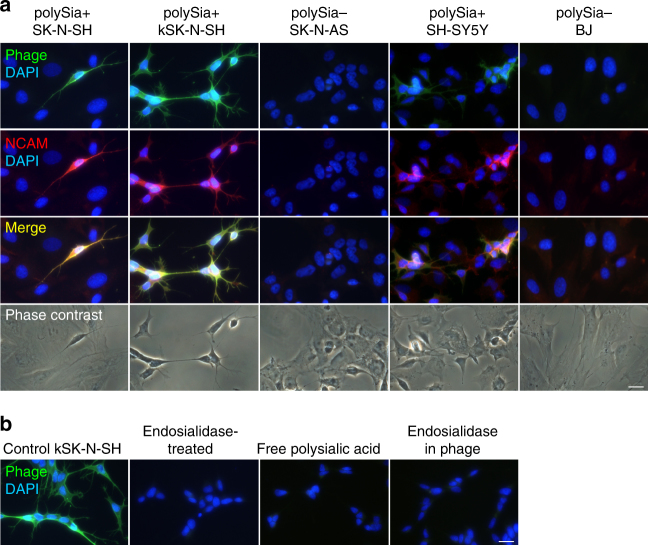
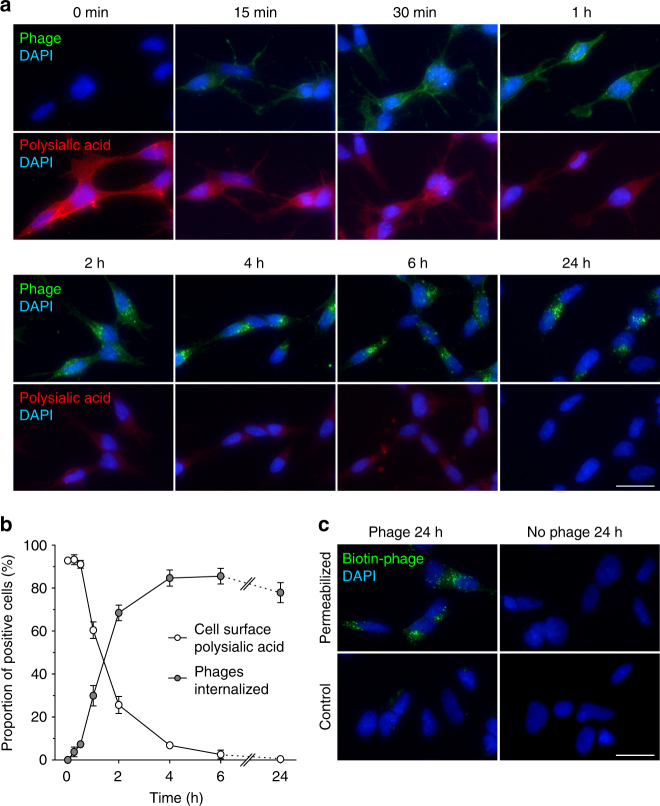
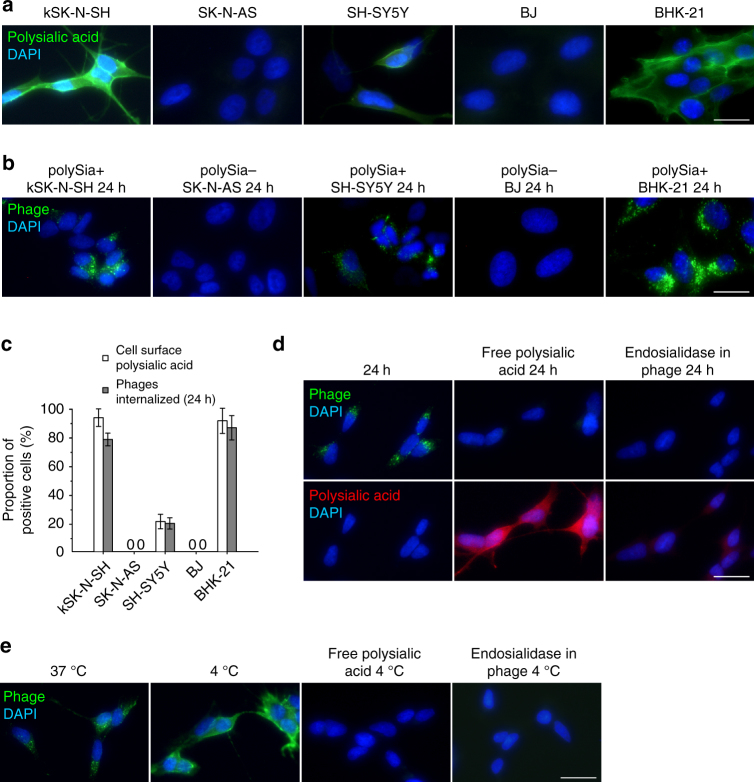
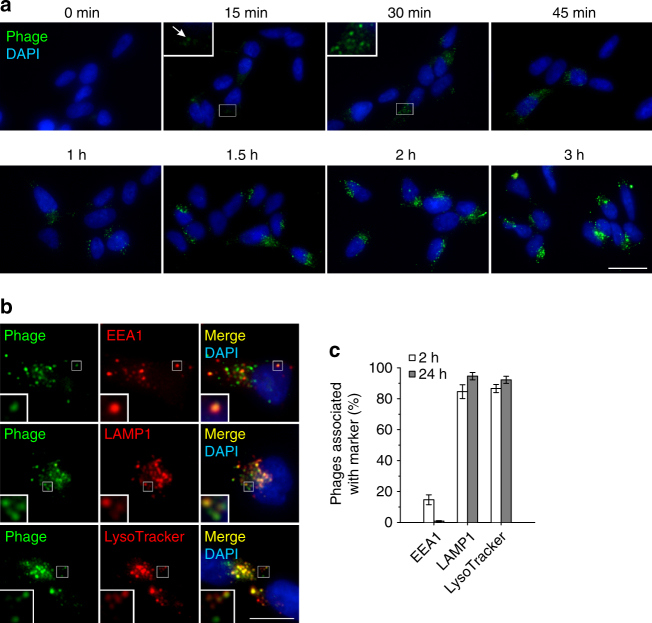
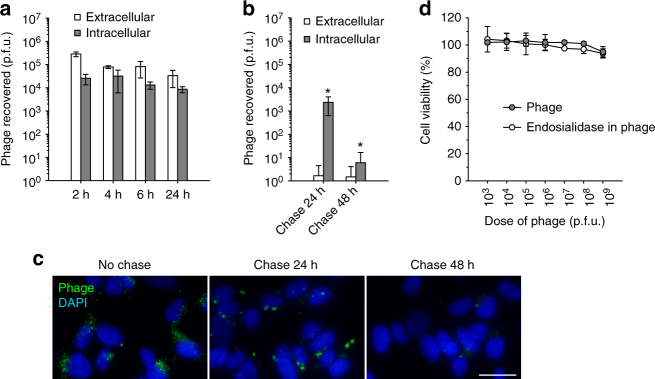
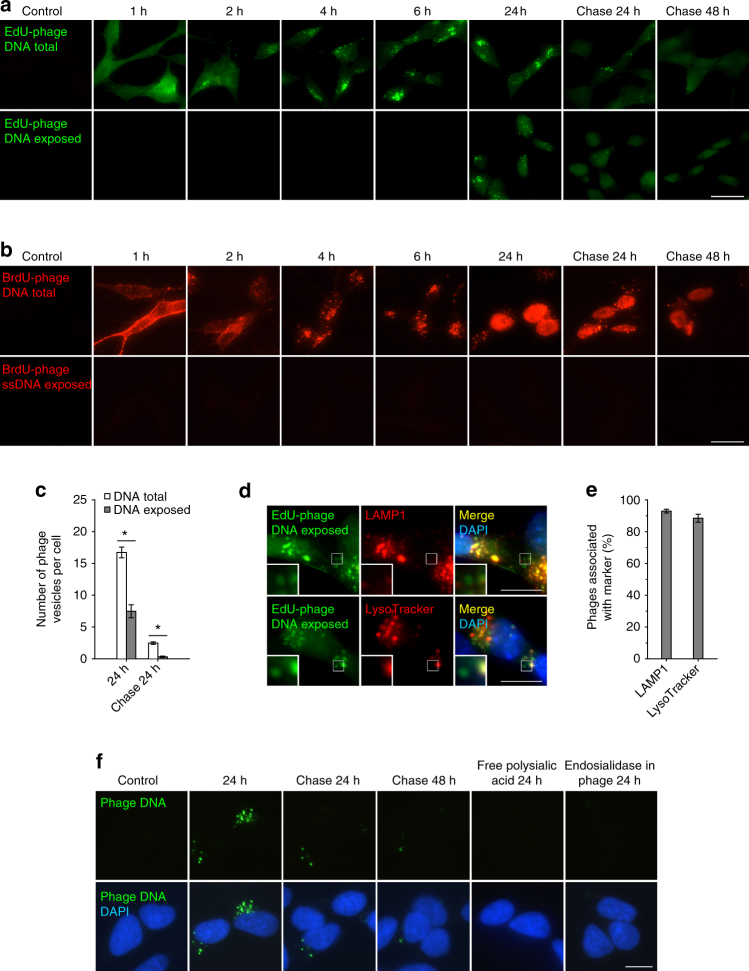
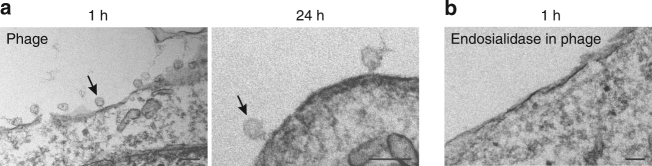
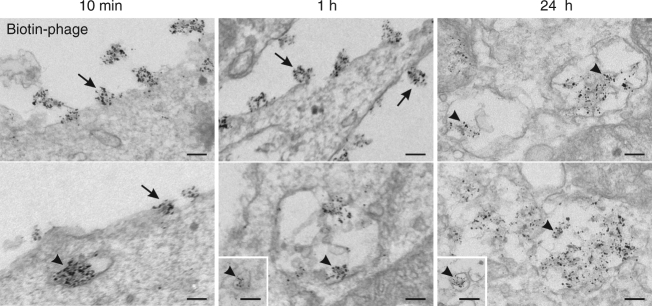
Eukaryotic organisms are continuously exposed to bacteriophages, which are efficient gene transfer agents in bacteria. However, bacteriophages are considered not to pass the eukaryotic cell membrane and enter nonphagocytic cells. Here we report the binding and penetration of Escherichia coli PK1A2 bacteriophage into live eukaryotic neuroblastoma cells in vitro. The phage interacts with cell surface polysialic acid, which shares structural similarity with the bacterial phage receptor. Using fluorescence and electron microscopy, we show that phages are internalized via the endolysosomal route and persist inside the human cells up to one day without affecting cell viability. Phage capsid integrity is lost in lysosomes, and the phage DNA is eventually degraded. We did not detect the entry of phage DNA into the nucleus; however, we speculate that this might occur as a rare event, and propose that this potential mechanism could explain prokaryote-eukaryote gene flow.
Conflict of interest statement
The authors declare no competing financial interests.
Figures
References
-
- Bushman, F. Lateral DNA Transfer: Mechanisms and Consequences (Cold Spring Harbor Laboratory Press, Cold Spring Harbor, New York, 2002).
Publication types
MeSH terms
Substances
LinkOut - more resources
Full Text Sources
Other Literature Sources
Medical
Research Materials
