


Cerebral White Matter Maturation Patterns in Preterm Infants: An MRI T2 Relaxation Anisotropy and Diffusion Tensor Imaging Study
- PMID: 29205635
- PMCID: PMC5764128
- DOI: 10.1111/jon.12486
Cerebral White Matter Maturation Patterns in Preterm Infants: An MRI T2 Relaxation Anisotropy and Diffusion Tensor Imaging Study
Abstract
Background and purpose: Preterm birth is associated with worse neurodevelopmental outcome, but brain maturation in preterm infants is poorly characterized with standard methods. We evaluated white matter (WM) of infant brains at term-equivalent age, as a function of gestational age at birth, using multimodal magnetic resonance imaging (MRI).
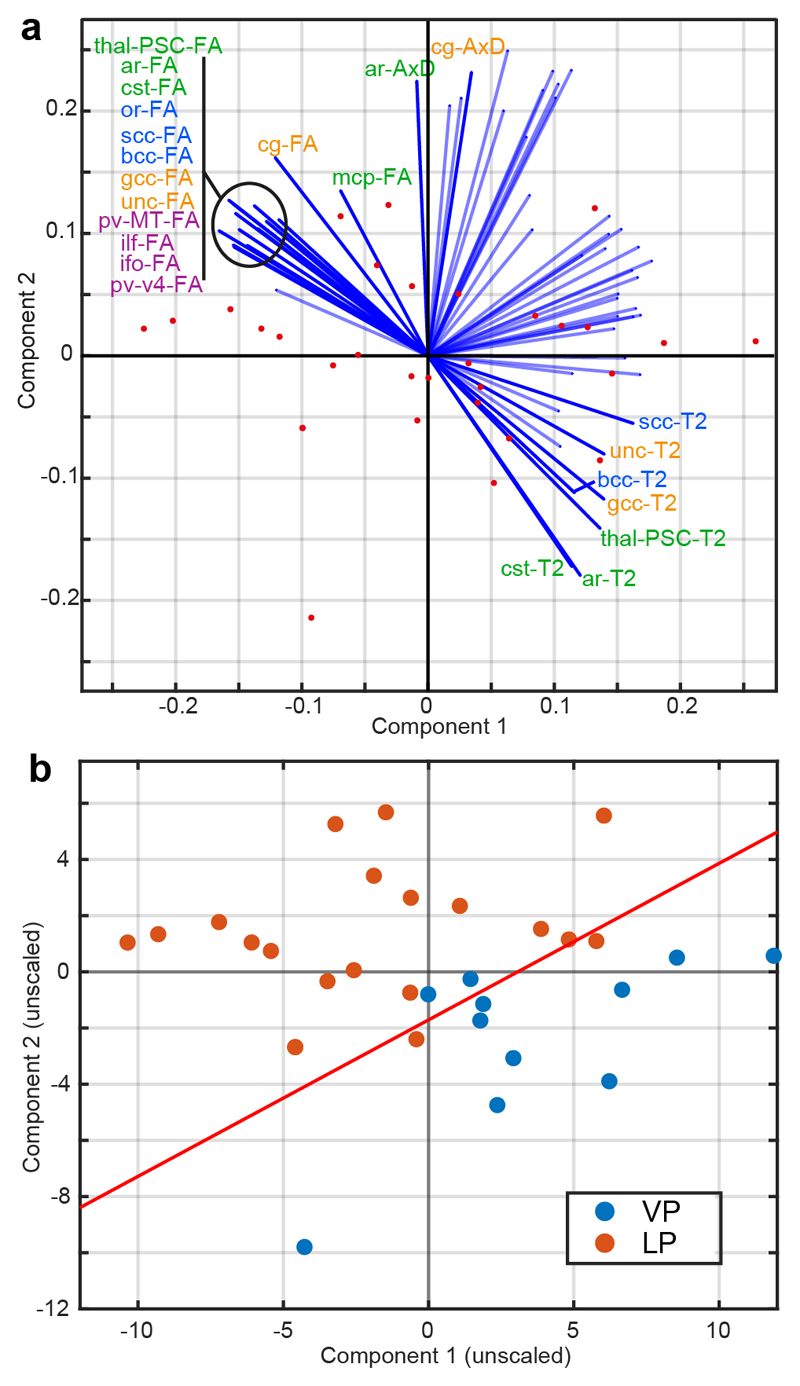
Methods: Infants born very preterm (<32 weeks gestation) and late preterm (33-36 weeks gestation) were scanned at 3 T at term-equivalent age using diffusion tensor imaging (DTI) and T2 relaxometry. MRI data were analyzed using tract-based spatial statistics, and anisotropy of T2 relaxation was also determined. Principal component analysis and linear discriminant analysis were applied to seek the variables best distinguishing very preterm and late preterm groups.
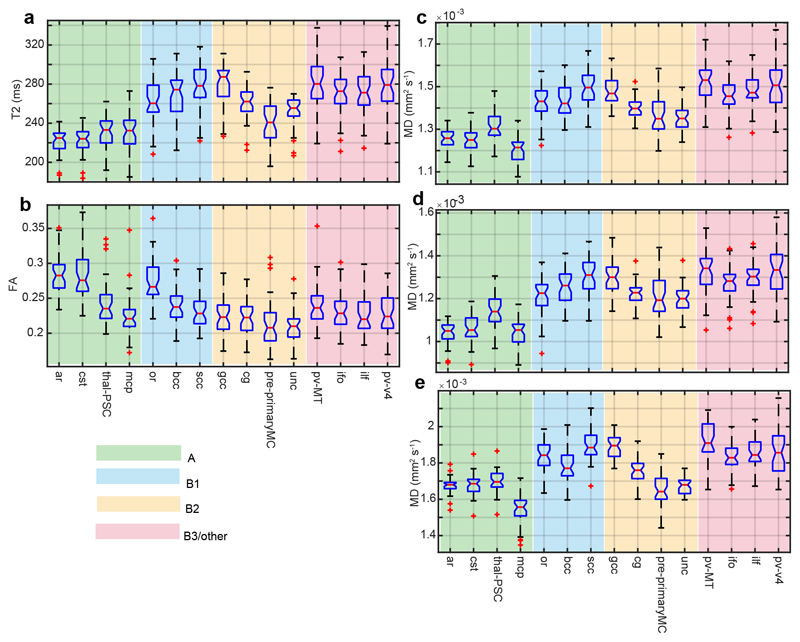
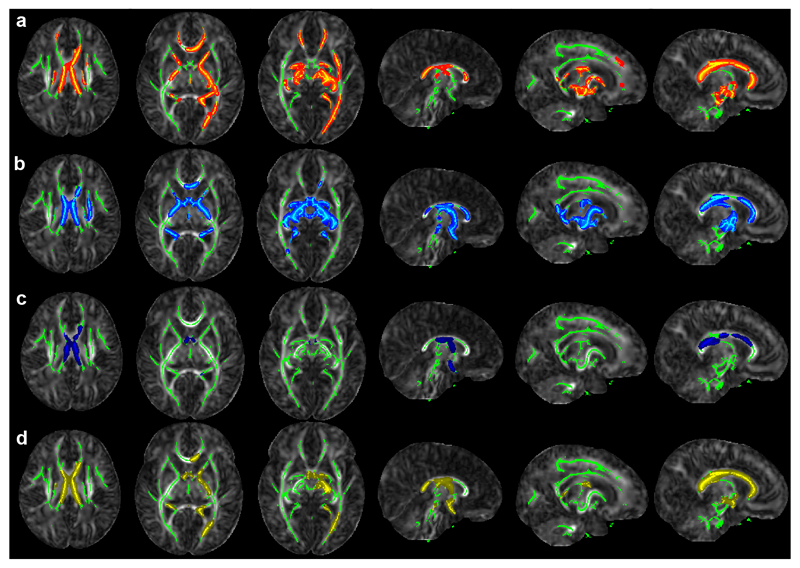
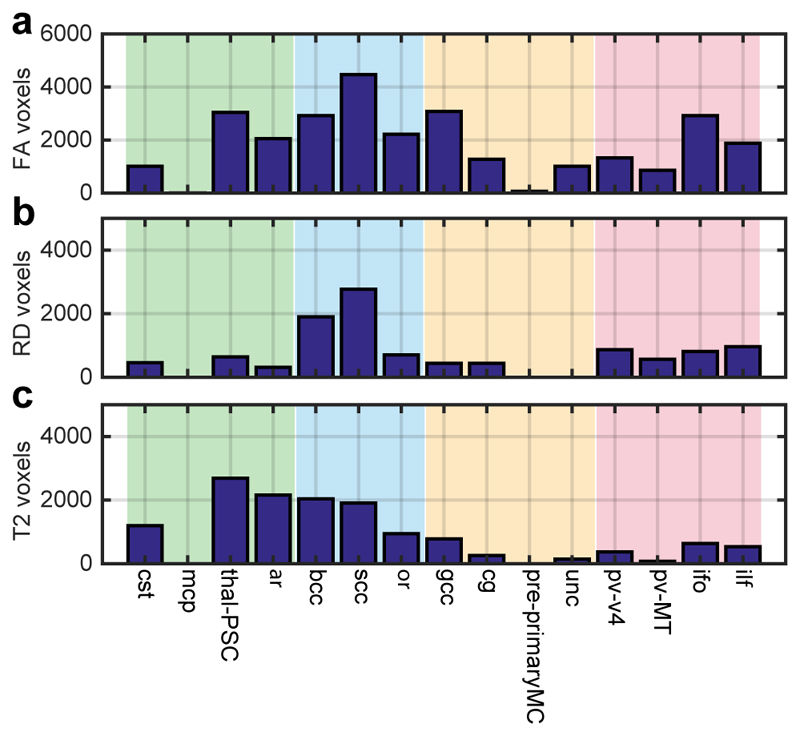
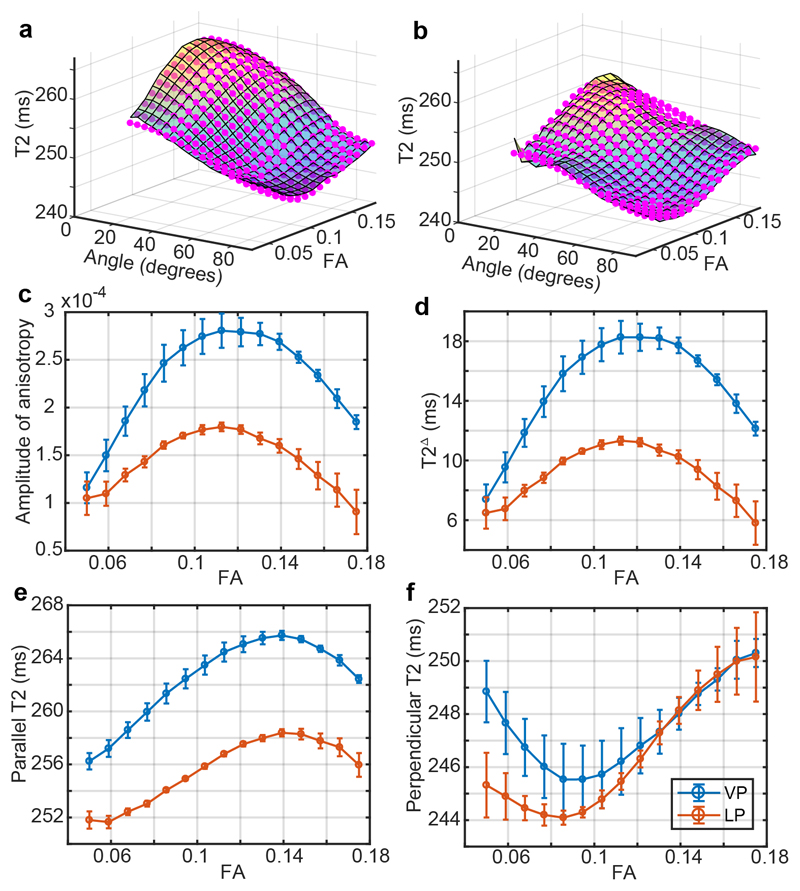
Results: Across widespread regions of WM, T2 is longer in very preterm infants than in late preterm ones. These effects are more prevalent in regions of WM that myelinate earlier and faster. Similar effects are obtained from DTI, showing that fractional anisotropy (FA) is lower and radial diffusivity higher in the very preterm group, with a bias toward earlier myelinating regions. Discriminant analysis shows high sensitivity and specificity of combined T2 relaxometry and DTI for the detection of a distinct WM development pathway in very preterm infants. T2 relaxation is anisotropic, depending on the angle between WM fiber and magnetic field, and this effect is modulated by FA.
Conclusions: Combined T2 relaxometry and DTI characterizes specific patterns of retarded WM maturation, at term equivalent age, in infants born very preterm relative to late preterm.
Keywords: MRI; T2 relaxometry; diffusion tensor imaging; preterm birth; white matter.
Copyright © 2017 by the American Society of Neuroimaging.
Figures
Similar articles
-
Assessment of brain maturation in the preterm infants using diffusion tensor imaging (DTI) and enhanced T2 star weighted angiography (ESWAN).Eur J Radiol. 2013 Sep;82(9):e476-83. doi: 10.1016/j.ejrad.2013.04.003. Epub 2013 Apr 29. Eur J Radiol. 2013. PMID: 23639775
-
The effects of mild germinal matrix-intraventricular haemorrhage on the developmental white matter microstructure of preterm neonates: a DTI study.Eur Radiol. 2018 Mar;28(3):1157-1166. doi: 10.1007/s00330-017-5060-0. Epub 2017 Sep 27. Eur Radiol. 2018. PMID: 28956133
-
Moderate and late preterm infants exhibit widespread brain white matter microstructure alterations at term-equivalent age relative to term-born controls.Brain Imaging Behav. 2016 Mar;10(1):41-9. doi: 10.1007/s11682-015-9361-0. Brain Imaging Behav. 2016. PMID: 25739350
-
The role of diffusion tensor imaging and fractional anisotropy in the evaluation of patients with idiopathic normal pressure hydrocephalus: a literature review.Neurosurg Focus. 2016 Sep;41(3):E12. doi: 10.3171/2016.6.FOCUS16192. Neurosurg Focus. 2016. PMID: 27581308 Review.
-
Recent advances in diffusion neuroimaging: applications in the developing preterm brain.F1000Res. 2018 Aug 21;7:F1000 Faculty Rev-1326. doi: 10.12688/f1000research.15073.1. eCollection 2018. F1000Res. 2018. PMID: 30210783 Free PMC article. Review.
Cited by
-
Quantifying myelin in neonates using magnetic resonance imaging: a systematic literature review.Clin Exp Pediatr. 2024 Aug;67(8):371-385. doi: 10.3345/cep.2023.00514. Epub 2023 Dec 6. Clin Exp Pediatr. 2024. PMID: 38062713 Free PMC article.
-
Altered Thalamocortical Connectivity in 6-Week-Old Infants at High Familial Risk for Autism Spectrum Disorder.Cereb Cortex. 2021 Jul 29;31(9):4191-4205. doi: 10.1093/cercor/bhab078. Cereb Cortex. 2021. PMID: 33866373 Free PMC article.
-
Neurodevelopmental patterns of early postnatal white matter maturation represent distinct underlying microstructure and histology.Neuron. 2022 Dec 7;110(23):4015-4030.e4. doi: 10.1016/j.neuron.2022.09.020. Epub 2022 Oct 14. Neuron. 2022. PMID: 36243003 Free PMC article.
-
White Matter Plasticity in Reading-Related Pathways Differs in Children Born Preterm and at Term: A Longitudinal Analysis.Front Hum Neurosci. 2019 May 8;13:139. doi: 10.3389/fnhum.2019.00139. eCollection 2019. Front Hum Neurosci. 2019. PMID: 31139064 Free PMC article.
-
Brain tissue microstructure in a prospective, longitudinal, population-based cohort of preterm and term-born young adults.J Child Psychol Psychiatry. 2025 May;66(5):635-649. doi: 10.1111/jcpp.14069. Epub 2024 Nov 19. J Child Psychol Psychiatry. 2025. PMID: 39561978 Free PMC article.
References
-
- Bhutta AT, Cleves MA, Casey PH, Cradock MM, Anand KJ. Cognitive and behavioral outcomes of school-aged children who were born preterm: a meta-analysis. JAMA. 2002;288:728–7. - PubMed
-
- de Kieviet JF, Piek JP, Aarnoudse-Moens CS, Oosterlaan J. Motor development in very preterm and very low-birth-weight children from birth to adolescence: A meta-analysis. JAMA. 2009;302:2235–42. - PubMed
-
- Marlow N, Hennessy EM, Bracewell MA, Wolke D. Motor and executive function at 6 years of age after extremely preterm birth. Pediatrics. 2007;120:793–804. - PubMed
-
- Johnson S, Hennessy E, Smith R, et al. Academic attainment and special educational needs in extremely preterm children at 11 years of age: the EPICure study. Arch Dis Child Fetal Neonatal Ed. 2009;94:F283–9. - PubMed
-
- Kinney HC, Brody BA, Kloman AS, Gilles FH. Sequence of central nervous system myelination in human infancy. II. Patterns of myelination in autopsied infants. J Neuropathol Exp Neurol. 1988;47:217–34. - PubMed
Publication types
MeSH terms
Grants and funding
LinkOut - more resources
Full Text Sources
Other Literature Sources
Medical
