


Podcasting in medical education: a review of the literature
- PMID: 29207454
- PMCID: PMC5717411
- DOI: 10.3946/kjme.2017.69
Podcasting in medical education: a review of the literature
Abstract
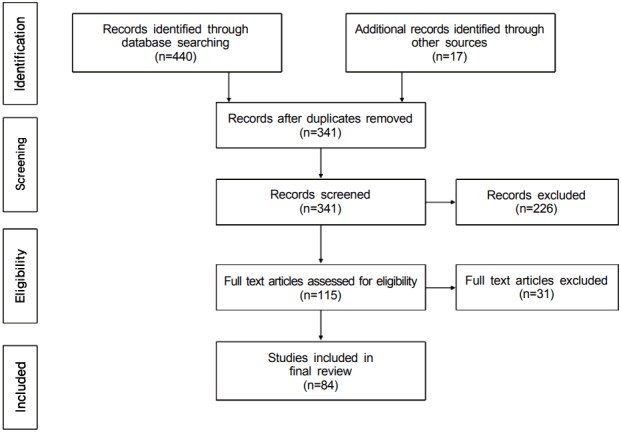
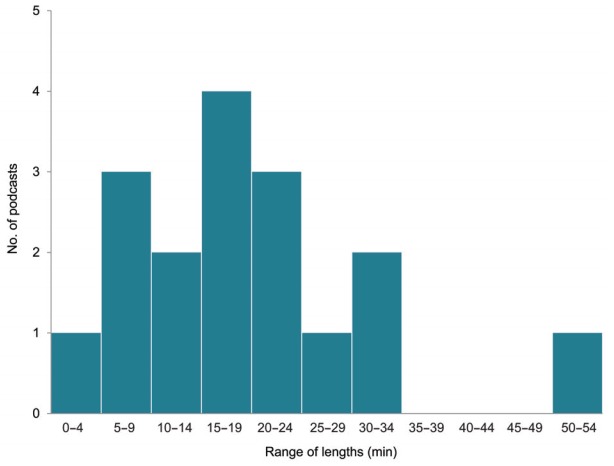
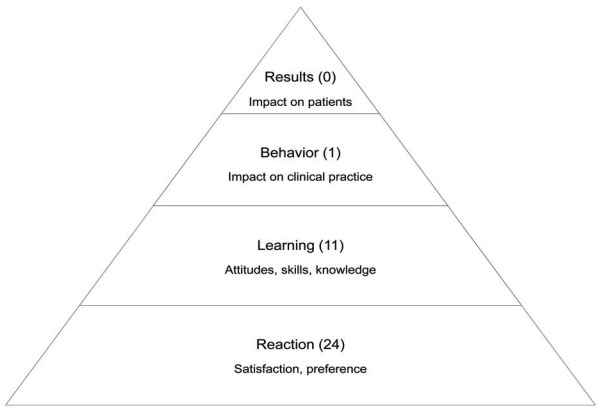
Podcasts are increasingly being used for medical education, both within teaching institutions and on an international scale by major journals. To date, there are no evidence-based guidelines for the development of educational podcasts. To review the state of the literature, MEDLINE, SCOPUS, and ERIC were searched in May 2016 for articles describing audio format podcasts used in medical education. Eighty-four articles met inclusion criteria. A qualitative synthesis of the evidence was done using Kirkpatrick's model for evaluating outcomes. Twenty-four articles described reaction outcomes, eleven described learning outcomes, and one described behavioral outcomes. None measured patient impact. The literature demonstrates that podcasts are both feasible and accepted by learners. The mean length of reported podcasts was 18 minutes, which falls within the recommended range in at least one paper, and is consistent with reported listener preference. Interview format, clear disclosures, and accurate information were reported as desirable. There is limited evidence showing the efficacy of podcasts as teaching tools, or regarding best practices in making podcasts. More rigorous studies evaluating efficacy, changes in behavior, and changes in patient outcomes need to be performed in order to prove podcasts' value and to justify production costs.
Keywords: Continuing medical education; Graduate medical education; Medical education; Webcasts as topic.
Conflict of interest statement
None.
Figures
References
-
- Fletcher S, Watson AA. Magnetic tape recording in the teaching of histopathology. Br J Med Educ. 1968;2(4):283–292. - PubMed
-
- Hammersley B. The Guardian; Audible revolution. https://www.theguardian.com/media/2004/feb/12/broadcasting.digitalmedia. Published February 12, 2004. Accessed August 29, 2016.
-
- Cadogan M, Thoma B, Chan TM, Lin M. Free Open Access Meducation (FOAM): the rise of emergency medicine and critical care blogs and podcasts (2002-2013) Emerg Med J. 2014;31(e1):e76–e77. - PubMed
-
- Sandars J. Twelve tips for using podcasts in medical education. Med Teach. 2009;31(5):387–389. - PubMed
Publication types
MeSH terms
LinkOut - more resources
Full Text Sources
Other Literature Sources
Miscellaneous
