


Egr-1 regulates RTA transcription through a cooperative involvement of transcriptional regulators
- PMID: 29207655
- PMCID: PMC5710935
- DOI: 10.18632/oncotarget.20648
Egr-1 regulates RTA transcription through a cooperative involvement of transcriptional regulators
Abstract
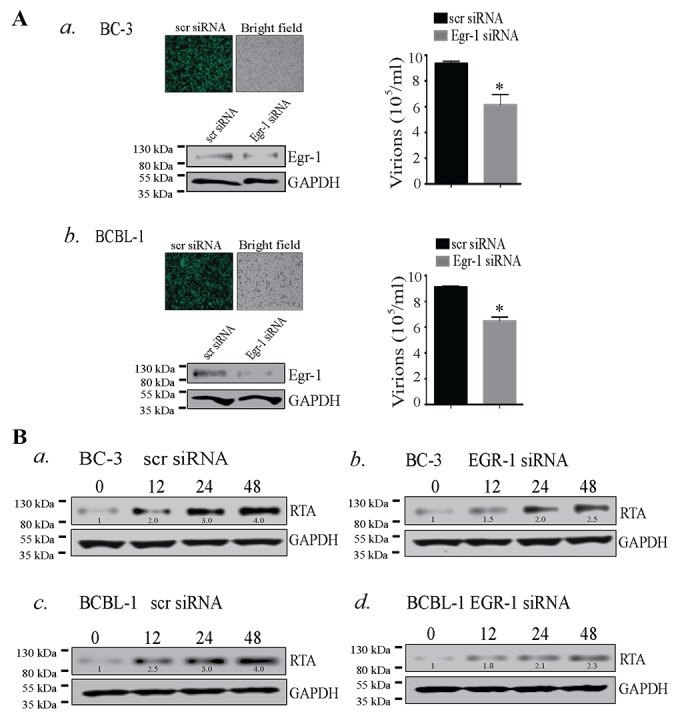
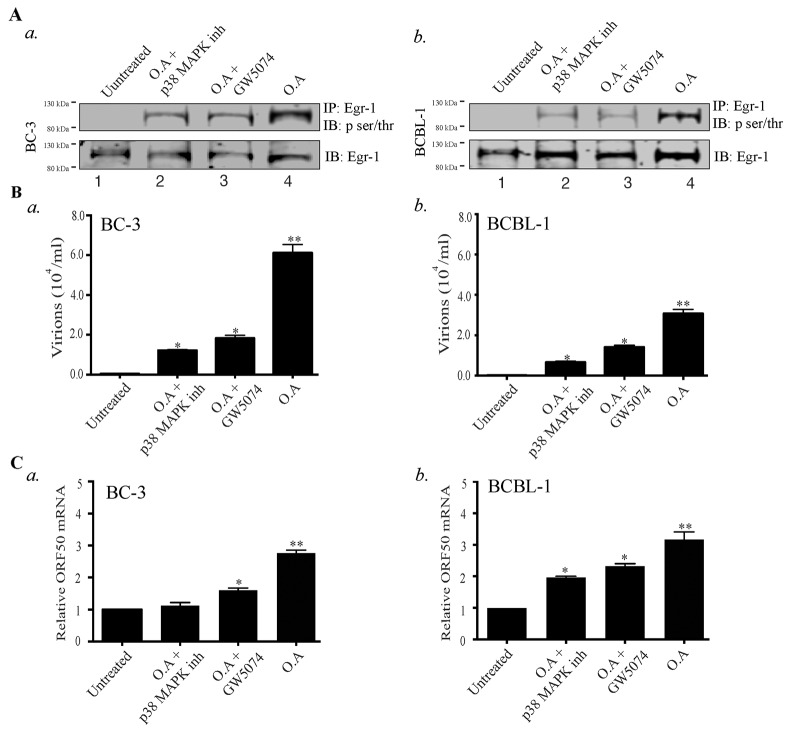
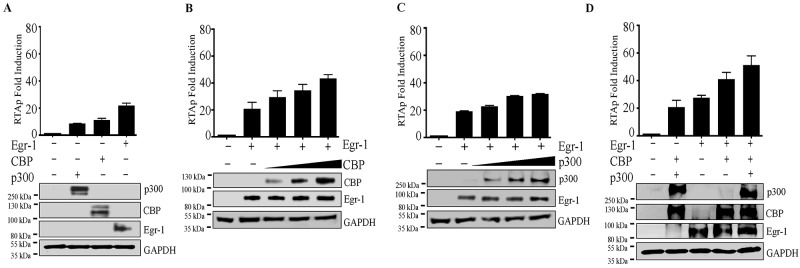
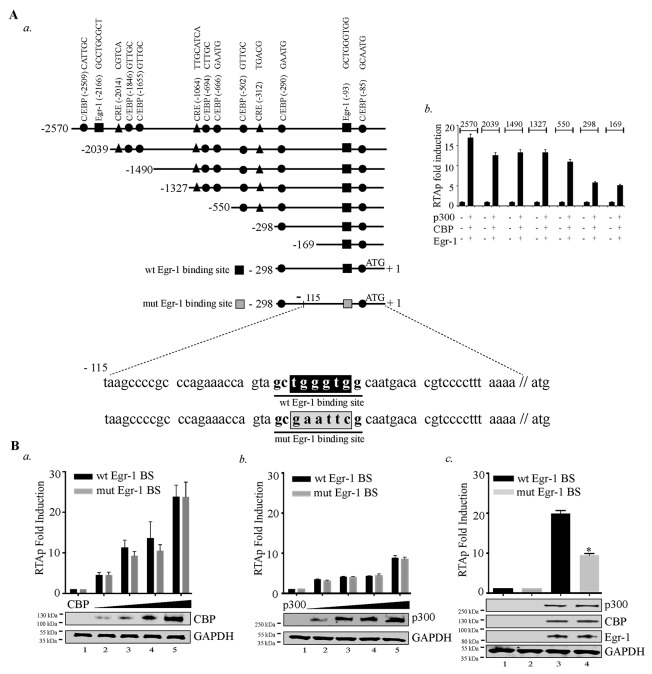
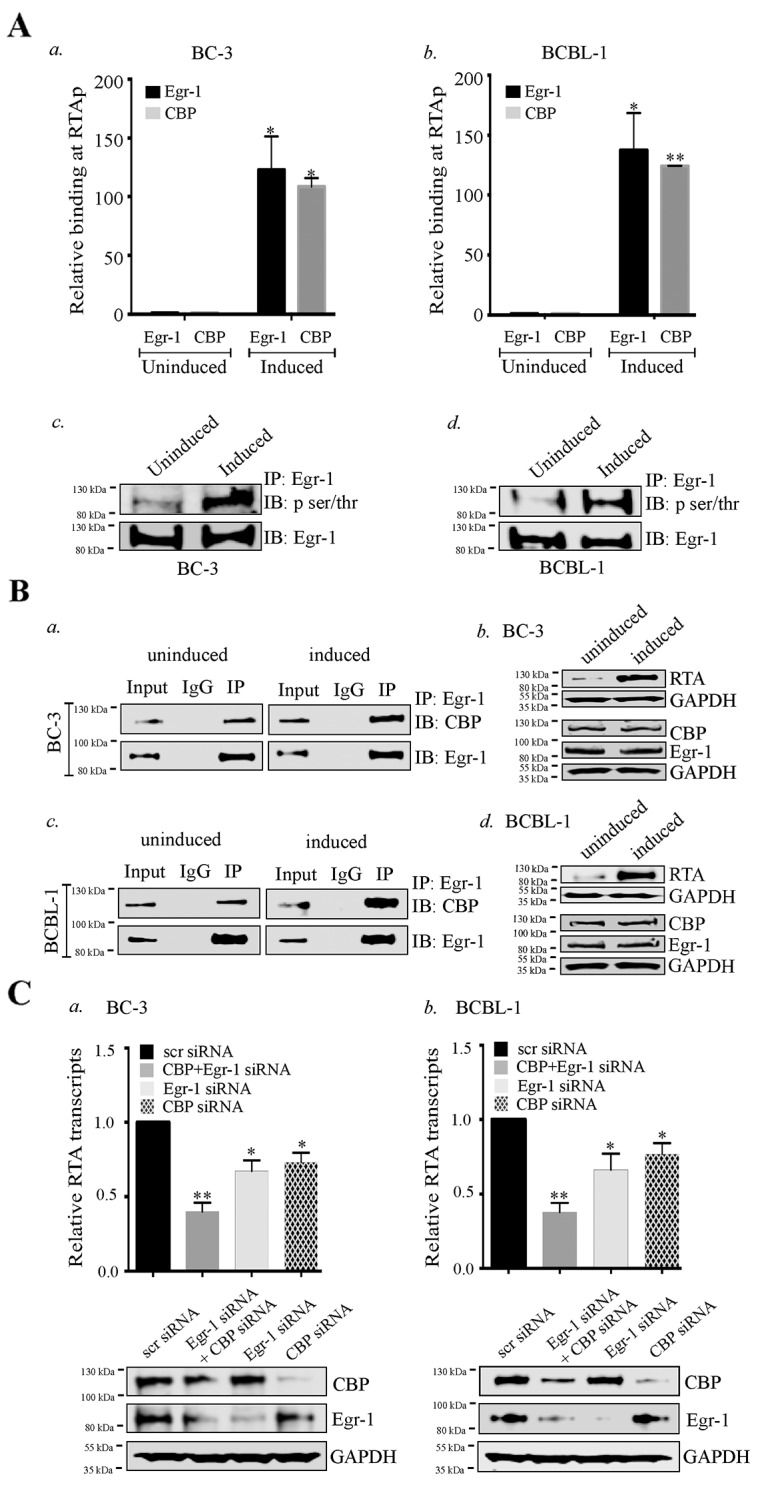
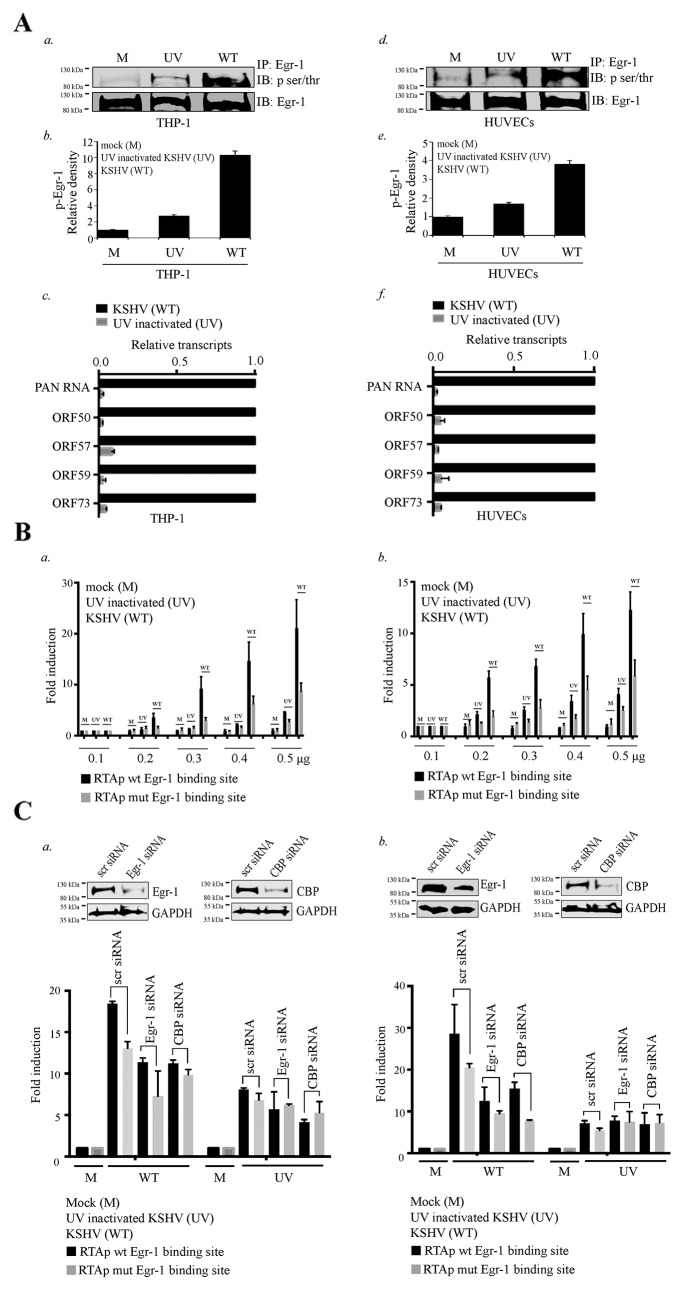
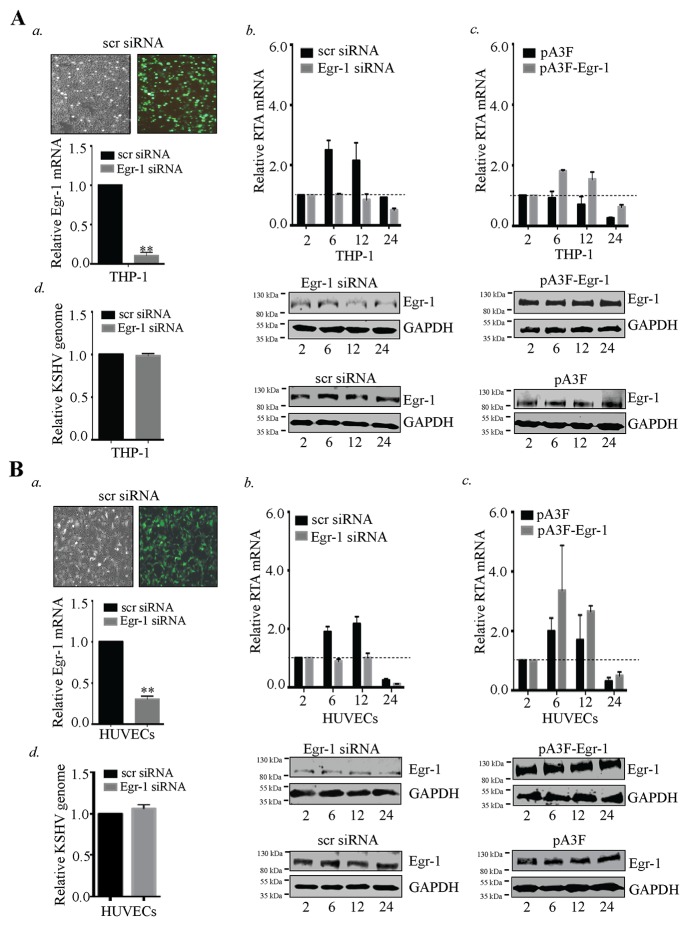
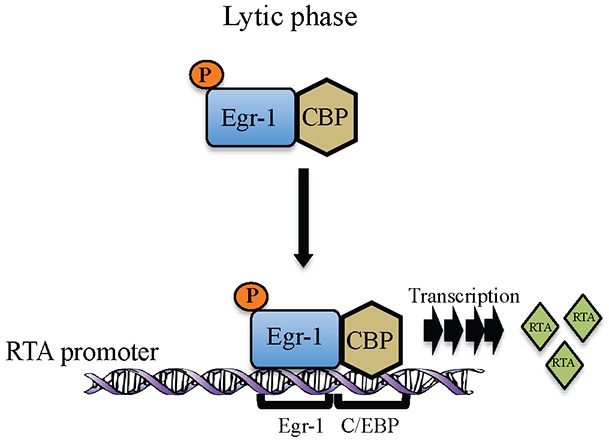
Kaposi's sarcoma associated herpesvirus (KSHV) regulates the host cellular environment to establish life-long persistent infection by manipulating cellular signaling pathways, with approximately 1- 5% of cells undergoing lytic reactivation during the course of infection. Egr-1 (Early Growth Response Factor-1) is one such cellular transcription factor, which gets phosphorylated during the lytic phase of viral life cycle to perpetrate its function. This study demonstrates the mechanism of how Egr-1 mediates transcription of the immediate early gene, RTA (Replication and transcription activator), which is the lytic switch gene of KSHV. Egr-1 depleted KSHV infected cells exhibited reduced expression of RTA. Also, an increase in Egr-1 phosphorylation led to a higher virion production, which was suppressed in the presence of p38 and Raf inhibitors. Reporter assays showed that coexpression of Egr-1 and CBP (CREB-binding protein) enhances RTA promoter activity as compared to the expression of either Egr-1 or CBP alone. Binding of Egr-1 and CBP at RTA promoter was analyzed by chromatin immunoprecipitation assay (ChIP), which showed an enhanced accumulation during viral reactivation. Mutation in Egr-1 binding site of the RTA promoter eliminated Egr-1 response on promoter activation. Furthermore, de novo infection of THP-1 (monocytic) and HUVECs (endothelial) cells showed an upregulation of Egr-1 phosphorylation, whereas depletion of Egr-1 reduced the mRNA levels of RTA during primary infection. Together, these results demonstrate a cooperative role of Egr-1 and CBP in mediating RTA transcription, which significantly improves our understanding of the involvement of cellular factors controlling RTA transcription in KSHV pathogenesis.
Keywords: CBP; Egr-1; KSHV; RTA; lytic reactivation.
Conflict of interest statement
CONFLICTS OF INTEREST The authors have declared that no competing interest exists.
Figures
References
-
- Soulier J, Grollet L, Oksenhendler E, Cacoub P, Cazals-Hatem D, Babinet P, d’Agay MF, Clauvel JP, Raphael M, Degos L. Kaposi’s sarcoma-associated herpesvirus-like DNA sequences in multicentric Castleman’s disease. Blood. 1995;86:1276–80. - PubMed
-
- Cesarman E. Gammaherpesviruses and lymphoproliferative disorders. Annu Rev Pathol. 2014;9:349–72. https://doi.org/10.1146/annurev-pathol-012513-104656. - DOI - PubMed
-
- Cai Q, Verma SC, Lu J, Robertson ES. Molecular biology of Kaposi’s sarcoma-associated herpesvirus and related oncogenesis. Adv Virus Res. 2010;78:87–142. https://doi.org/10.1016/B978-0-12-385032-4.00003-3. - DOI - PMC - PubMed
-
- Chang Y, Cesarman E, Pessin MS, Lee F, Culpepper J, Knowles DM, Moore PS. Identification of herpesvirus-like DNA sequences in AIDS-associated Kaposi’s sarcoma. Science. 1994;266:1865–9. - PubMed
-
- Wang HW, Trotter MW, Lagos D, Bourboulia D, Henderson S, Makinen T, Elliman S, Flanagan AM, Alitalo K, Boshoff C. Kaposi sarcoma herpesvirus-induced cellular reprogramming contributes to the lymphatic endothelial gene expression in Kaposi sarcoma. Nat Genet. 2004;36:687–93. https://doi.org/10.1038/ng1384. - DOI - PubMed
Grants and funding
LinkOut - more resources
Full Text Sources
Other Literature Sources
Research Materials
Miscellaneous
