


A partially supervised physical activity program for adult and adolescent survivors of childhood cancer (SURfit): study design of a randomized controlled trial [NCT02730767]
- PMID: 29207962
- PMCID: PMC5717834
- DOI: 10.1186/s12885-017-3801-8
A partially supervised physical activity program for adult and adolescent survivors of childhood cancer (SURfit): study design of a randomized controlled trial [NCT02730767]
Abstract
Background: Beyond survival of nowadays >80%, modern childhood cancer treatment strives to preserve long-term health and quality of life. However, the majority of today's survivors suffer from short- and long-term adverse effects such as cardiovascular and pulmonary diseases, obesity, osteoporosis, fatigue, depression, and reduced physical fitness and quality of life. Regular exercise can play a major role to mitigate or prevent such late-effects. Despite this, there are no data on the effects of regular exercise in childhood cancer survivors from randomized controlled trials (RCTs). Primary outcome of the current RCT is therefore the effect of a 12-months exercise program on a composite cardiovascular disease risk score in childhood cancer survivors. Secondary outcomes are single cardiovascular disease risk factors, glycaemic control, bone health, body composition, physical fitness, physical activity, quality of life, mental health, fatigue and adverse events (safety).
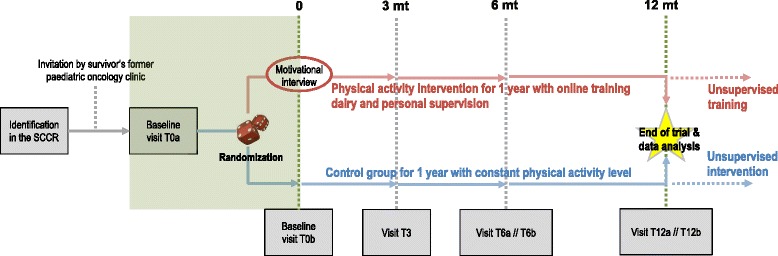
Methods: A total of 150 childhood cancer survivors aged ≥16 years and diagnosed ≥5 years prior to the study are recruited from Swiss paediatric oncology clinics. Following the baseline assessments patients are randomized 1:1 into an intervention and control group. Thereafter, they are seen at month 3, 6 and 12 for follow-up assessments. The intervention group is asked to add ≥2.5 h of intense physical activity/week, including 30 min of strength building and 2 h of aerobic exercises. In addition, they are told to reduce screen time by 25%. Regular consulting by physiotherapists, individual web-based activity diaries, and pedometer devices are used as motivational tools for the intervention group. The control group is asked to keep their physical activity levels constant.
Discussion: The results of this study will show whether a partially supervised exercise intervention can improve cardiovascular disease risk factors, bone health, body composition, physical activity and fitness, fatigue, mental health and quality of life in childhood cancer survivors. If the program will be effective, all relevant information of the SURfit physical activity intervention will be made available to interested clinics that treat and follow-up childhood cancer patients to promote exercise in their patients.
Trial registration: Prospectively registered in clinicaltrials.gov [ NCT02730767 ], registration date: 10.12.2015.
Keywords: Body composition; Bone health; Cardiovascular disease; Childhood cancer survivors; Exercise intervention; Late-effects; Physical activity; Physical fitness; Quality of life; Randomized controlled trial.
Conflict of interest statement
Ethics approval and consent to participate
The study was approved by the Swiss Ethics Committees on research involving humans (Ehtikkommision Nordwest- und Zentralschweiz [EKNZ]; reference number: EKNZ-2015-169). Informed Consent as documented by signature is obtained from each survivor prior to participation in the study.
Consent for publication
Not applicable (this manuscript does not contain data from any individual person).
Competing interests
The authors declare that they have no competing interests.
Publisher’s Note
Springer Nature remains neutral with regard to jurisdictional claims in published maps and institutional affiliations.
Figures
References
-
- Gatta G, Corazziari I, Magnani C, Peris-Bonet R, Roazzi P, Stiller C. Childhood cancer survival in Europe. Ann Onc. 2003;14(5):119–127. - PubMed
-
- Gatta G, Zigon G, Capocaccia R, Coebergh JW, Desandes E, Kaatsch P, Pastore G, Peris-Bonet R, Stiller CA. Survival of European children and young adults with cancer diagnosed 1995-2002. Eur J Cancer. 2009;45(6):992–1005. - PubMed
-
- Mitter V, Michel G, Strippoli M-PF, Rueegg CS, Rebholz CE, Feller M, Hau E, Reck M, Niggli F, Hengartner H, et al. The Swiss childhood cancer registry. Annual report 2009/2010. Bern: Institute of Social and Preventive Medicine, University of Bern; 2011.
-
- Alvarez JA, Scully RE, Miller TL, Armstrong FD, Constine LS, Friedman DL, Lipshultz SE. Long-term effects of treatments for childhood cancers. Curr Opin Pediatr. 2007;19(1):23–31. - PubMed
-
- Berkman AM, Lakoski SG. A Review of cardiorespiratory fitness in adolescent and young adult survivors of childhood cancer: factors that affect its decline and opportunities for intervention. J Adolesc Young Adult Oncol. 2016;5(1):8–15. - PubMed
MeSH terms
Associated data
Grants and funding
LinkOut - more resources
Full Text Sources
Other Literature Sources
Medical
