


Molecular etiological profile of atypical bacterial pathogens, viruses and coinfections among infants and children with community acquired pneumonia admitted to a national hospital in Lima, Peru
- PMID: 29208015
- PMCID: PMC5718007
- DOI: 10.1186/s13104-017-3000-3
Molecular etiological profile of atypical bacterial pathogens, viruses and coinfections among infants and children with community acquired pneumonia admitted to a national hospital in Lima, Peru
Abstract
Objective: The main objective of this study was to detect the presence of 14 respiratory viruses and atypical bacteria (Mycoplasma pneumoniae, Chlamydia pneumoniae), via polymerase chain reaction in patients under 18 years old hospitalized due to community-acquired pneumonia (CAP) from Lima, Peru.
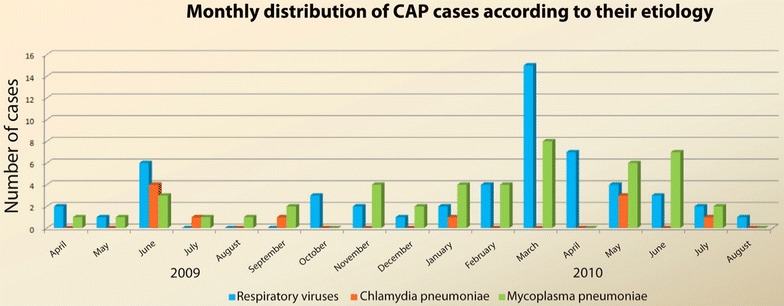
Results: Atypical pathogens were detected in 40% (58/146); viral etiologies in 36% (52/146) and coinfections in 19% (27/146). The most common etiological agent was M. pneumoniae (n = 47), followed by C. pneumoniae (n = 11). The most frequent respiratory viruses detected were: respiratory syncytial virus A (n = 35), influenza virus C (n = 21) and parainfluenza virus (n = 10). Viral-bacterial and bacterium-bacterium coinfections were found in 27 cases. In our study population, atypical bacteria (40%) were detected as frequently as respiratory viruses (36%). The presence of M. pneumoniae and C. pneumoniae should not be underestimated as they can be commonly isolated in Peruvian children with CAP.
Keywords: Atypical pathogens; CAP; Community-acquired pneumonia; Respiratory infection; Respiratory viruses.
Figures
References
-
- Nair H, Simões EAF, Rudan I, Gessner BD, Azziz-Baumgartner E, Zhang JS, et al. Global and regional burden of hospital admissions for severe acute lower respiratory infections in young children in 2010: a systematic analysis. Lancet. 2013;9875:1380–1390. doi: 10.1016/S0140-6736(12)61901-1. - DOI - PMC - PubMed
-
- UNICEF/WHO Pneumonia: the forgotten killer of children. Wkly Epidemiol Rec. 2008;83:1–16.
-
- British Thoracic Society Standards of Care Committee BTS guidelines for the management of community acquired pneumonia in childhood. Thorax. 2011;66(Suppl 2):1–23. - PubMed
MeSH terms
Grants and funding
LinkOut - more resources
Full Text Sources
Other Literature Sources
Medical
Miscellaneous
