


Altered brain morphometry in 7-year old HIV-infected children on early ART
- PMID: 29209922
- PMCID: PMC5866746
- DOI: 10.1007/s11011-017-0162-6
Altered brain morphometry in 7-year old HIV-infected children on early ART
Abstract
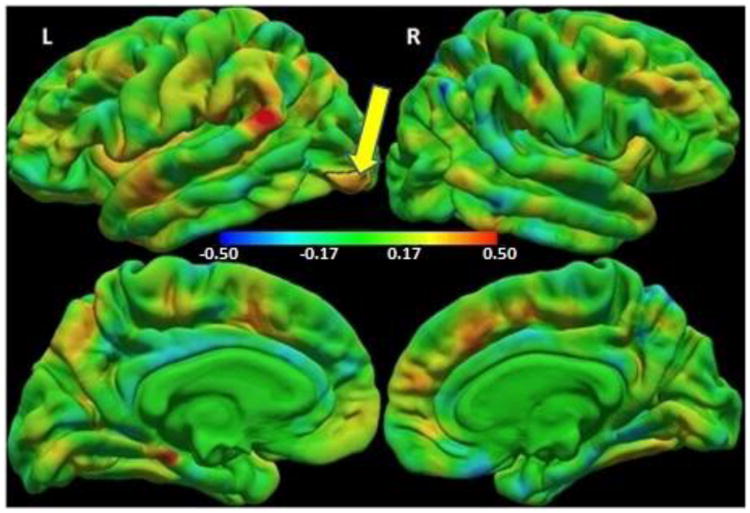
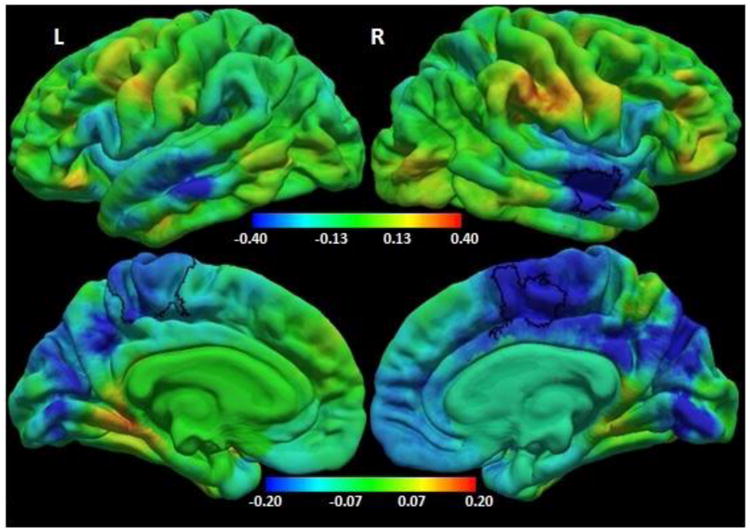
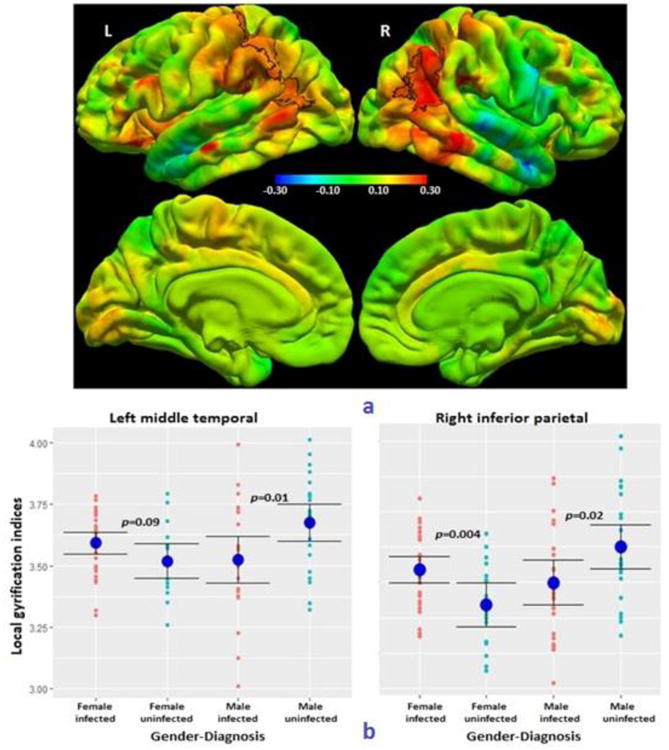
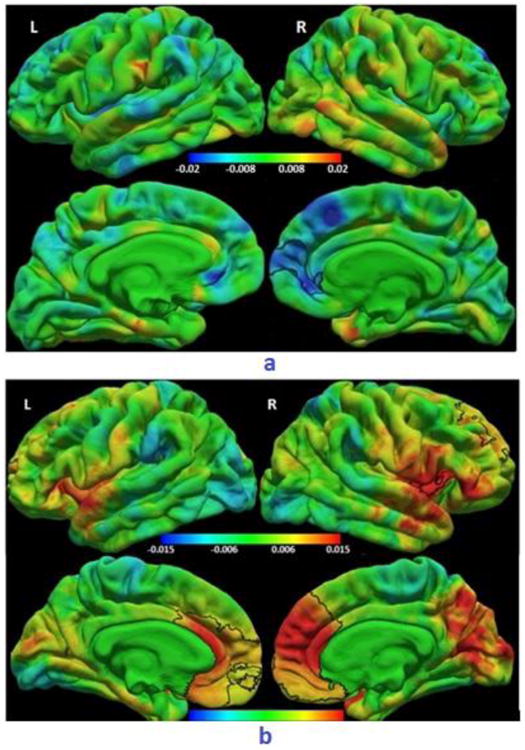
Even with the increased roll out of combination antiretroviral therapy (cART), paediatric HIV infection is associated with neurodevelopmental delays and neurocognitive deficits that may be accompanied by alterations in brain structure. Few neuroimaging studies have been done in children initiating ART before 2 years of age, and even fewer in children within the critical stage of brain development between 5 and 11 years. We hypothesized that early ART would limit HIV-related brain morphometric deficits at age 7. Study participants were 7-year old HIV-infected (HIV+) children from the Children with HIV Early Antiretroviral Therapy (CHER) trial whose viral loads were supressed at a young age, and age-matched uninfected controls. We used structural magnetic resonance imaging (MRI) and FreeSurfer ( http://www.freesurfer.net/ ) software to investigate effects of HIV and age at ART initiation on cortical thickness, gyrification and regional brain volumes. HIV+ children showed reduced gyrification compared to controls in bilateral medial parietal regions, as well as reduced volumes of the right putamen, left hippocampus, and global white and gray matter and thicker cortex in small lateral occipital region. Earlier ART initiation was associated with lower gyrification and thicker cortex in medial frontal regions. Although early ART appears to preserve cortical thickness and volumes of certain brain structures, HIV infection is nevertheless associated with reduced gyrification in the parietal cortex, and lower putamen and hippocampus volumes. Our results indicate that in early childhood gyrification is more sensitive than cortical thickness to timing of ART initiation. Future work will clarify the implications of these morphometric effects for neuropsychological function.
Keywords: Cher; Cortical thickness; Gyrification; Morphometry; Neurodevelopment; Paediatric HIV.
Conflict of interest statement
Figures
References
-
- Ackermann C, Andronikou S, Laughton B, Kidd M, Dobbels E, Innes S, van Toorn R, Cotton M. White matter signal abnormalities in children with suspected HIV-related neurologic disease on early combination antiretroviral therapy. The Pediatric infectious disease journal. 2014;33(8):e207–12. 2014. - PMC - PubMed
-
- Ackermann C, Andronikou S, Saleh MG, Laughton B, Alhamud AA, van der Kouwe A, Meintjes EM. Early Antiretroviral Therapy in HIV-Infected Children Is Associated with Diffuse White Matter Structural Abnormality and Corpus Callosum Sparing. American Journal of Neuroradiology. 2016;37(12):2363–2369. - PMC - PubMed
-
- Andronikou S, Ackermann C, Laughton B, Cotton M, Tomazos N, Spottiswoode B, Mauff K, Pettifor JM. Corpus callosum thickness on mid-sagittal MRI as a marker of brain volume: a pilot study in children with HIV-related brain disease and controls. Pediatric radiology. 2015;45(7):1016–1025. - PubMed
-
- Benjamini Y, Hochberg Y. Controlling the false discovery rate: a practical and powerful approach to multiple testing. Journal of the royal statistical society Series B (Methodological) 1995:289–300.
Publication types
MeSH terms
Substances
Grants and funding
LinkOut - more resources
Full Text Sources
Other Literature Sources
Medical
