


Association between attention bias to threat and anxiety symptoms in children and adolescents
- PMID: 29212134
- PMCID: PMC6342553
- DOI: 10.1002/da.22706
Association between attention bias to threat and anxiety symptoms in children and adolescents
Abstract
Background: Considerable research links threat-related attention biases to anxiety symptoms in adults, whereas extant findings on threat biases in youth are limited and mixed. Inconsistent findings may arise due to substantial methodological variability and limited sample sizes, emphasizing the need for systematic research on large samples. The aim of this report is to examine the association between threat bias and pediatric anxiety symptoms using standardized measures in a large, international, multi-site youth sample.
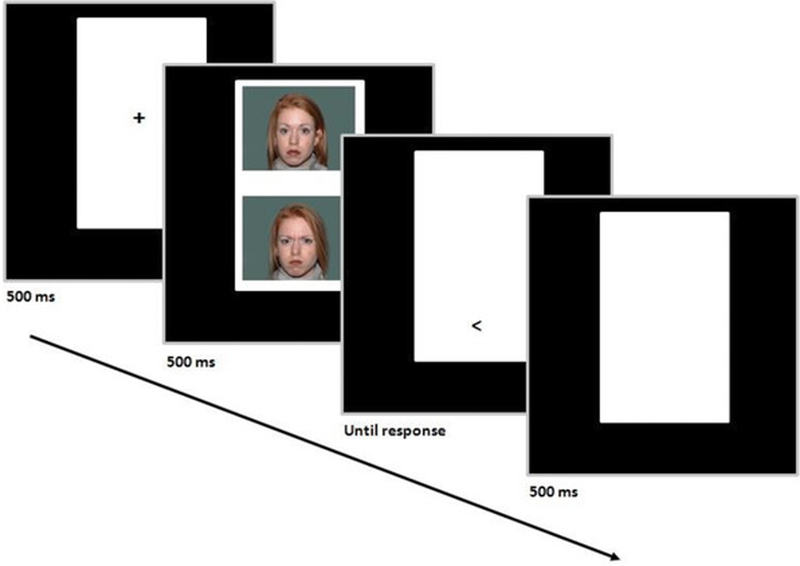
Methods: A total of 1,291 children and adolescents from seven research sites worldwide completed standardized attention bias assessment task (dot-probe task) and child anxiety symptoms measure (Screen for Child Anxiety Related Emotional Disorders). Using a dimensional approach to symptomatology, we conducted regression analyses predicting overall, and disorder-specific, anxiety symptoms severity, based on threat bias scores.
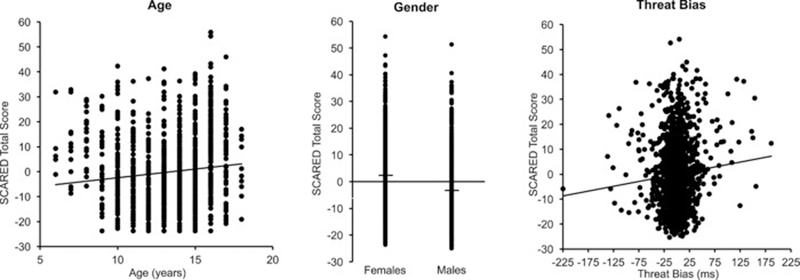
Results: Threat bias correlated positively with overall anxiety symptoms severity (ß = 0.078, P = .004). Furthermore, threat bias was positively associated specifically with social anxiety (ß = 0.072, P = .008) and school phobia (ß = 0.076, P = .006) symptoms severity, but not with panic, generalized anxiety, or separation anxiety symptoms. These associations were not moderated by age or gender.
Conclusions: These findings indicate associations between threat bias and pediatric anxiety symptoms, and suggest that vigilance to external threats manifests more prominently in symptoms of social anxiety and school phobia, regardless of age and gender. These findings point to the role of attention bias to threat in anxiety, with implications for translational clinical research. The significance of applying standardized methods in multi-site collaborations for overcoming challenges inherent to clinical research is discussed.
Keywords: GAD/generalized anxiety disorder; SAD/social anxiety disorder/social phobia; anxiety/anxiety disorders; biological markers; child/adolescent; computer/internet technology; international; phobia/phobic disorders; separation anxiety.
© 2017 Wiley Periodicals, Inc.
Conflict of interest statement
CONFLICT OF INTEREST
All authors declare that they have no conflict of interest.
Figures
References
-
- Abend R, Pine DS, & Bar-Haim Y (2014). The TAU-NIMH attention bias measurement toolbox Retrieved from https://people.socsci.tau.ac.il/mu/anxietytrauma/research/
-
- Allen LB, White KS, Barlow DH, Shear MK, Gorman JM, & Woods SW (2010). Cognitive-Behavior Therapy (CBT) for panic disorder: Relationship of anxiety and depression comorbidity with treatment outcome. Journal of Psychopathology and Behavioral Assessment, 32(2), 185–192. 10.1007/s10862-009-9151-3 - DOI - PMC - PubMed
-
- Asendorpf JB, Conner M, De Fruyt F, De Houwer J, Denissen JJA, Fiedler K, … Wicherts JM (2013). Recommendations for increasing replicability in psychology. European Journal of Personality, 27(2), 108–119. 10.1002/per.1919 - DOI
Publication types
MeSH terms
Grants and funding
LinkOut - more resources
Full Text Sources
Other Literature Sources
Medical
