


CMG2 Expression Is an Independent Prognostic Factor for Soft Tissue Sarcoma Patients
- PMID: 29215551
- PMCID: PMC5751250
- DOI: 10.3390/ijms18122648
CMG2 Expression Is an Independent Prognostic Factor for Soft Tissue Sarcoma Patients
Abstract
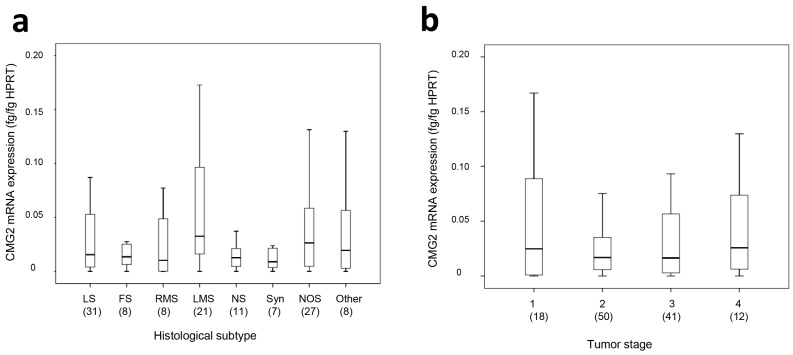
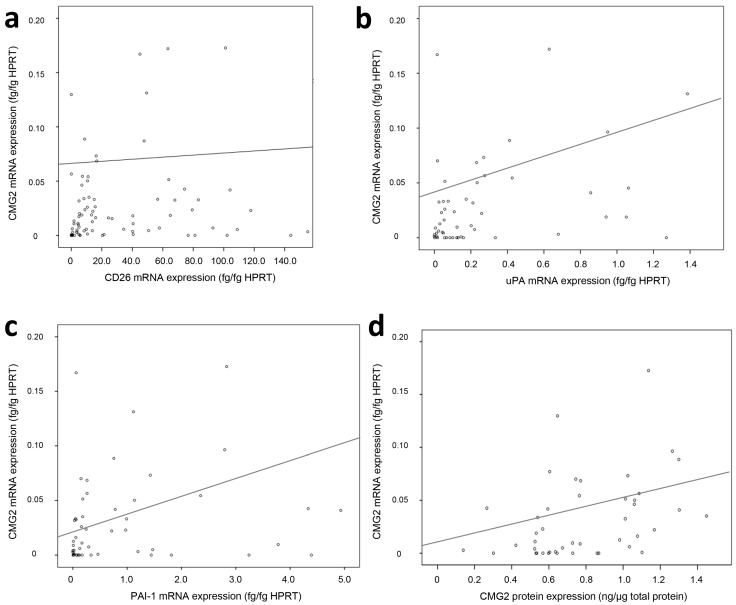
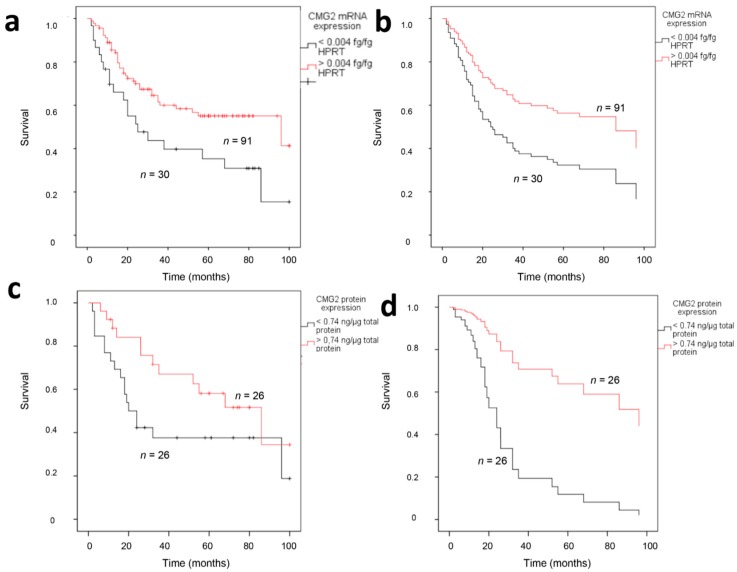
The capillary morphogenesis gene 2 (CMG2), also known as the anthrax toxin receptor 2 (ANTXR2), is a transmembrane protein putatively involved in extracellular matrix (ECM) adhesion and tissue remodeling. CMG2 promotes endothelial cell proliferation and exhibits angiogenic properties. Its downregulation is associated with a worsened survival of breast carcinoma patients. Aim of this study was to analyze the CMG2 mRNA and protein expression in soft tissue sarcoma and their association with patient outcome. CMG2 mRNA was measured in 121 tumor samples of soft tissue sarcoma patients using quantitative real-time PCR. CMG2 protein was evaluated in 52 tumor samples by ELISA. CMG2 mRNA was significantly correlated with the corresponding CMG2 protein expression (rs = 0.31; p = 0.027). CMG2 mRNA expression was associated with the mRNA expressions of several ECM and tissue remodeling enzymes, among them CD26 and components of the uPA system. Low CMG2 mRNA expression was correlated with a worsened patients' disease-specific survival in Kaplan-Meier analyses (mean patient survival was 25 vs. 96 months; p = 0.013), especially in high-stage tumors. A decreased CMG2 expression is a negative prognostic factor for soft tissue sarcoma patients. CMG2 may be an interesting candidate gene for the further exploration of soft tissue sarcoma genesis and progression.
Keywords: CMG2; outcome; pathobiology; soft tissue sarcoma.
Conflict of interest statement
The authors declare no conflict of interest.
Figures
References
-
- Katenkamp D., Kosmehl H. Heterogeneity in malignant soft tissue tumors. Curr. Top. Pathol. 1995;89:123–151. - PubMed
-
- Ferrari A., Sultan I., Huang T.T., Rodriguez-Galindo C., Shehadeh A., Meazza C., Ness K.K., Casanova M., Spunt S.L. Soft tissue sarcoma across the age spectrum: A population-based study from the Surveillance Epidemiology and End Results database. Pediatr. Blood Cancer. 2011;57:943–949. doi: 10.1002/pbc.23252. - DOI - PMC - PubMed
MeSH terms
Substances
LinkOut - more resources
Full Text Sources
Other Literature Sources
Medical
Miscellaneous
