A thermostable messenger RNA based vaccine against rabies
- PMID: 29216187
- PMCID: PMC5737050
- DOI: 10.1371/journal.pntd.0006108
A thermostable messenger RNA based vaccine against rabies
Abstract
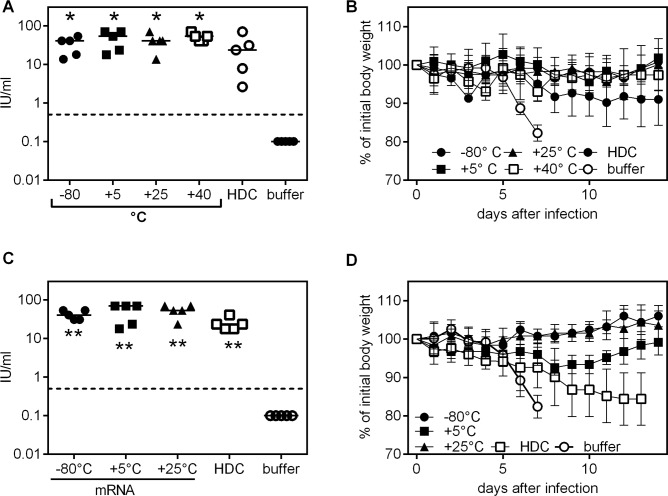
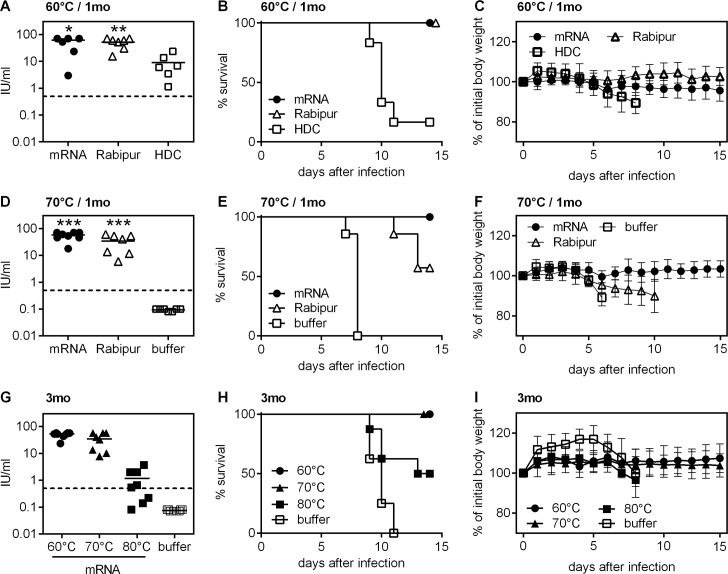
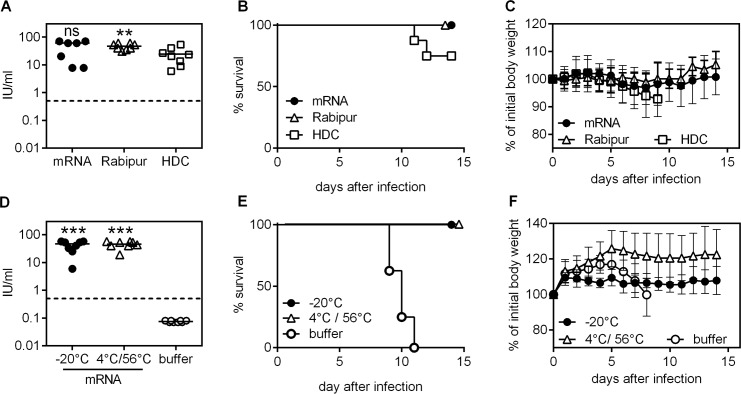
Although effective rabies virus vaccines have been existing for decades, each year, rabies virus infections still cause around 50.000 fatalities worldwide. Most of these cases occur in developing countries, where these vaccines are not available. The reasons for this are the prohibitive high costs of cell culture or egg grown rabies virus vaccines and the lack of a functional cold chain in many regions in which rabies virus is endemic. Here, we describe the excellent temperature resistance of a non-replicating mRNA based rabies virus vaccine encoding the rabies virus glycoprotein (RABV-G). Prolonged storage of the vaccine from -80°C to up to +70°C for several months did not impact the protective capacity of the mRNA vaccine. Efficacy after storage was demonstrated by the induction of rabies specific virus neutralizing antibodies and protection in mice against lethal rabies infection. Moreover, storing the vaccine at oscillating temperatures between +4° and +56°C for 20 cycles in order to simulate interruptions of the cold chain during vaccine transport, did not affect the vaccine's immunogenicity and protective characteristics, indicating that maintenance of a cold chain is not essential for this vaccine.
Conflict of interest statement
I have read the journal's policy and the authors of this manuscript have the following competing interests: L.S., M.S., D.V., S.R., T.M., T.Ke., T.Kr. and B.P. are inventors on patent applications comprising different aspects of mRNA vaccines. M.S., S.R., T.M., T.Ke. and B.P. are employees of CureVac, a company developing mRNA based vaccines and therapeutics. A.V. is employee of BioNTech RNA Pharmaceuticals, a company developing mRNA vaccines and therapeutics.
Figures
References
-
- Kristensen D, Chen D, Cummings R (2011) Vaccine stabilization: research, commercialization, and potential impact. Vaccine 29: 7122–7124. doi: 10.1016/j.vaccine.2011.05.070 - DOI - PubMed
-
- Matthias DM, Robertson J, Garrison MM, Newland S, Nelson C (2007) Freezing temperatures in the vaccine cold chain: a systematic literature review. Vaccine 25: 3980–3986. doi: 10.1016/j.vaccine.2007.02.052 - DOI - PubMed
-
- Wirkas T, Toikilik S, Miller N, Morgan C, Clements CJ (2007) A vaccine cold chain freezing study in PNG highlights technology needs for hot climate countries. Vaccine 25: 691–697. doi: 10.1016/j.vaccine.2006.08.028 - DOI - PubMed
-
- Chen D, Tyagi A, Carpenter J, Perkins S, Sylvester D, et al. (2009) Characterization of the freeze sensitivity of a hepatitis B vaccine. Hum Vaccin 5: 26–32. - PubMed
-
- Chen D, Kristensen D (2009) Opportunities and challenges of developing thermostable vaccines. Expert Rev Vaccines 8: 547–557. doi: 10.1586/erv.09.20 - DOI - PubMed
MeSH terms
Substances
LinkOut - more resources
Full Text Sources
Other Literature Sources
Medical