


Use of HuH6 and other human-derived hepatoma lines for the detection of genotoxins: a new hope for laboratory animals?
- PMID: 29218508
- PMCID: PMC5818615
- DOI: 10.1007/s00204-017-2109-4
Use of HuH6 and other human-derived hepatoma lines for the detection of genotoxins: a new hope for laboratory animals?
Abstract
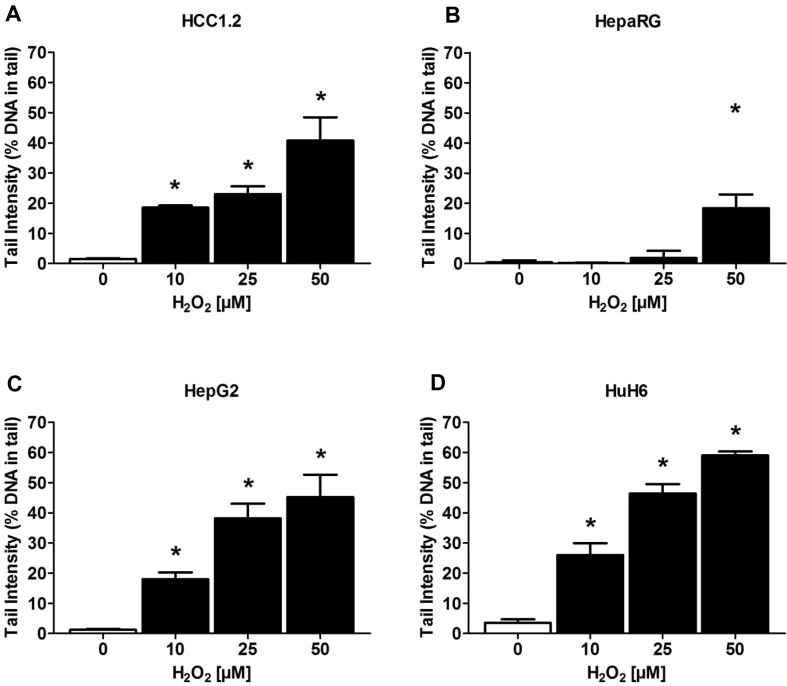
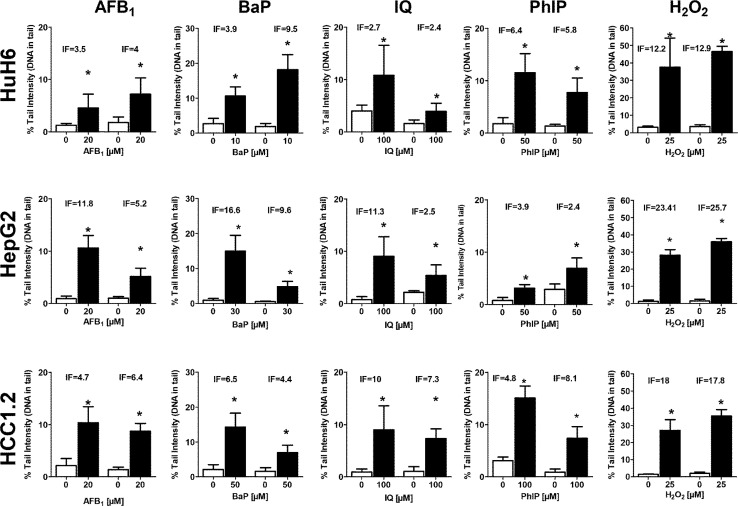
Cell lines which are currently used in genotoxicity tests lack enzymes which activate/detoxify mutagens. Therefore, rodent-derived liver preparations are used which reflect their metabolism in humans only partly; as a consequence misleading results are often obtained. Previous findings suggest that certain liver cell lines express phase I/II enzymes and detect promutagens without activation; however, their use is hampered by different shortcomings. The aim of this study was the identification of a suitable cell line. The sensitivity of twelve hepatic cell lines was investigated in single cell gel electrophoresis assays. Furthermore, characteristics of these lines were studied which are relevant for their use in genotoxicity assays (mitotic activity, p53 status, chromosome number, and stability). Three lines (HuH6, HCC1.2, and HepG2) detected representatives of five classes of promutagens, namely, IQ and PhIP (HAAs), B(a)P (PAH), NDMA (nitrosamine), and AFB1 (aflatoxin), and were sensitive towards reactive oxygen species (ROS). In contrast, the commercially available line HepaRG, postulated to be a surrogate for hepatocytes and an ideal tool for mutagenicity tests, did not detect IQ and was relatively insensitive towards ROS. All other lines failed to detect two or more compounds. HCC1.2 cells have a high and unstable chromosome number and mutated p53, these features distract from its use in routine screening. HepG2 was frequently employed in earlier studies, but pronounced inter-laboratory variations were observed. HuH6 was never used in genotoxicity experiments and is highly promising, it has a stable karyotype and we demonstrated that the results of genotoxicity experiments are reproducible.
Keywords: Comet assay; Genotoxicity; Hepatic cell lines; p53.
Figures
References
MeSH terms
Substances
Grants and funding
LinkOut - more resources
Full Text Sources
Other Literature Sources
Research Materials
Miscellaneous
