


Systematic review of the relationships between combinations of movement behaviours and health indicators in the early years (0-4 years)
- PMID: 29219071
- PMCID: PMC5773877
- DOI: 10.1186/s12889-017-4851-1
Systematic review of the relationships between combinations of movement behaviours and health indicators in the early years (0-4 years)
Abstract
Background: A recent review highlighted important relationships between combinations of movement behaviours (i.e., sleep, sedentary behaviour, and physical activity) and health indicators among school-aged children and youth (aged 5-17 years). It is unclear whether similar relationships exist in younger children. Therefore, this review sought to examine the relationships between combinations of movement behaviours and health indicators in the early years (1.00 month to 4.99 years).
Methods: Medline, EMBASE, PsycINFO, and SportDiscus were searched for relevant studies up to November 2016, with no date or study design limits. Included studies met the a priori-determined population (apparently healthy children aged 1.00 month to 4.99 years), intervention (combination of ≥2 movement behaviours [i.e., sleep and sedentary behaviour; sleep and physical activity; sedentary behaviour and physical activity; and sleep, sedentary behaviour, and physical activity]), comparator (various levels and combinations of movement behaviours), and health outcome/indicator (Critical: adiposity, motor development, psychosocial health/emotional regulation, cognitive development, fitness, and growth; Important: bone and skeletal health, cardiometabolic health, and risks). For each health indicator, quality of evidence was assessed by study design using the Grading of Recommendations Assessment, Development, and Evaluation (GRADE) framework.
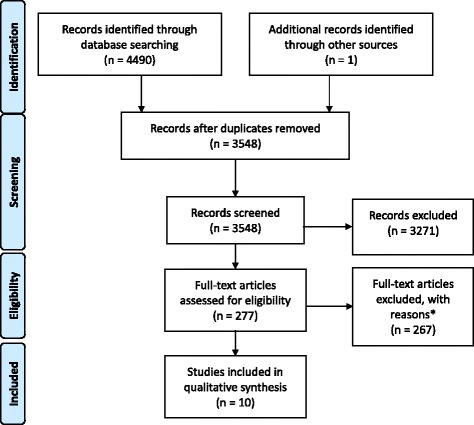
Results: Ten articles (n = 7436 participants; n = 5 countries) were included. Across observational and experimental study designs, the most ideal combinations of sedentary behaviour and physical activity were: favourably associated with motor development and fitness among preschool-aged children (3.00 to 4.99 years); both favourably and not associated with adiposity among toddlers (1.10 to 2.99 years) and preschool-aged children; and not associated with growth among toddlers and preschool-aged children. The most ideal combinations of sleep and sedentary behaviour were favourably associated with adiposity among infants (1.00 month to 1.00 years) and toddlers. Quality of evidence ranged from "very low" to "moderate".
Conclusions: The most ideal combinations of movement behaviours (e.g., high sleep, low sedentary behaviour, high physical activity) may be important for optimal health in the early years. Findings can help inform movement behaviour guidelines for the early years. Given the limited evidence, future research is needed to determine the ideal distribution of daily movement behaviours for optimal health throughout the early years.
Keywords: Adiposity; Early years; Fitness; Growth; Motor development; Movement behaviours; Physical activity; Sedentary behaviour; Sleep.
Conflict of interest statement
Ethics approval and consent to participate
Not applicable.
Consent for publication
Not applicable.
Competing interests
The authors declare that they have no competing interests.
Publisher’s Note
Springer Nature remains neutral with regard to jurisdictional claims in published maps and institutional affiliations.
Figures
References
-
- Nielsen MS, Quist JS, Chaput JP, Dalskov SM, Damsgaard CT, Ritz C, et al. Physical activity, sedentary time, and sleep and the association with inflammatory markers and adiponectin in 8- to 11-year-old Danish children. J Phys Act Health. 2016;13(6):733–739. doi: 10.1123/jpah.2015-0123. - DOI - PubMed
Publication types
MeSH terms
LinkOut - more resources
Full Text Sources
Other Literature Sources
Medical
Miscellaneous
