Engineering Hydrogel Microenvironments to Recapitulate the Stem Cell Niche
- PMID: 29220201
- PMCID: PMC7266431
- DOI: 10.1146/annurev-bioeng-062117-120954
Engineering Hydrogel Microenvironments to Recapitulate the Stem Cell Niche
Abstract
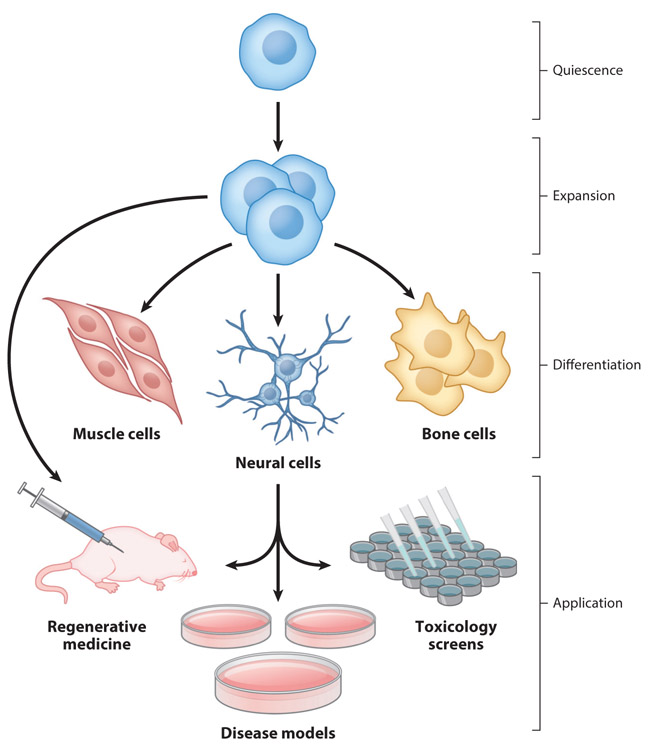
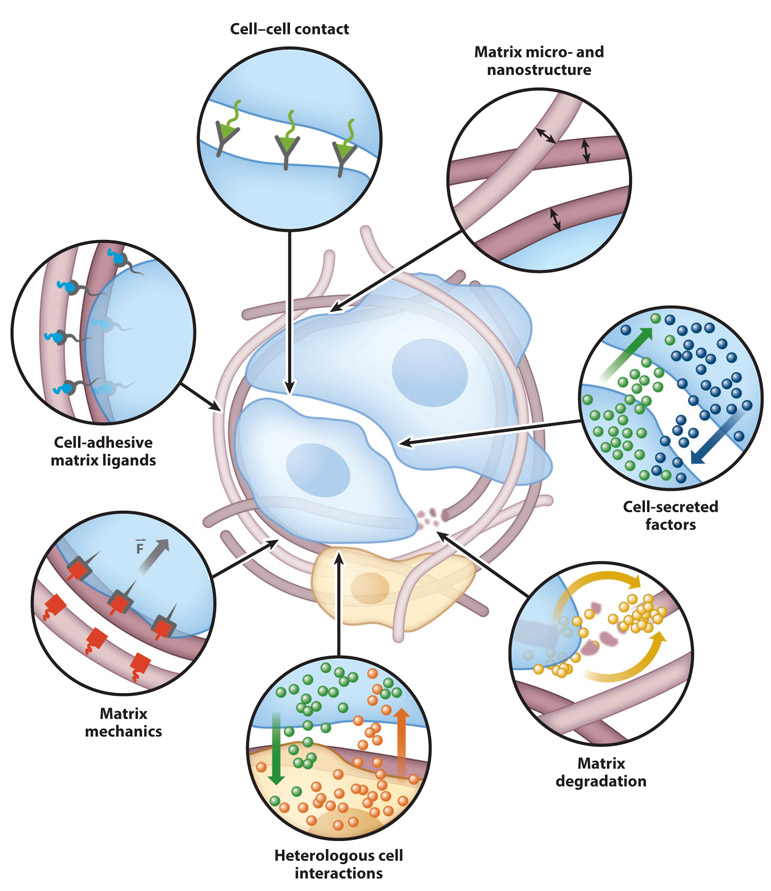
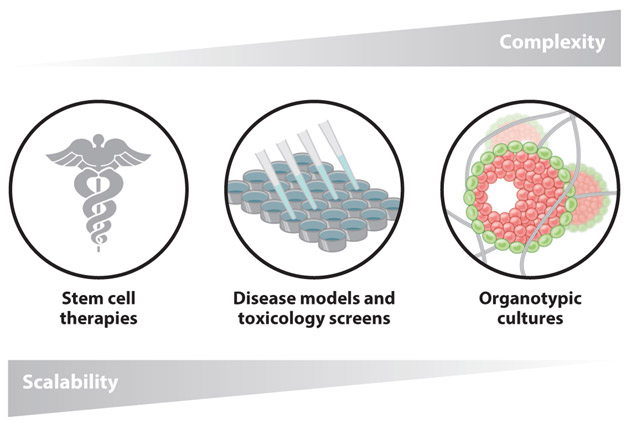
Stem cells are a powerful resource for many applications including regenerative medicine, patient-specific disease modeling, and toxicology screening. However, eliciting the desired behavior from stem cells, such as expansion in a naïve state or differentiation into a particular mature lineage, remains challenging. Drawing inspiration from the native stem cell niche, hydrogel platforms have been developed to regulate stem cell fate by controlling microenvironmental parameters including matrix mechanics, degradability, cell-adhesive ligand presentation, local microstructure, and cell-cell interactions. We survey techniques for modulating hydrogel properties and review the effects of microenvironmental parameters on maintaining stemness and controlling differentiation for a variety of stem cell types. Looking forward, we envision future hydrogel designs spanning a spectrum of complexity, ranging from simple, fully defined materials for industrial expansion of stem cells to complex, biomimetic systems for organotypic cell culture models.
Keywords: cell-adhesive ligands; cell–cell interactions; engineered cellular microenvironments; hydrogel; matrix mechanics; stem cell niche.
Figures
References
-
- Trounson A, DeWitt ND. 2016. Pluripotent stem cells progressing to the clinic. Nat. Rev. Mol. Cell. Biol 17:194–200 - PubMed
-
- Goldman S 2005. Stem and progenitor cell–based therapy of the human central nervous system. Nat. Biotechnol 23:862–71 - PubMed
-
- Scadden DT. 2006. The stem-cell niche as an entity of action. Nature 441:1075–79 - PubMed
-
- Li L, Xie T. 2005. Stem cell niche: structure and function. Annu. Rev. Cell Dev. Biol 21:605–31 - PubMed
-
- Lee KY, Mooney DJ. 2001. Hydrogels for tissue engineering. Chem. Rev 101:1869–79 - PubMed
Publication types
MeSH terms
Substances
Grants and funding
LinkOut - more resources
Full Text Sources
Other Literature Sources
Medical