


A Prospective Multi-Institutional Cohort Study of Mediastinal Infections After Cardiac Operations
- PMID: 29223421
- PMCID: PMC5877809
- DOI: 10.1016/j.athoracsur.2017.06.078
A Prospective Multi-Institutional Cohort Study of Mediastinal Infections After Cardiac Operations
Abstract
Background: Mediastinal infections are a potentially devastating complication of cardiac operations. This study analyzed the frequency, risk factors, and perioperative outcomes of mediastinal infections after cardiac operations.
Methods: In 2010, 5,158 patients enrolled in a prospective study evaluating infections after cardiac operations and their effect on readmissions and mortality for up to 65 days after the procedure. Clinical and demographic characteristics, operative variables, management practices, and outcomes were compared for patients with and without mediastinal infections, defined as deep sternal wound infection, myocarditis, pericarditis, or mediastinitis.
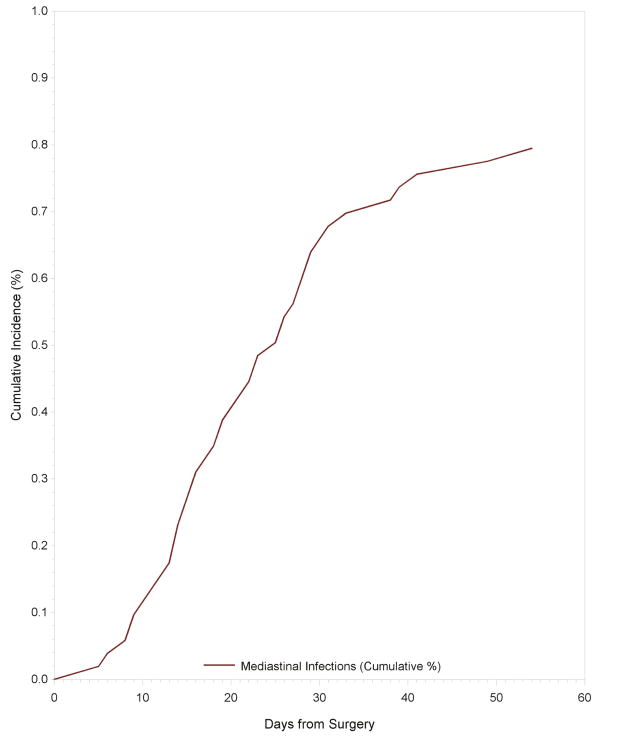
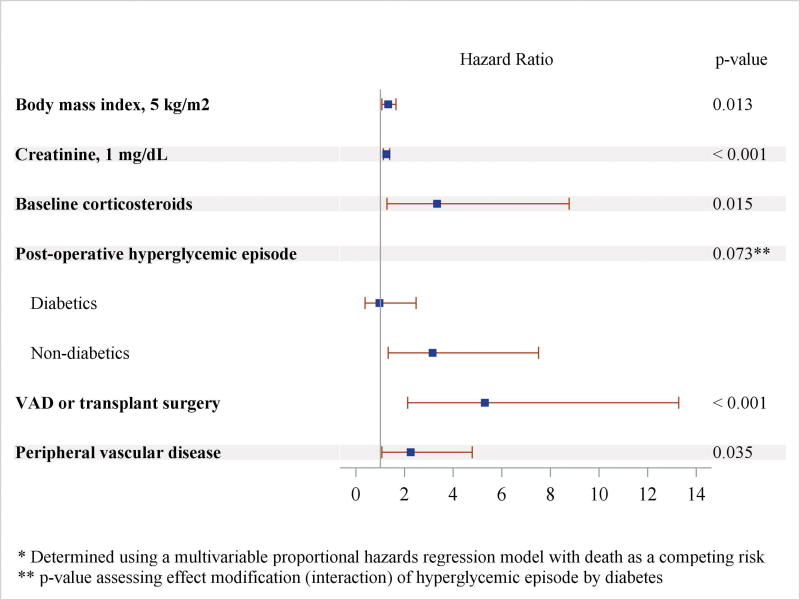
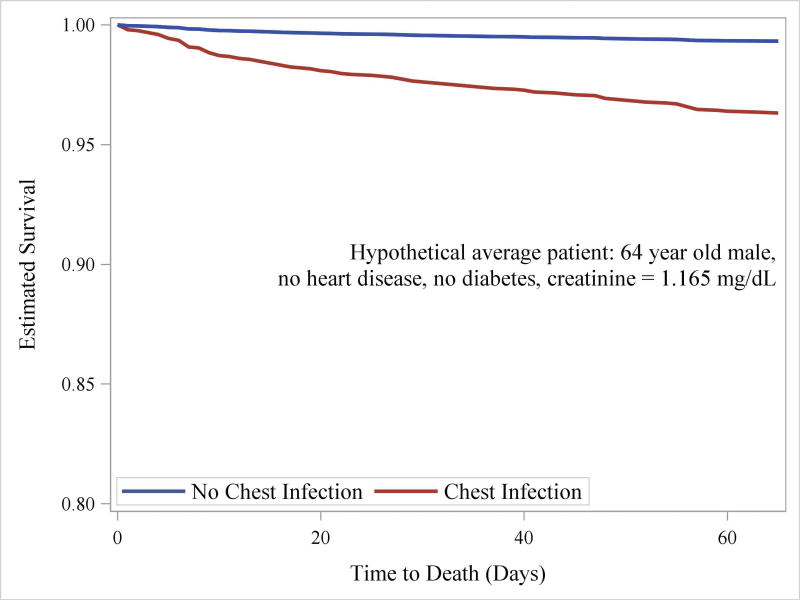
Results: There were 43 mediastinal infections in 41 patients (cumulative incidence, 0.79%; 95% confidence interval [CI] 0.60% to 1.06%). Median time to infection was 20.0 days, with 65% of infections occurring after the index hospitalization discharge. Higher body mass index (hazard ratio [HR] 1.06; 95% CI, 1.01 to 1.10), higher creatinine (HR, 1.25; 95% CI, 1.13 to 1.38), peripheral vascular disease (HR, 2.47; 95% CI, 1.21 to 5.05), preoperative corticosteroid use (HR, 3.33; 95% CI, 1.27 to 8.76), and ventricular assist device or transplant surgery (HR, 5.81; 95% CI, 2.36 to 14.33) were associated with increased risk of mediastinal infection. Postoperative hyperglycemia (HR, 3.15; 95% CI, 1.32 to 7.51) was associated with increased risk of infection in nondiabetic patients. Additional length of stay attributable to mediastinal infection was 11.5 days (bootstrap 95% CI, 1.88 to 21.11). Readmission rates and mortality were five times higher in patients with mediastinal infection than in patients without mediastinal infection.
Conclusions: Mediastinal infection after a cardiac operation is associated with substantial increases in length of stay, readmissions, and death. Reducing these infections remains a high priority, and improving post-operative glycemic management may reduce their risk in patients without diabetes.
Copyright © 2018 The Society of Thoracic Surgeons. Published by Elsevier Inc. All rights reserved.
Figures
Comment in
-
Perrault LP, Kirkwood KA, Chang HL, et al. A prospective multi-institutional cohort study of mediastinal infections after cardiac operations. Ann Thorac Surg. 2018;105(2):461-468.AORN J. 2018 Jul;108(1):95-100. doi: 10.1002/aorn.12297. AORN J. 2018. PMID: 29953614 No abstract available.
References
-
- Risnes I, Abdelnoor M, Almdahl SM, Svennevig JL. Mediastinitis after coronary artery bypass grafting risk factors and long-term survival. Ann Thorac Surg. 2010;89:1502–9. - PubMed
-
- Eklund AM, Lyytikäinen O, Klemets P, et al. Mediastinitis After More Than 10,000 Cardiac Surgical Procedures. Ann Thorac Surg. 2006;82:1784–9. - PubMed
Publication types
MeSH terms
Grants and funding
LinkOut - more resources
Full Text Sources
Other Literature Sources
Medical
