


Differences in the Activity of Endogenous Bone Morphogenetic Protein Signaling Impact on the Ability of Induced Pluripotent Stem Cells to Differentiate to Corneal Epithelial-Like Cells
- PMID: 29226476
- PMCID: PMC5839253
- DOI: 10.1002/stem.2750
Differences in the Activity of Endogenous Bone Morphogenetic Protein Signaling Impact on the Ability of Induced Pluripotent Stem Cells to Differentiate to Corneal Epithelial-Like Cells
Abstract
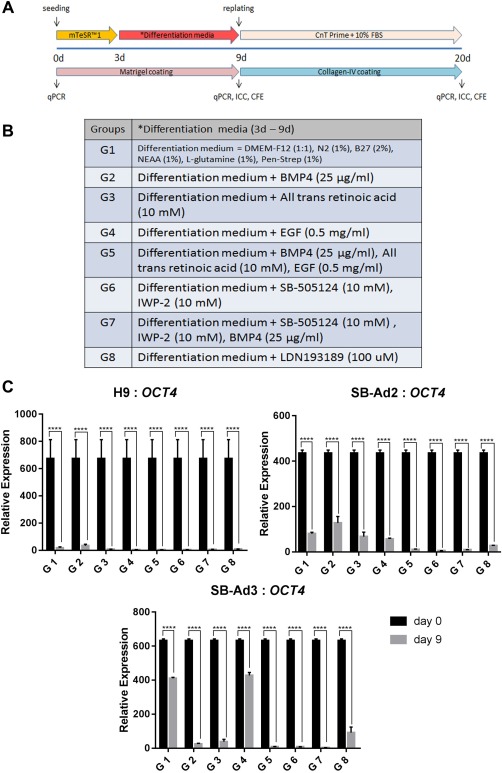
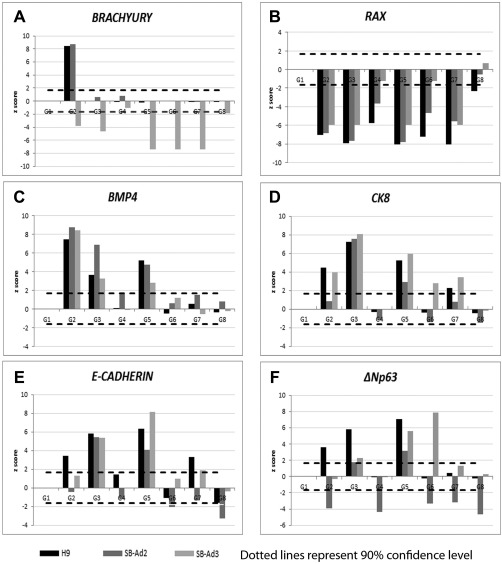
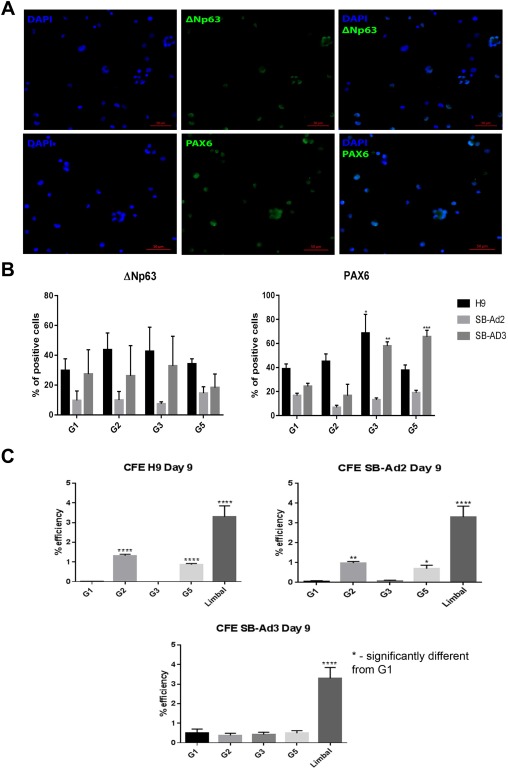
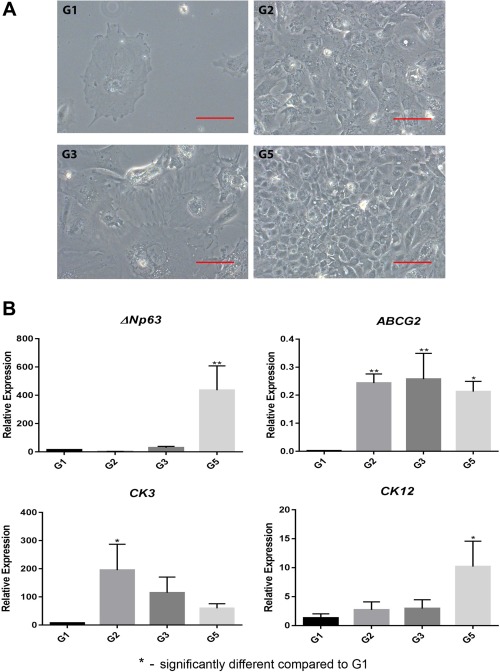
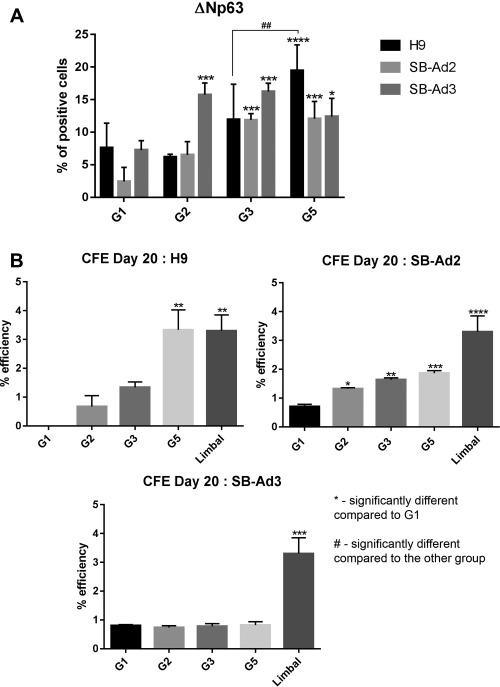
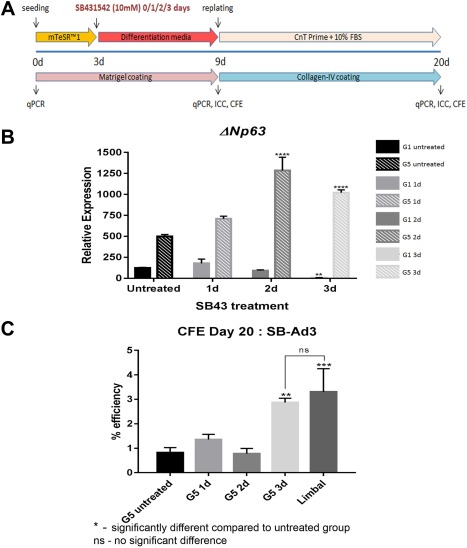
Cornea is a clear outermost layer of the eye which enables transmission of light onto the retina. The transparent corneal epithelium is regenerated by limbal stem cells (LSCs), whose loss/dysfunction results in LSCs deficiency (LSCD). Ex vivo expansion of autologous LSCs obtained from patient's healthy eye followed by transplantation onto the LSCs damaged/deficient eye, has provided a successful treatment for unilateral LSCD. However, this is not applicable to patient with total bilateral LSCD, where LSCs are lost/damaged from both eyes. We investigated the potential of human induced pluripotent stem cell (hiPSC) to differentiate into corneal epithelial-like cells as a source of autologous stem cell treatment for patients with total bilateral LSCD. Our study showed that combined addition of bone morphogenetic protein 4 (BMP4), all trans-retinoic acid and epidermal growth factor for the first 9 days of differentiation followed by cell-replating on collagen-IV-coated surfaces with a corneal-specific-epithelial cell media for an additional 11 days, resulted in step wise differentiation of human embryonic stem cells (hESC) to corneal epithelial progenitors and mature corneal epithelial-like cells. We observed differences in the ability of hiPSC lines to undergo differentiation to corneal epithelial-like cells which were dependent on the level of endogenous BMP signaling and could be restored via the activation of this signaling pathway by a specific transforming growth factor β inhibitor (SB431542). Together our data reveal a differential ability of hiPSC lines to generate corneal epithelial cells which is underlined by the activity of endogenous BMP signaling pathway. Stem Cells 2018;36:337-348.
Keywords: Bone morphogenetic protein 4; Corneal epithelial cells; Corneal epithelial progenitors; Epidermal growth factor; Human embryonic stem cell; Human induced pluripotent stem cell; Retinoic acid.
© 2017 The Authors Stem Cells published by Wiley Periodicals, Inc. on behalf of AlphaMed Press.
Figures
References
-
- Schlotzer‐Schrehardt U, Kruse FE. Identification and characterization of limbal stem cells. Exp Eye Res 2005;81:247–264. - PubMed
-
- Lu L, Reinach PS, Kao WWY. Corneal epithelial wound healing. Exp Biol Med 2001;226:653–664. - PubMed
-
- Hay ED. Development of the vertebrate cornea. Int Rev Cytol 1980;63:263–322. - PubMed
-
- Amano S, Satoru Y, Tatsuya M et al. Corneal stromal and endothelial cell precursors. Cornea 2006;25:S73–S77. - PubMed
Publication types
MeSH terms
Substances
Grants and funding
- MC_PC_15030/MRC_/Medical Research Council/United Kingdom
- PB-PG-1215-20037/DH_/Department of Health/United Kingdom
- BB/E012841/1/BB_/Biotechnology and Biological Sciences Research Council/United Kingdom
- MR/S035826/1/MRC_/Medical Research Council/United Kingdom
- G0301182/MRC_/Medical Research Council/United Kingdom
LinkOut - more resources
Full Text Sources
Other Literature Sources
