Association of Early Postresuscitation Hypotension With Survival to Discharge After Targeted Temperature Management for Pediatric Out-of-Hospital Cardiac Arrest: Secondary Analysis of a Randomized Clinical Trial
- PMID: 29228147
- PMCID: PMC6217961
- DOI: 10.1001/jamapediatrics.2017.4043
Association of Early Postresuscitation Hypotension With Survival to Discharge After Targeted Temperature Management for Pediatric Out-of-Hospital Cardiac Arrest: Secondary Analysis of a Randomized Clinical Trial
Abstract
Importance: Out-of-hospital cardiac arrest (OHCA) occurs in more than 6000 children each year in the United States, with survival rates of less than 10% and severe neurologic morbidity in many survivors. Post-cardiac arrest hypotension can occur, but its frequency and association with survival have not been well described during targeted temperature management.
Objective: To determine whether hypotension is associated with survival to discharge in children and adolescents after resuscitation from OHCA.
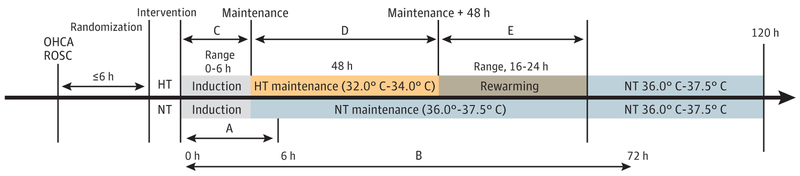
Design, setting, and participants: This post hoc secondary analysis of the Therapeutic Hypothermia After Pediatric Cardiac Arrest (THAPCA) trial included 292 pediatric patients older than 48 hours and younger than 18 years treated in 36 pediatric intensive care units from September 1, 2009, through December 31, 2012. Participants underwent therapeutic hypothermia (33.0°C) vs therapeutic normothermia (36.8°C) for 48 hours. All participants had hourly systolic blood pressure measurements documented during the initial 6 hours of temperature intervention. Hourly blood pressures beginning at the time of temperature intervention (time 0) were normalized for age, sex, and height. Early hypotension was defined as a systolic blood pressure less than the fifth percentile during the first 6 hours after temperature intervention. With use of forward stepwise logistic regression, covariates of interest (age, sex, initial cardiac rhythm, any preexisting condition, estimated duration of cardiopulmonary resuscitation [CPR], primary cause of cardiac arrest, temperature intervention group, night or weekend cardiac arrest, witnessed status, and bystander CPR) were evaluated in the final model. Data were analyzed from February 5, 2016, through June 13, 2017.
Exposures: Hypotension.
Main outcomes and measure: Survival to hospital discharge.
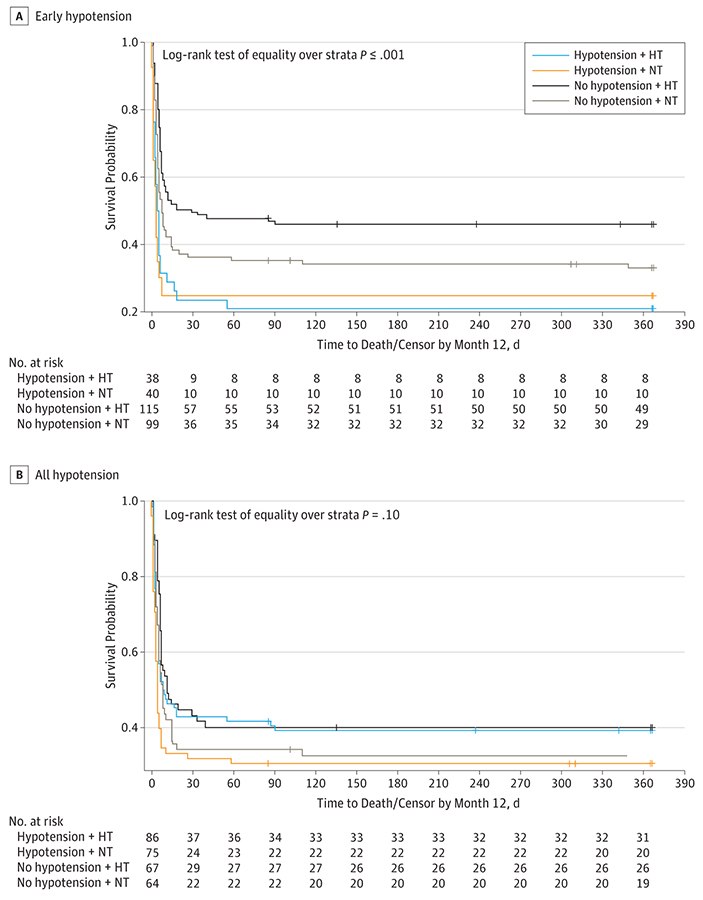
Results: Of 292 children (194 boys [66.4%] and 98 girls [33.6%]; median age, 23.0 months [interquartile range, 5.0-105.0 months]), 78 (26.7%) had at least 1 episode of early hypotension. No difference was observed between the therapeutic hypothermia and therapeutic normothermia groups in the prevalence of hypotension during induction and maintenance (73 of 153 [47.7%] vs 72 of 139 [51.8%]; P = .50) or rewarming (35 of 118 [29.7%] vs 19 of 95 [20.0%]; P = .10) during the first 72 hours. Participants who had early hypotension were less likely to survive to hospital discharge (20 of 78 [25.6%] vs 93 of 214 [43.5%]; adjusted odds ratio, 0.39; 95% CI, 0.20-0.74).
Conclusions and relevance: In this post hoc secondary analysis of the THAPCA trial, 26.7% of participants had hypotension within 6 hours after temperature intervention. Early post-cardiac arrest hypotension was associated with lower odds of discharge survival, even after adjusting for covariates of interest.
Conflict of interest statement
Conflict of Interest Disclosures:
None reported.
Figures
Comment in
-
Importance of Hypotension and Its Definition After Cardiac Arrest.JAMA Pediatr. 2018 Feb 1;172(2):120-122. doi: 10.1001/jamapediatrics.2017.4099. JAMA Pediatr. 2018. PMID: 29228070 No abstract available.
References
Publication types
MeSH terms
Grants and funding
LinkOut - more resources
Full Text Sources
Other Literature Sources
Medical