. 2017 Oct 30;8(57):97428-97438.
doi: 10.18632/oncotarget.22134. eCollection 2017 Nov 14.

Comparison between liver resection and liver transplantation on outcomes in patients with solitary hepatocellular carcinoma meeting UNOS criteria: a population-based study of the SEER database

Affiliations

Comparison between liver resection and liver transplantation on outcomes in patients with solitary hepatocellular carcinoma meeting UNOS criteria: a population-based study of the SEER database

Anli Yang et al. Oncotarget. .

Abstract

Liver resection (LR) and liver transplantation (LT) are potential curative treatment methods for early hepatocellular carcinoma (HCC). However, it is controversial which treatment is more beneficial to patients with solitary HCC meeting the United Network for Organ Sharing (UNOS) criteria (single lesion, diameter≤50mm, no vascular invasion, no extrahepatic metastasis). We retrieved patients with solitary HCC meeting UNOS criteria diagnosed between 2004-2013 from the Surveillance Epidemiology and End Results (SEER) database. Multivariate Cox proportional hazards regression models were used to evaluate the impact of surgery type (LR/LT) on overall survival (OS) and disease-specific survival (DSS) in both the whole study group and subgroups. Our analyses show that LT Patients had significantly superior OS (Adjusted HR (95% CI): 0.39 [0.26-0.59]) and DSS (Adjusted HR (95% CI): 0.19 [0.10-0.35]) than those receiving LR, although compared with the 288 patients receiving LR, the 258 patients receiving LT had younger age, smaller tumor size, and higher fibrosis score (P<0.001). Subgroup analyses identified significant interactions between surgery type (LR/LT) and gender (Male/Female) in both OS (P=0.02) and DSS (P=0.02). Male patients benefit more from LT compared with LR in both OS (Adjusted HR (95% CI): 0.29 [0.18-0.47]) and DSS (Adjusted HR (95% CI): 0.10 [0.05-0.21]), but there is no difference between patients receiving LT and LR in female patients. In conclusion, LT is associated with superior survival than LR in patients with solitary HCC meeting UNOS criteria. Moreover, male patients benefits more from LT than LR, while female patients do not show different outcomes between the two procedures.

Keywords: UNOS criteria; hepatocellular carcinoma; liver resection; liver transplantation.


Conflict of interest statement

CONFLICTS OF INTEREST We declare no conflicts of interest in this study.

Figures
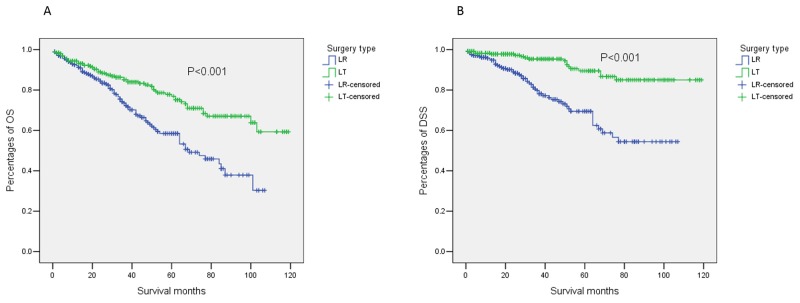
Figure 1
Figure 1. Outcomes of patients with solitary HCC meeting UNOS criteria stratified by surgery type (LR/LT)
(A) OS; (B) DSS. Patients receiving LT had significantly superior OS to patients receiving LR (hazard ratio [HR] [95%CI]: 0.50 [0.35-0.70], P<0.001). Patients receiving LT also had significantly superior DSS to patients receiving LR (HR [95%CI]: 0.25 [0.15-0.43], P<0.001). Abbreviations: HCC, hepatocellular carcinoma; UNOS, the United Network for Organ Sharing; LR, liver resection; LT, liver transplantation; OS, overall survival; DSS, disease-sepecific survival.
Figure 2
Figure 2. Subgroup analyses for the impact of surgery type (LR/LT) on OS
Comparisons of the OS between patients receiving LR and LT were conducted in subgroups stratified by clinicopathologic factors. LR group was used as the reference for adjusted HR (95%CI). The factors considered for the multivariable Cox regression model included year of diagnosis, age at diagnosis, sex, tumor grade, tumor size, AFP level, fibrosis score, race, and marriage status. Abbreviations: OS, overall survival; LR, liver resection; LT, liver transplantation; HR, hazard ratio; CI, confidence interval; AFP, alpha fetal protein.
Figure 3
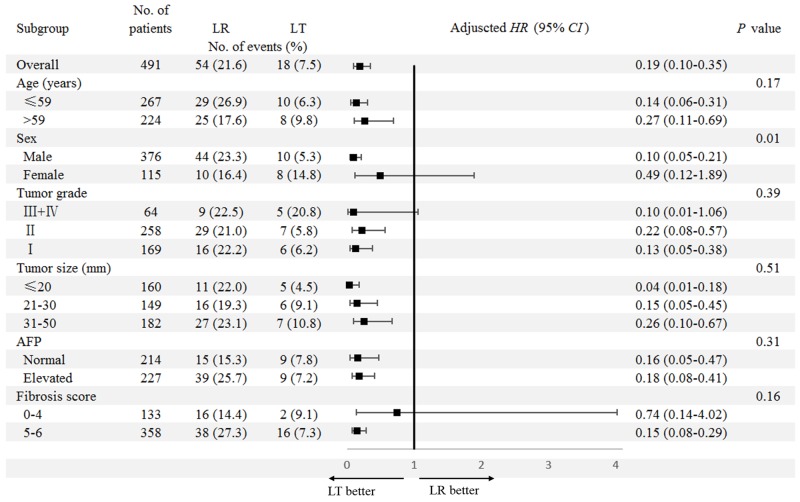
Figure 3. Subgroup analyses for the impact of surgery type (LR/LT) on DSS
Comparisons between the DSS for patients receiving LR and LT were conducted in subgroups stratified by clinicopathologic factors. LR was used as the reference group for adjusted HR (95%CI). The factors considered for the multivariable Cox regression model included year of diagnosis, age at diagnosis, sex, tumor grade, tumor size, AFP level, fibrosis score, race, and marriage status. Abbreviations: DSS, disease-specific survival; LR, liver resection; LT, liver transplantation; HR, hazard ratio; CI, confidence interval; AFP, alpha fetal protein.
Figure 4
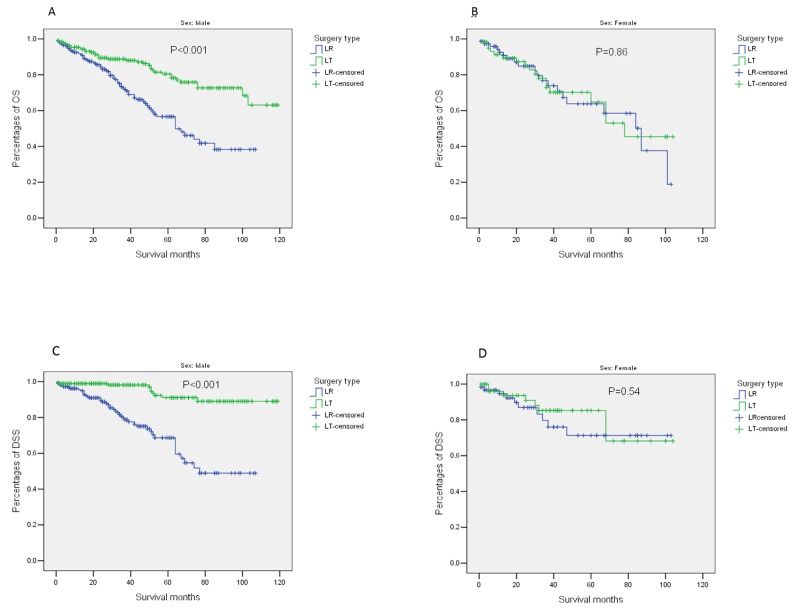
Figure 4. Outcomes of patients stratified by surgery type (LR/LT) and sex (male/female)
(A) OS, Male; (B) OS, Female; (C) DSS, Male; (D), DSS, Female. Abbreviations: LR, liver resection; LT, liver transplantation; OS, overall survival; DSS, disease-free survival.
Figure 5
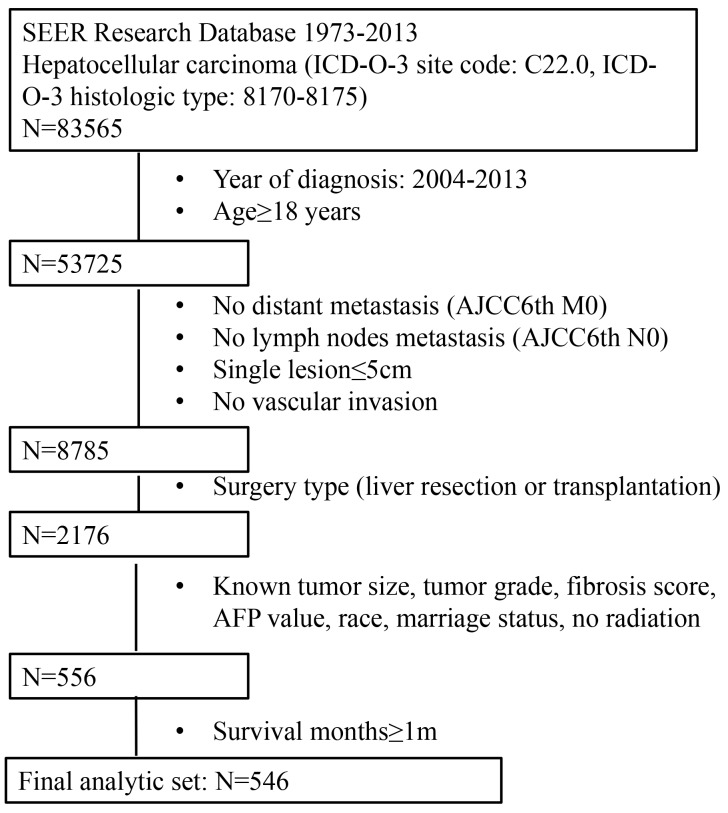
Figure 5. The flow chart for selection of study population
Abbreviations: SEER, Surveillance, Epidemiology, and End Results; ICD-O-3, international classification of diseases for oncology, 3rd edition; AJCC, American Joint Committee on Cancer; AFP, alpha fetal protein.

References

    1. Siegel RL, Miller KD, Jemal A. Cancer statistics, 2017. CA Cancer J Clin. 2017;67:7–30. - PubMed
    1. El-Serag HB, Kanwal F. Epidemiology of hepatocellular carcinoma in the United States: where are we? Where do we go? Hepatology. 2014;60:1767–1775. - PMC - PubMed
    1. Zhang BH, Yang BH, Tang ZY. Randomized controlled trial of screening for hepatocellular carcinoma. J Cancer Res Clin Oncol. 2004;130:417–422. - PMC - PubMed
    1. Ulahannan SV, Duffy AG, McNeel TS, Kish JK, Dickie LA, Rahma OE, McGlynn KA, Greten TF, Altekruse SF. Earlier presentation and application of curative treatments in hepatocellular carcinoma. Hepatology. 2014;60:1637–1644. - PMC - PubMed
    1. Vitale A, Peck-Radosavljevic M, Giannini EG, Vibert E, Sieghart W, Van Poucke S, Pawlik TM. Personalized treatment of patients with very early hepatocellular carcinoma. J Hepatol. 2017;66:412–423. - PubMed

LinkOut - more resources