


Apical periodontitis in southern Estonian population: prevalence and associations with quality of root canal fillings and coronal restorations
- PMID: 29233146
- PMCID: PMC5727925
- DOI: 10.1186/s12903-017-0429-7
Apical periodontitis in southern Estonian population: prevalence and associations with quality of root canal fillings and coronal restorations
Abstract
Background: Apical periodontitis (AP) is an inflammatory disease around the apex of a tooth root. Reported prevalence of AP ranges from 27% to 83% while the data about most post-Soviet countries are still missing. Knowing the prevalence of AP within a certain population helps to plan the treatment need and evaluate the success of endodontic interventions. We aimed to collect data about prevalence and determining factors of AP for the first time in Estonia.
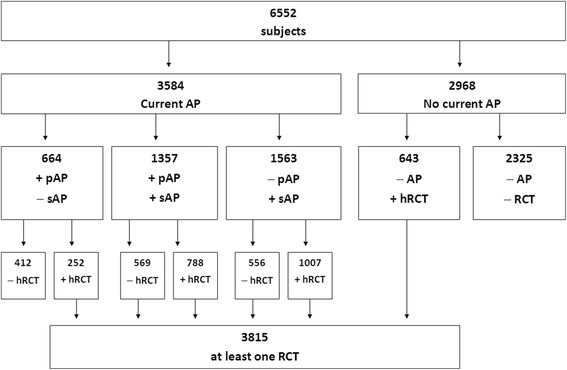
Methods: The cross-sectional study included 6552 patients (age 35.5±19.2 years). Radiographic examination was applied to investigate the prevalence of AP and quality of endodontic treatment.
Results: AP was diagnosed in 54.7% of subjects. Endodontically treated teeth were present in 58.2% of subjects. Periapical finding was present in 44.6% of endodontically treated and in 30.8% of untreated teeth. Out of 181,495 teeth, 52.7% were intact. AP was diagnosed in 6.3% of teeth, 6.9% of teeth were endodontically treated. Risk factors for AP included caries (OR = 2.30), male gender (OR = 1.44), too short (OR = 1.76) or too long root canal filling (OR = 2.51), root canal filling of low density (OR = 1.61) while not orthodontic appliance. Lower AP risk was associated with restoration of the tooth - filling (OR = 0.45), crown (OR = 0.34) and bridge (OR = 0.33).
Conclusions: AP is highly prevalent in Southern Estonian population. Most cases are associated with root canal-treated teeth. The overall quality of root canal fillings tends to be low, consistent with the mediocre outcome of treatment. Considerable efforts are required to improve the standards of endodontic treatment.
Keywords: Apical periodontitis; Epidemiology; Quality of restoration; Quality of root canal filling.
Conflict of interest statement
Ethics approval and consent to participate
The study was conducted in compliance with the "Ethical principles for medical research involving human subjects" of Helsinki Declaration and approved by Ethics Review Committee (ERC) on Human Research of the University of Tartu (protocol no: 246/T-19). Written informed consent was obtained from the human subjects. All of the collected data were coded and isolated; personal data and measurements data were kept separately.
Consent for publication
Not applicable.
Competing interests
The authors declare that they have no competing interests.
Publisher’s Note
Springer Nature remains neutral with regard to jurisdictional claims in published maps and institutional affiliations.
Figures
References
MeSH terms
Grants and funding
LinkOut - more resources
Full Text Sources
Other Literature Sources
Miscellaneous
