


Low versus high volume of culture medium during embryo transfer: a randomized clinical trial
- PMID: 29234954
- PMCID: PMC5949098
- DOI: 10.1007/s10815-017-1099-8
Low versus high volume of culture medium during embryo transfer: a randomized clinical trial
Abstract
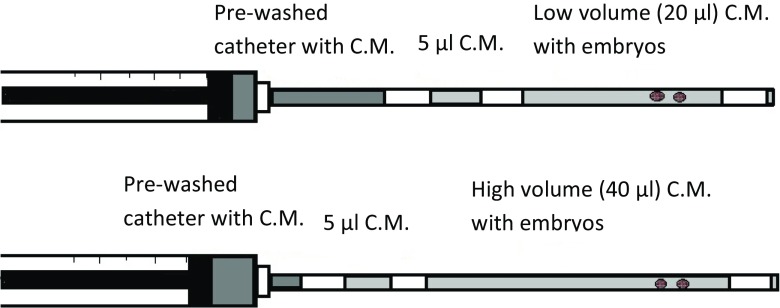
Purpose: The aim of this prospective randomized control trial was to evaluate if the use of two different volumes (20-25 vs 40-45 μl) of media used for embryo transfer affects the clinical outcomes in fresh in vitro fertilization (IVF) cycles.
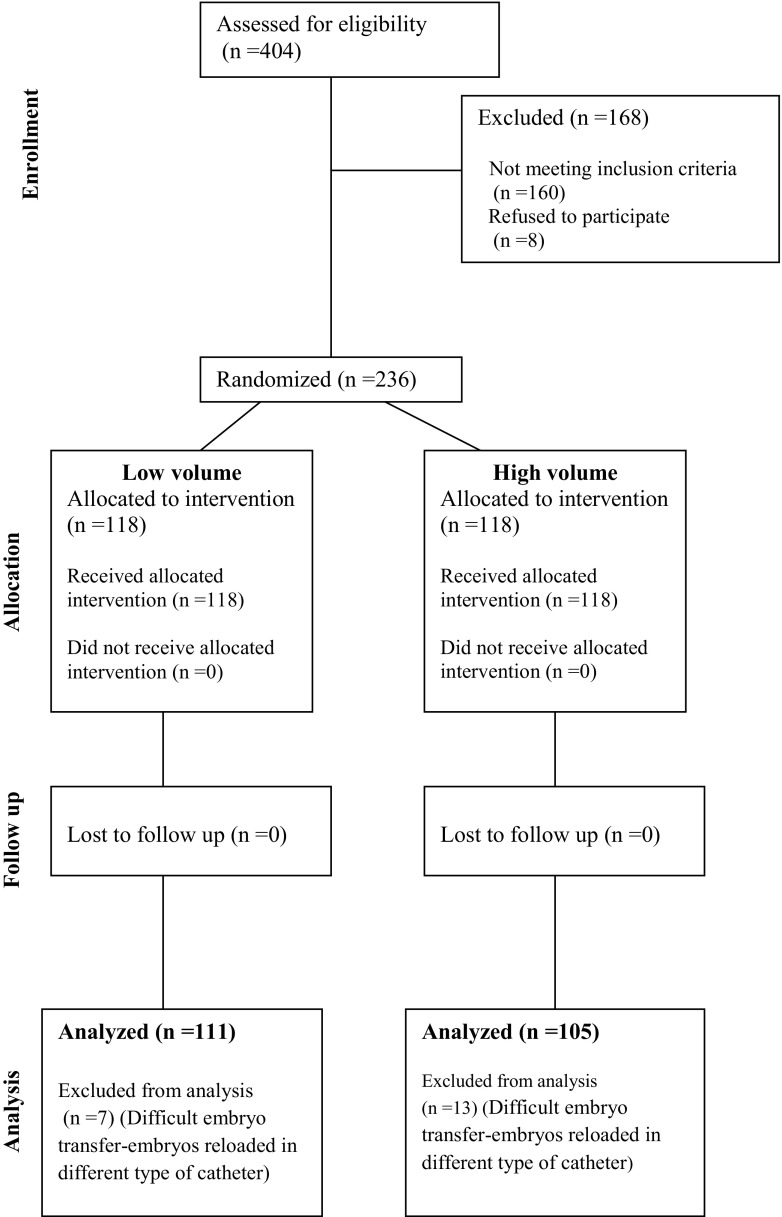
Methods: In total, 236 patients were randomized in two groups, i.e., "low volume" group (n = 118) transferring the embryos with 20-25 μl of medium and "high volume" group (n = 118) transferring the embryos with 40-45 μl of medium. The clinical pregnancy, implantation, and ongoing pregnancy rates were compared between the two groups.
Results: No statistically significant differences were observed in clinical pregnancy (46.8 vs 54.3%, p = 0.27), implantation (23.7 vs 27.8%, p = 0.30), and ongoing pregnancy (33.3 vs 40.0%, p = 0.31) rates between low and high volume group, respectively.
Conclusion: Higher volume of culture medium to load the embryo into the catheter during embryo transfer does not influence the clinical outcome in fresh IVF cycles.
Trial registration number: NCT03350646.
Keywords: Clinical pregnancy rate; Culture medium; Embryo transfer; Loading the catheter; Volume.
Conflict of interest statement
Conflicts of interest
The authors declare that they have no conflicts of interest.
Figures
References
Publication types
MeSH terms
Substances
Associated data
LinkOut - more resources
Full Text Sources
Other Literature Sources
Medical
