


Postnatal effects of intrauterine treatment of the growth-restricted ovine fetus with intra-amniotic insulin-like growth factor-1
- PMID: 29235113
- PMCID: PMC6265545
- DOI: 10.1113/JP274999
Postnatal effects of intrauterine treatment of the growth-restricted ovine fetus with intra-amniotic insulin-like growth factor-1
Abstract
Key points: Fetal growth restriction increases the risk of fetal and neonatal mortality and morbidity, and contributes to increased risk of chronic disease later in life. Intra-amniotic insulin-like growth factor-1 (IGF1) treatment of the growth-restricted ovine fetus improves fetal growth, but postnatal effects are unknown. Here we report that intra-amniotic IGF1 treatment of the growth-restricted ovine fetus alters size at birth and mechanisms of early postnatal growth in a sex-specific manner. We also show that maternal plasma C-type natriuretic peptide (CNP) products are related to fetal oxygenation and size at birth, and hence may be useful for non-invasive monitoring of fetal growth restriction. Intrauterine IGF1 treatment in late gestation is a potentially clinically relevant intervention that may ameliorate the postnatal complications of fetal growth restriction.
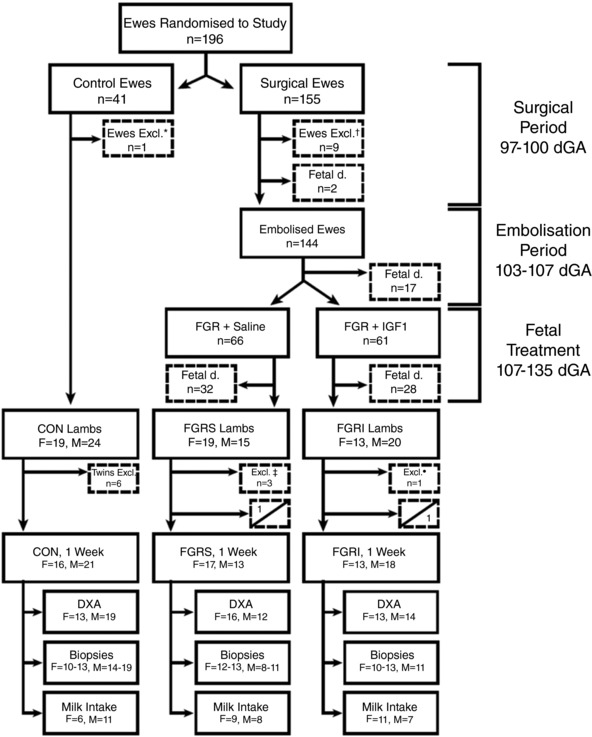
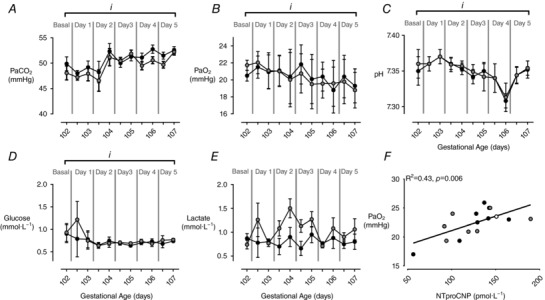
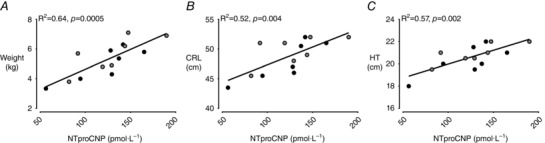
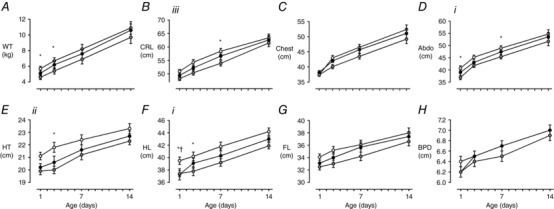
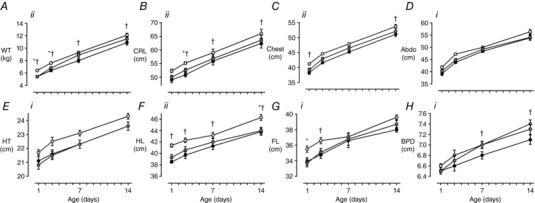
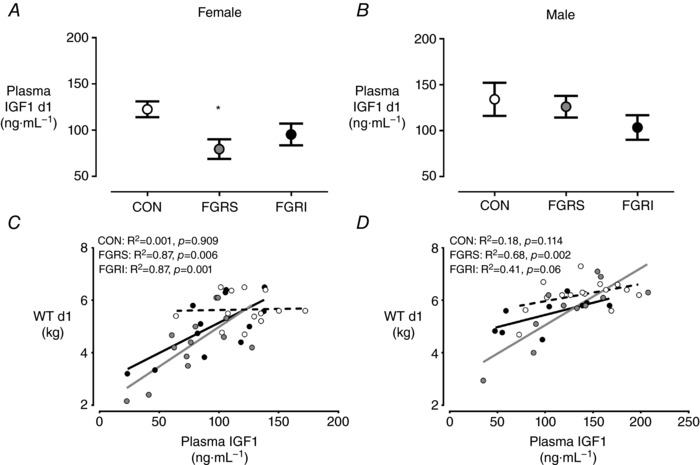
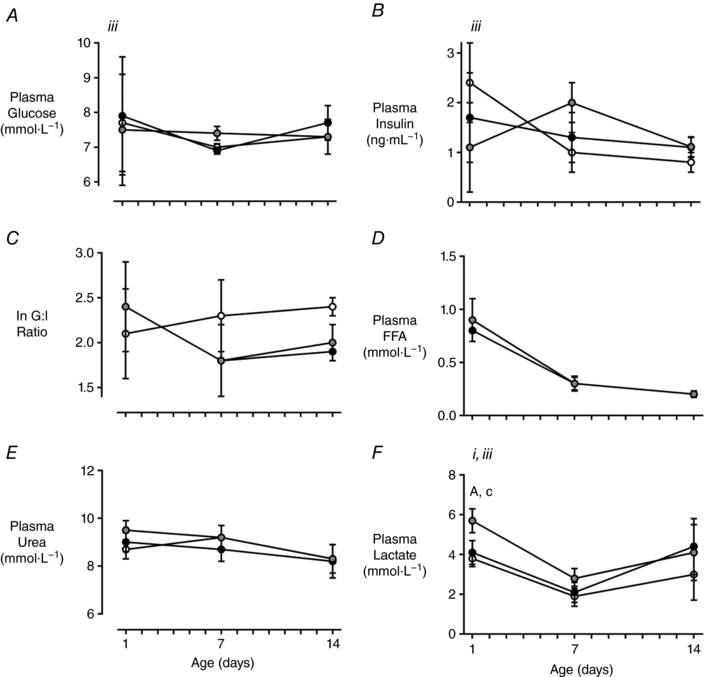
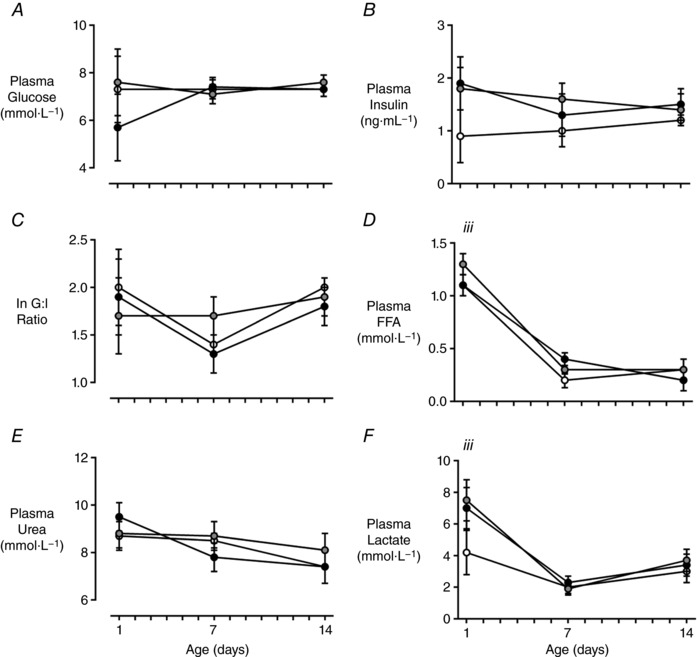
Abstract: Placental insufficiency-mediated fetal growth restriction (FGR) is associated with altered postnatal growth and metabolism, which are, in turn, associated with increased risk of adult disease. Intra-amniotic insulin-like growth factor-1 (IGF1) treatment of ovine FGR increases growth rate in late gestation, but the effects on postnatal growth and metabolism are unknown. We investigated the effects of intra-amniotic IGF1 administration to ovine fetuses with uteroplacental embolisation-induced FGR on phenotypical and physiological characteristics in the 2 weeks after birth. We measured early postnatal growth velocity, amino-terminal propeptide of C-type natriuretic peptide (NTproCNP), body composition, tissue-specific mRNA expression, and milk intake in singleton lambs treated weekly with 360 μg intra-amniotic IGF1 (FGRI; n = 13 females, 19 males) or saline (FGRS; n = 18 females, 12 males) during gestation, and in controls (CON; n = 15 females, 22 males). There was a strong positive correlation between maternal NTproCNP and fetal oxygenation, and size at birth in FGR lambs. FGR lambs were ∼20% lighter at birth and demonstrated accelerated postnatal growth velocity. IGF1 treatment did not alter perinatal mortality, partially abrogated the reduction in newborn size in females, but not males, and reduced accelerated growth in both sexes. IGF1-mediated upregulation of somatotrophic genes in males during the early postnatal period could suggest that treatment effects are associated with delayed axis maturation, whilst treatment outcomes in females may rely on the reprogramming of nutrient-dependent mechanisms of growth. These data suggest that the growth-restricted fetus is responsive to intra-amniotic intervention with IGF1, and that sex-specific somatotrophic effects persist in the early postnatal period.
Keywords: amino-terminal propeptide of C-type natriuretic peptide; fetal growth restriction; growth and metabolism; insulin-like growth factor-1; intrauterine intervention; somatotrophic maturation.
© 2017 The Authors. The Journal of Physiology © 2017 The Physiological Society.
Figures
Comment in
-
Fetal growth: too little or just right?J Physiol. 2018 Dec;596(23):5497. doi: 10.1113/JP275612. Epub 2018 Feb 2. J Physiol. 2018. PMID: 29336048 Free PMC article. No abstract available.
-
Placentas on treadmills? Exercise may be more beneficial when started before pregnancy.J Physiol. 2018 Dec;596(23):5499-5500. doi: 10.1113/JP276679. Epub 2018 Jul 18. J Physiol. 2018. PMID: 29968375 Free PMC article. No abstract available.
References
-
- Bansal A, Bloomfield FH, Connor KL, Dragunow M, Thorstensen EB, Oliver MH, Sloboda DM, Harding JE & Alsweiler JM (2015). Glucocorticoid‐induced preterm birth and neonatal hyperglycemia alter ovine β‐cell development. Endocrinology 156, 3763–3776. - PubMed
-
- Baschat AA, Gembruch U & Harman C (2001). The sequence of changes in Doppler and biophysical parameters as severe fetal growth restriction worsens. Ultrasound Obstet Gynecol 18, 571–577. - PubMed
-
- Bernstein IM, Horbar JD, Badger GJ, Ohlsson A & Golan A (2000). Morbidity and mortality among very‐low‐birth‐weight neonates with intrauterine growth restriction. Am J Obstet Gynecol 182, 198–206. - PubMed
Publication types
MeSH terms
Substances
Grants and funding
LinkOut - more resources
Full Text Sources
Other Literature Sources
Medical
Miscellaneous
