


Retrospective study of the presentation, diagnosis and management of 16 cats with otitis media not due to nasopharyngeal polyp
- PMID: 29235932
- PMCID: PMC11104215
- DOI: 10.1177/1098612X17746282
Retrospective study of the presentation, diagnosis and management of 16 cats with otitis media not due to nasopharyngeal polyp
Abstract
Objectives: The aim of this study was to analyse retrospectively cats diagnosed with otitis media (OM) not due to nasopharyngeal polyp, and to review the clinical outcome with surgical and medical management.
Methods: Patient records were searched for cats diagnosed with OM. The diagnosis of OM was based on the presence of clinical signs, including neurological signs, respiratory signs and signs of otitis externa, and on the basis of evidence of thickened or irregular bullae walls, or the presence of fluid within the tympanic cavity in those that had diagnostic imaging. In those that did not have imaging, the diagnosis was made on the basis of the presence of fluid in the bulla or organisms cultured using myringotomy. These records were analysed retrospectively.
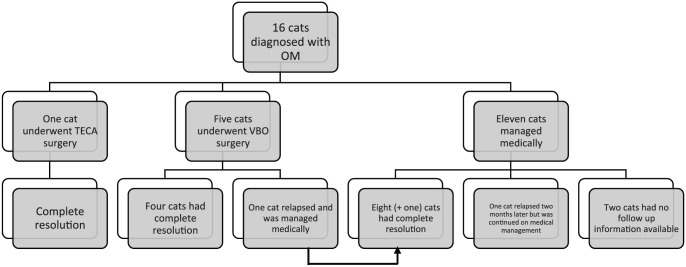
Results: Of 16 cats, one had a total ear canal ablation, five had ventral bulla osteotomy surgery and 11 were medically managed. Of the cats that were medically managed, using either topical products, systemic antimicrobials or a combination of both, eight had complete resolution of clinical signs.
Conclusions and relevance: This small cohort shows that some cats with OM can be successfully managed medically. Surgery is invasive and may not necessarily be required if appropriate medical management is undertaken. This is the first study of OM treatment in cats and provides the basis for further studies, which should aim to establish specific infectious causes of OM and how they can potentially be managed with medical therapies.
Conflict of interest statement
The authors declared no potential conflicts of interest with respect to the research, authorship, and/or publication of this article.
Figures
References
-
- Hill PB, Lo A, Eden CA, et al. Survey or the prevalence, diagnosis and treatment of dermatological conditions in small animals in general practice. Vet Rec 2006; 158: 533–539. - PubMed
-
- King A, Weinrauch S, Doust R, et al. Comparison of ultrasonography, radiography and a single computed tomography slice for fluid identification within the feline tympanic bulla. Vet J 2007; 173: 638–644. - PubMed
-
- Shell L. Otitis media and otitis interna. Vet Clin North Am Small Anim Pract 1988; 18: 885–899. - PubMed
-
- Gotthelf L. Diagnosis and treatment of otitis media in dogs and cats. Vet Clin North Am Small Anim Pract 2004; 34: 469–487. - PubMed
MeSH terms
LinkOut - more resources
Full Text Sources
Other Literature Sources
Medical
Miscellaneous
