Vaccine and Therapeutic Options To Control Chikungunya Virus
- PMID: 29237708
- PMCID: PMC5740971
- DOI: 10.1128/CMR.00104-16
Vaccine and Therapeutic Options To Control Chikungunya Virus
Abstract
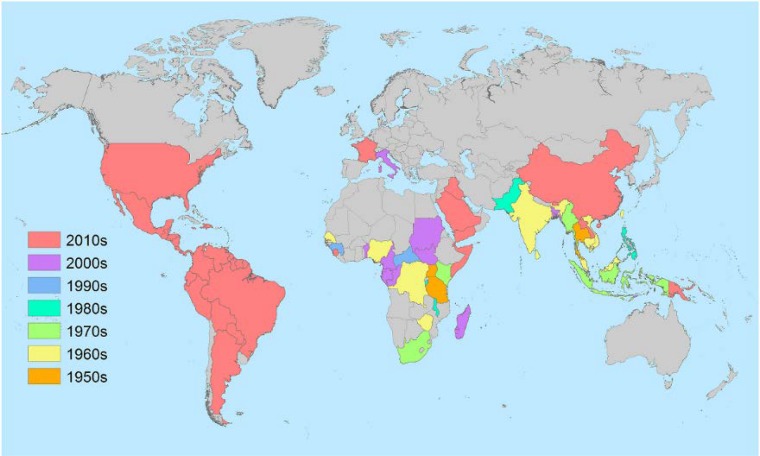
Beginning in 2004, chikungunya virus (CHIKV) went from an endemic pathogen limited to Africa and Asia that caused periodic outbreaks to a global pathogen. Given that outbreaks caused by CHIKV have continued and expanded, serious consideration must be given to identifying potential options for vaccines and therapeutics. Currently, there are no licensed products in this realm, and control relies completely on the use of personal protective measures and integrated vector control, which are only minimally effective. Therefore, it is prudent to urgently examine further possibilities for control. Vaccines have been shown to be highly effective against vector-borne diseases. However, as CHIKV is known to rapidly spread and generate high attack rates, therapeutics would also be highly valuable. Several candidates are currently being developed; this review describes the multiple options under consideration for future development and assesses their relative advantages and disadvantages.
Keywords: chikungunya; therapeutics; vaccine.
Copyright © 2017 American Society for Microbiology.
Figures

References
-
- Jupp PG, McIntosh BM. 1988. Chikungunya virus disease, p 137–157. In Monath TP. (ed), The arbovirus: epidemiology and ecology, vol II CRC Press, Boca Raton, FL.
-
- Halstead SB, Scanlon JE, Umpaivit P, Udomsakdi S. 1969. Dengue and chikungunya virus infection in man in Thailand, 1962-1964. IV. Epidemiologic studies in the Bangkok metropolitan area. Am J Trop Med Hyg 18:997–1021. - PubMed
-
- Rao TR. 1966. Recent epidemics caused by chikungunya virus in India, 1963-1965. Sci Cult 32:215.
Publication types
MeSH terms
Substances
LinkOut - more resources
Full Text Sources
Other Literature Sources
Medical