


Zoonotic Transfer of Clostridium difficile Harboring Antimicrobial Resistance between Farm Animals and Humans
- PMID: 29237792
- PMCID: PMC5824051
- DOI: 10.1128/JCM.01384-17
Zoonotic Transfer of Clostridium difficile Harboring Antimicrobial Resistance between Farm Animals and Humans
Abstract
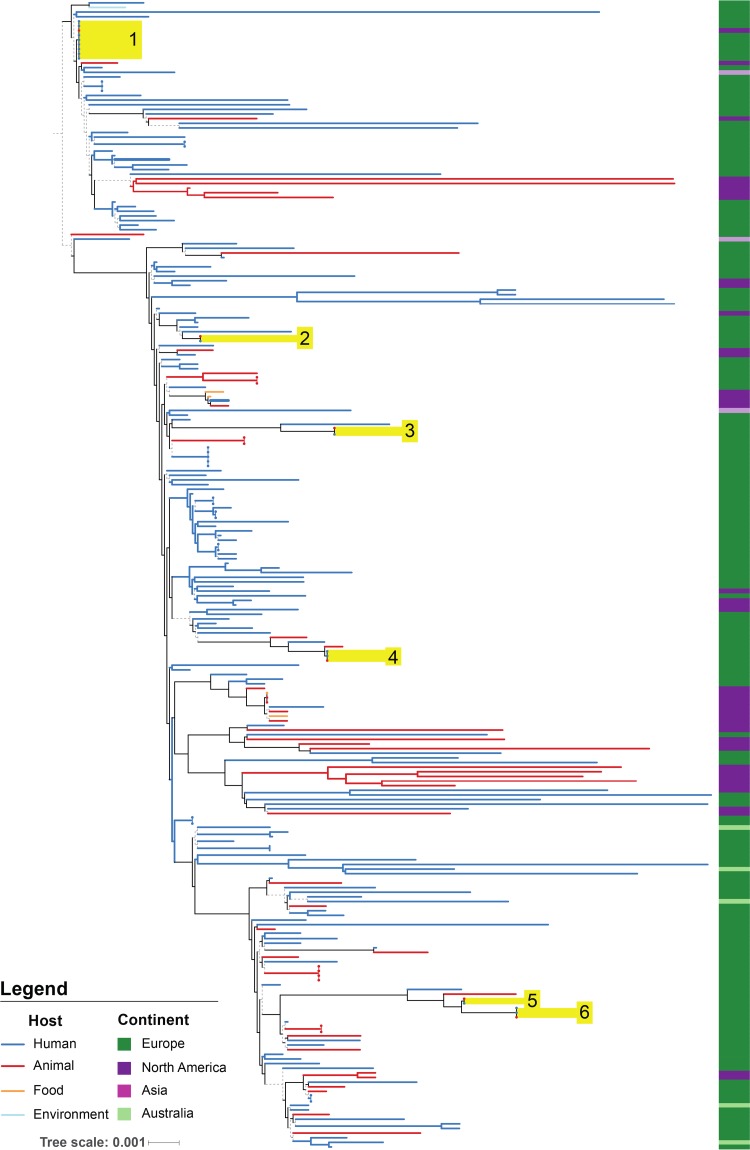
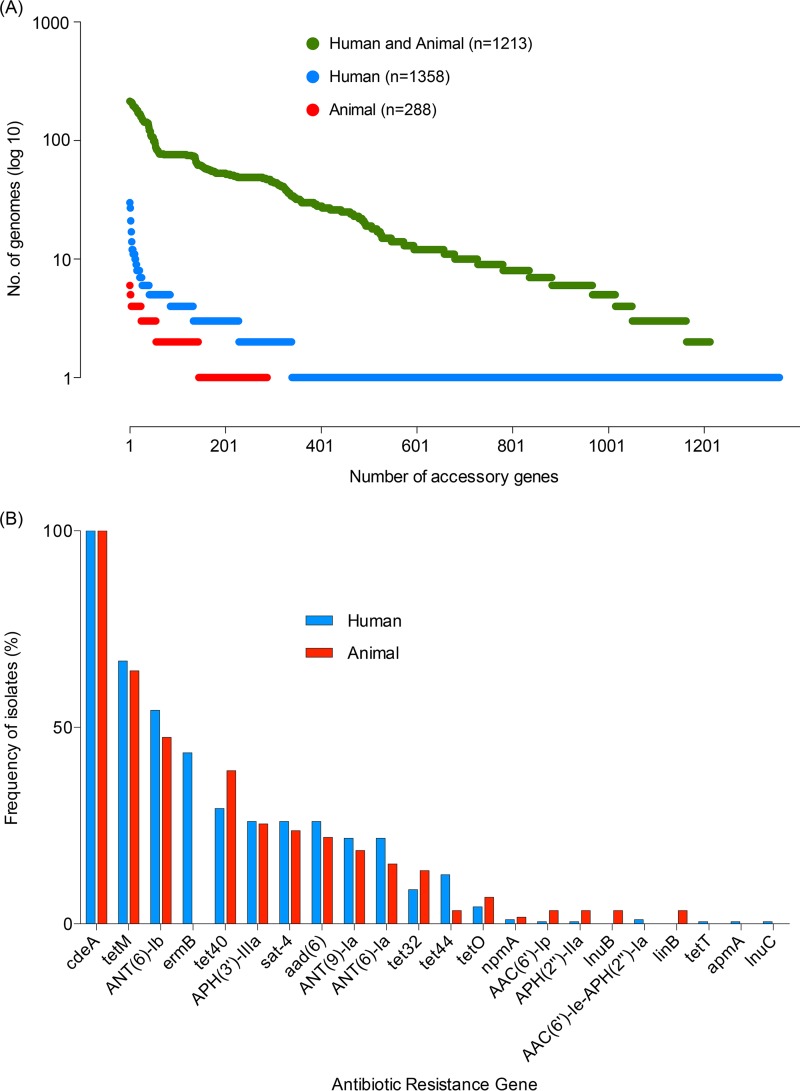
The emergence of Clostridium difficile as a significant human diarrheal pathogen is associated with the production of highly transmissible spores and the acquisition of antimicrobial resistance genes (ARGs) and virulence factors. Unlike the hospital-associated C. difficile RT027 lineage, the community-associated C. difficile RT078 lineage is isolated from both humans and farm animals; however, the geographical population structure and transmission networks remain unknown. Here, we applied whole-genome phylogenetic analysis of 248 C. difficile RT078 strains from 22 countries. Our results demonstrate limited geographical clustering for C. difficile RT078 and extensive coclustering of human and animal strains, thereby revealing a highly linked intercontinental transmission network between humans and animals. Comparative whole-genome analysis reveals indistinguishable accessory genomes between human and animal strains and a variety of antimicrobial resistance genes in the pangenome of C. difficile RT078. Thus, bidirectional spread of C. difficile RT078 between farm animals and humans may represent an unappreciated route disseminating antimicrobial resistance genes between humans and animals. These results highlight the importance of the "One Health" concept to monitor infectious disease emergence and the dissemination of antimicrobial resistance genes.
Keywords: Clostridium difficile; One Health concept; RT078; accessory genome; antibiotic resistance; intercontinental transmission; interhost transmission.
Copyright © 2018 Knetsch et al.
Figures
References
-
- Kuijper EJ, Coignard B, Tull P; ESCMID Study Group for Clostridium difficile; EU Member States; European Centre for Disease Prevention and Control. 2006. Emergence of Clostridium difficile-associated disease in North America and Europe. Clin Microbiol Infect 12(Suppl 6):S2–S18. doi: 10.1111/j.1469-0691.2006.01580.x. - DOI - PubMed
-
- Loo VG, Poirier L, Miller MA, Oughton M, Libman MD, Michaud S, Bourgault AM, Nguyen T, Frenette C, Kelly M, Vibien A, Brassard P, Fenn S, Dewar K, Hudson TJ, Horn R, Rene P, Monczak Y, Dascal A. 2005. A predominantly clonal multi-institutional outbreak of Clostridium difficile-associated diarrhea with high morbidity and mortality. N Engl J Med 353:2442–2449. doi: 10.1056/NEJMoa051639. - DOI - PubMed
-
- He M, Miyajima F, Roberts P, Ellison L, Pickard DJ, Martin MJ, Connor TR, Harris SR, Fairley D, Bamford KB, D'Arc S, Brazier J, Brown D, Coia JE, Douce G, Gerding D, Kim HJ, Koh TH, Kato H, Senoh M, Louie T, Michell S, Butt E, Peacock SJ, Brown NM, Riley T, Songer G, Wilcox M, Pirmohamed M, Kuijper E, Hawkey P, Wren BW, Dougan G, Parkhill J, Lawley TD. 2013. Emergence and global spread of epidemic healthcare-associated Clostridium difficile. Nat Genet 45:109–113. doi: 10.1038/ng.2478. - DOI - PMC - PubMed
Publication types
MeSH terms
Grants and funding
LinkOut - more resources
Full Text Sources
Other Literature Sources
Medical
