


A synthesis of European seahorse taxonomy, population structure, and habitat use as a basis for assessment, monitoring and conservation
- PMID: 29238097
- PMCID: PMC5717113
- DOI: 10.1007/s00227-017-3274-y
A synthesis of European seahorse taxonomy, population structure, and habitat use as a basis for assessment, monitoring and conservation
Abstract
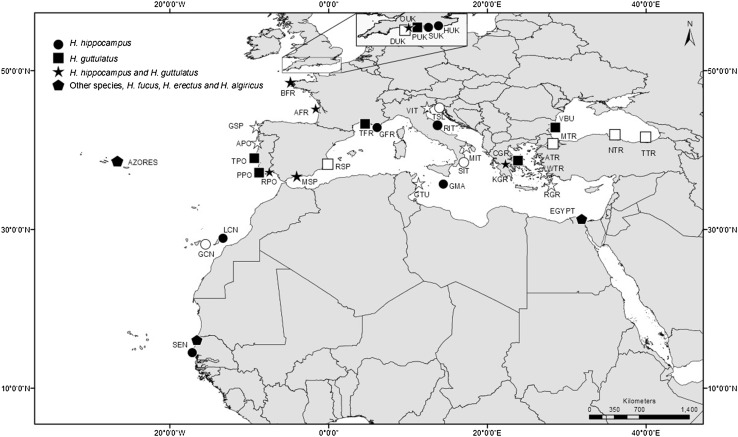
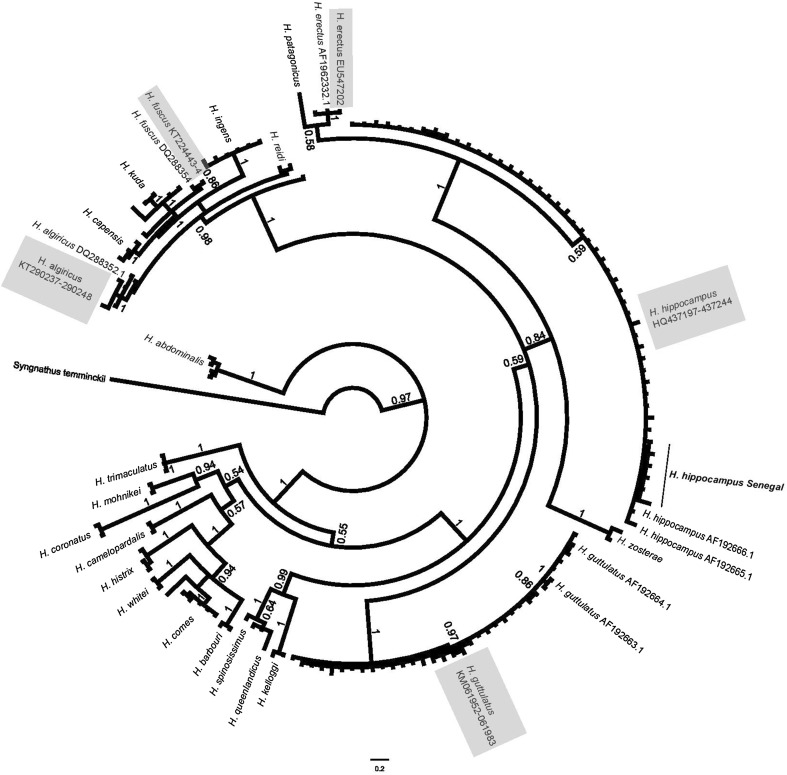
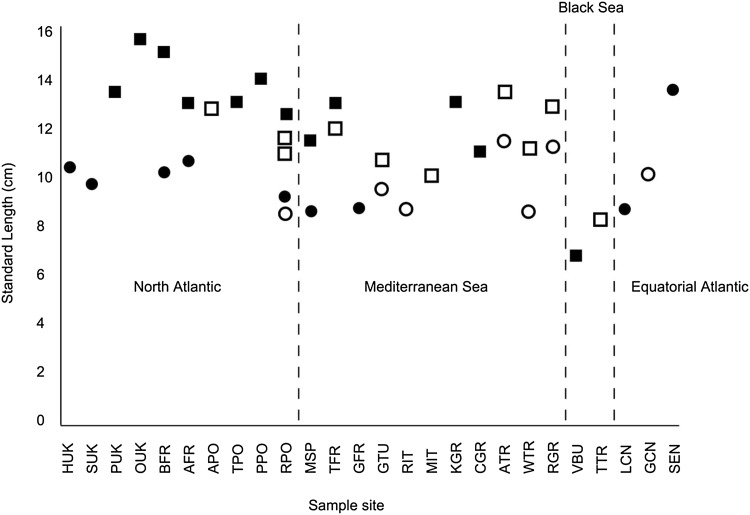
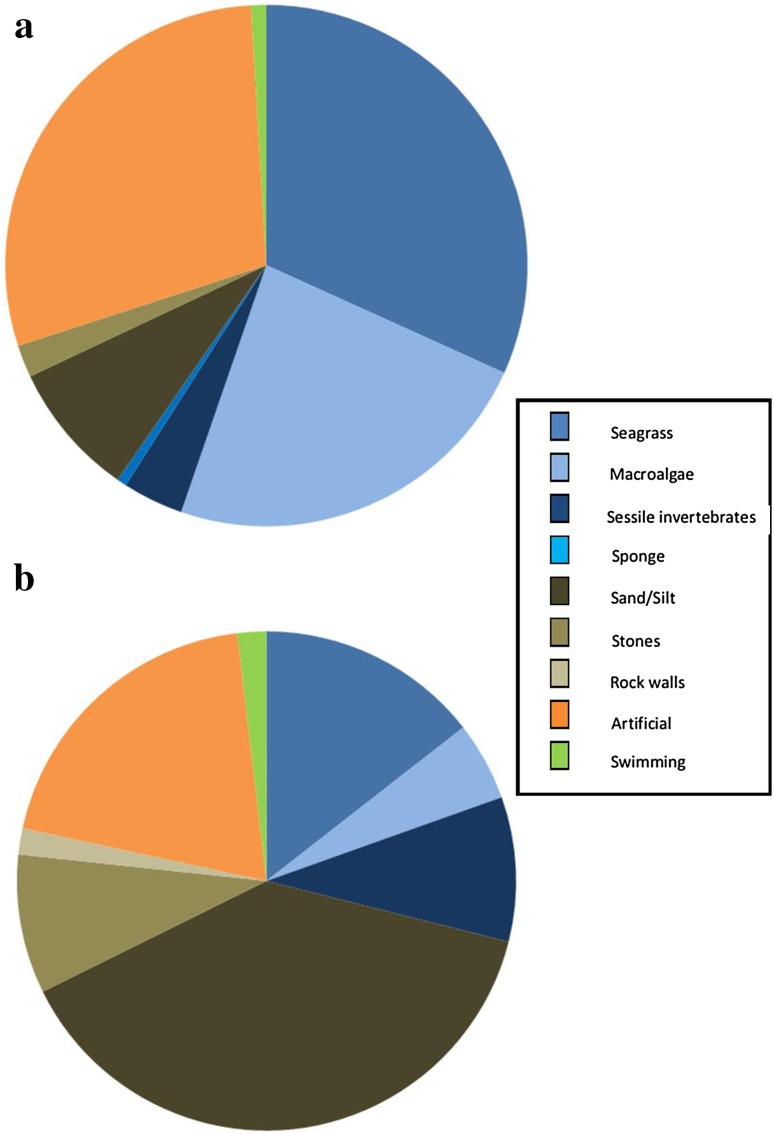
Accurate taxonomy, population demography, and habitat descriptors inform species threat assessments and the design of effective conservation measures. Here we combine published studies with new genetic, morphological and habitat data that were collected from seahorse populations located along the European and North African coastlines to help inform management decisions for European seahorses. This study confirms the presence of only two native seahorse species (Hippocampus guttulatus and H. hippocampus) across Europe, with sporadic occurrence of non-native seahorse species in European waters. For the two native species, our findings demonstrate that highly variable morphological characteristics, such as size and presence or number of cirri, are unreliable for distinguishing species. Both species exhibit sex dimorphism with females being significantly larger. Across its range, H. guttulatus were larger and found at higher densities in cooler waters, and individuals in the Black Sea were significantly smaller than in other populations. H. hippocampus were significantly larger in Senegal. Hippocampus guttulatus tends to have higher density populations than H. hippocampus when they occur sympatrically. Although these species are often associated with seagrass beds, data show both species inhabit a wide variety of shallow habitats and use a mixture of holdfasts. We suggest an international mosaic of protected areas focused on multiple habitat types as the first step to successful assessment, monitoring and conservation management of these Data Deficient species.
Conflict of interest statement
Compliance with ethical standardsFunding for this project was provided by Chocolaterie Guylian and a Natural Environment Research Council Industrial Case studentship (NER/S/C/2005/13461) to LCW. Support for FOF was provided by the European Commission (ASSEMBLE project, Grant agreement no. 227799).The authors declare that they no conflicts of interest.All applicable international, national, and institutional guidelines for the care and use of animals were followed.
Figures
References
-
- Başusta A, Özer EI, Girgin H, Serdar O, Başusta N. Length-weight relationship and condition factor of Hippocampus hippocampus and Hippocampus guttulatus inhabiting Eastern Black Sea. Pakistan J Zool. 2014;46:447–450.
-
- Bell EM, Lockyear JF, MacPherson JM, Marsden Dale, Vincent ACJ. First field studies of an endangered South African seahorse, Hippocampus capensis. Environ Biol Fish. 2003;67:35–46. doi: 10.1023/A:1024440717162. - DOI
-
- Ben Alaya H, Sanna D, Casu M, Biagi F, Francalacci P, Carcupino M, Galzin R, Quignard J-P, Trabelsi M. Analysis of meristic and mitochondrial DNA variation in Syngnathus abaster (Teleostea: Syngnathidae) from two western Mediterranean lagoons. Biologia. 2011;66:1140–1147. doi: 10.2478/s11756-011-0127-x. - DOI
-
- Ben Amor MM, Ben Salem M, Reynaud C, Capapé C. Length–weight relationships in syngnathid species from Tunisian waters (central Mediterranean) Mar Biodivers Rec. 2011;4:e44. doi: 10.1017/S1755267211000303. - DOI
-
- Berke SK, Jablonski D, Krug AZ, Roy K, Tomasovych A. Beyond Bergmann’s rule: size–latitude relationships in marine Bivalvia world-wide. Glob Ecol Biogeogr. 2013;22:173–183. doi: 10.1111/j.1466-8238.2012.00775.x. - DOI
LinkOut - more resources
Full Text Sources
Other Literature Sources