


A Large Polysaccharide Produced by Helicobacter hepaticus Induces an Anti-inflammatory Gene Signature in Macrophages
- PMID: 29241040
- PMCID: PMC5734933
- DOI: 10.1016/j.chom.2017.11.002
A Large Polysaccharide Produced by Helicobacter hepaticus Induces an Anti-inflammatory Gene Signature in Macrophages
Abstract
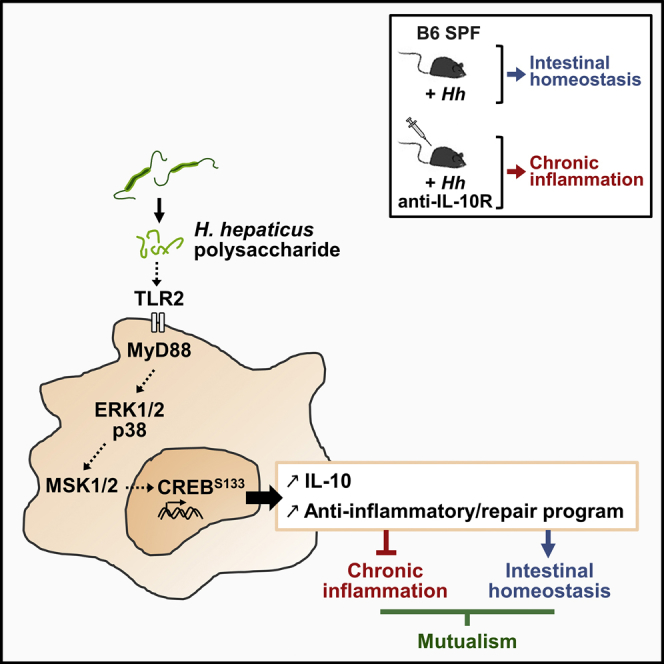
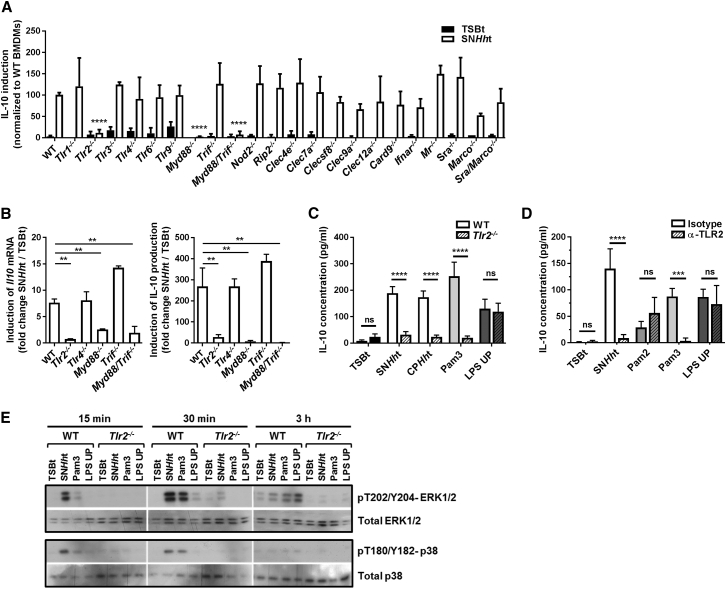
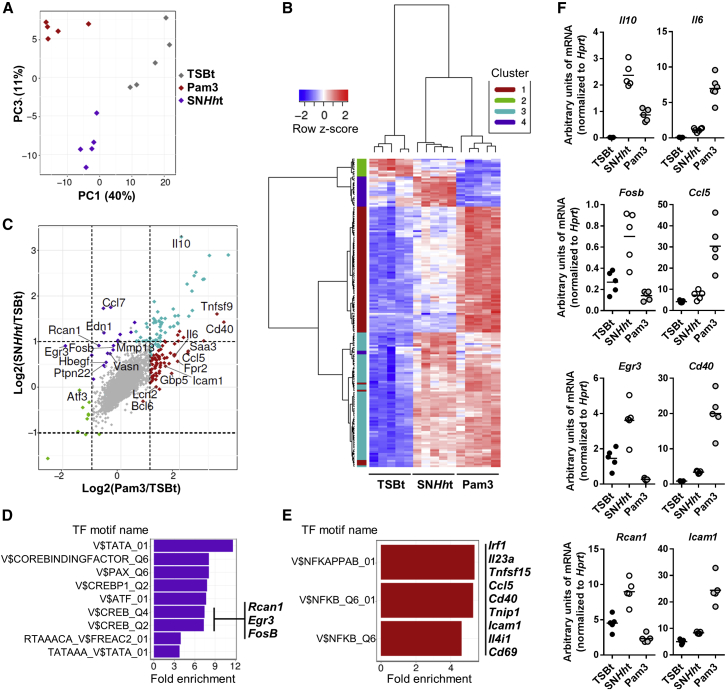
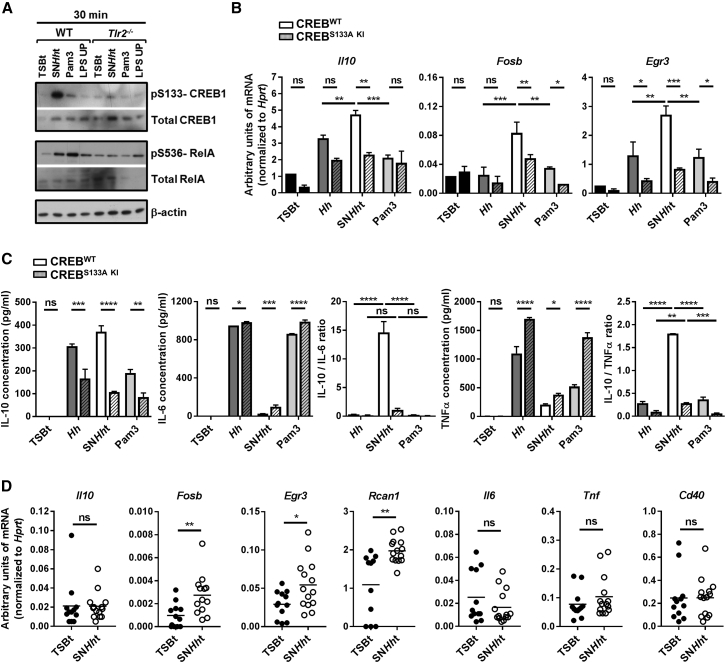
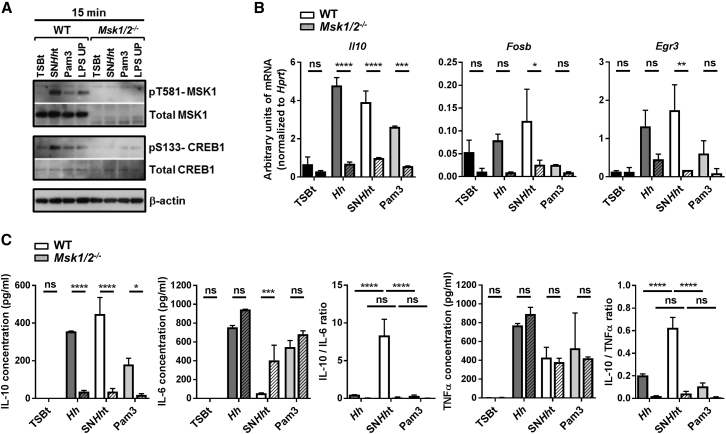
Interactions between the host and its microbiota are of mutual benefit and promote health. Complex molecular pathways underlie this dialog, but the identity of microbe-derived molecules that mediate the mutualistic state remains elusive. Helicobacter hepaticus is a member of the mouse intestinal microbiota that is tolerated by the host. In the absence of an intact IL-10 signaling, H. hepaticus induces an IL-23-driven inflammatory response in the intestine. Here we investigate the interactions between H. hepaticus and host immune cells that may promote mutualism, and the microbe-derived molecule(s) involved. Our results show that H. hepaticus triggers early IL-10 induction in intestinal macrophages and produces a large soluble polysaccharide that activates a specific MSK/CREB-dependent anti-inflammatory and repair gene signature via the receptor TLR2. These data identify a host-bacterial interaction that promotes mutualistic mechanisms at the intestinal interface. Further understanding of this pathway may provide novel prevention and treatment strategies for inflammatory bowel disease.
Keywords: CREB; Helicobacter hepaticus; MSK1/2; TLR2; anti-inflammatory gene signature; host-microbe interactions; inflammatory bowel disease; macrophage; mutualism; polysaccharide.
Copyright © 2017 The Authors. Published by Elsevier Inc. All rights reserved.
Figures
Comment in
-
Sweet! Helicobacter Sugar Calms Intestinal Macrophages.Cell Host Microbe. 2017 Dec 13;22(6):719-721. doi: 10.1016/j.chom.2017.11.014. Cell Host Microbe. 2017. PMID: 29241034
-
Helicobacter hepaticus polysaccharide induces an anti-inflammatory response in intestinal macrophages.Microb Cell. 2018 Mar 22;5(4):208-211. doi: 10.15698/mic2018.04.626. Microb Cell. 2018. PMID: 29611556 Free PMC article.
References
-
- Ananieva O., Darragh J., Johansen C., Carr J.M., McIlrath J., Park J.M., Wingate A., Monk C.E., Toth R., Santos S.G. The kinases MSK1 and MSK2 act as negative regulators of Toll-like receptor signaling. Nat. Immunol. 2008;9:1028–1036. - PubMed
MeSH terms
Substances
Grants and funding
LinkOut - more resources
Full Text Sources
Other Literature Sources
Molecular Biology Databases
