


Psoralea corylifolia L: Ethnobotanical, biological, and chemical aspects: A review
- PMID: 29243333
- PMCID: PMC7167735
- DOI: 10.1002/ptr.6006
Psoralea corylifolia L: Ethnobotanical, biological, and chemical aspects: A review
Abstract
Psoralea corylifolia L. (Leguminosae) is a well-known traditional medicinal plant used from ancient times for treatment of various ailments. It is widely distributed and an important part of therapeutics in Ayurveda and in Chinese medicines. The aim of this review is to present comprehensive and most up to date report on its ethnobotanical, ethnopharmacological, clinical, phytochemical, and side effects. Studies on the ethnobotanical, ethnopharmacological, clinical, phytochemical, and side effects of P. corylifolia were published until year 2017 and were searched using various scientific databases. The scientific literature searched revealed that these plant species has been extensively investigated in vivo and in vitro for various biological and phytochemical studies. It has cardiotonic, vasodilator, pigmentor, antitumor, antibacterial, cytotoxic, and anti-helminthic properties and locally used for alopecia, inflammation, leukoderma, leprosy, psoriasis, and eczema. So far, about a hundred bioactive compounds have been isolated from seeds and fruits, and most important compounds identified belongs to coumarins, flavonoids, and meroterpenes groups. This review article summarized the most updated scientific literature on bioactive phytochemical and biological activities of P. corylifolia. This article will be a useful addition to providing information for future research, and more standard clinical trials are needed for the plant to be used as therapeutic agent.
Keywords: Psoralea corylifolia; biological activities; coumarins; ethnopharmacology; flavonoids; phytoconstituents.
Copyright © 2017 John Wiley & Sons, Ltd.
Conflict of interest statement
Authors declare that there is no conflict of interest.
Figures
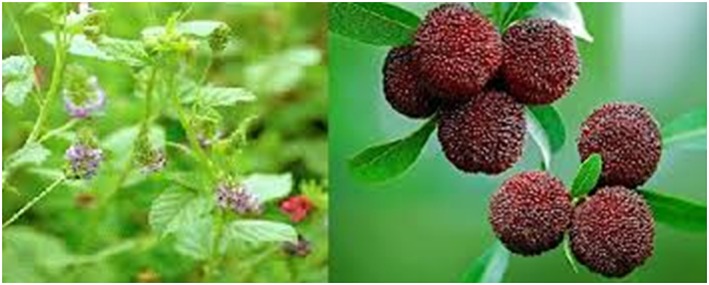
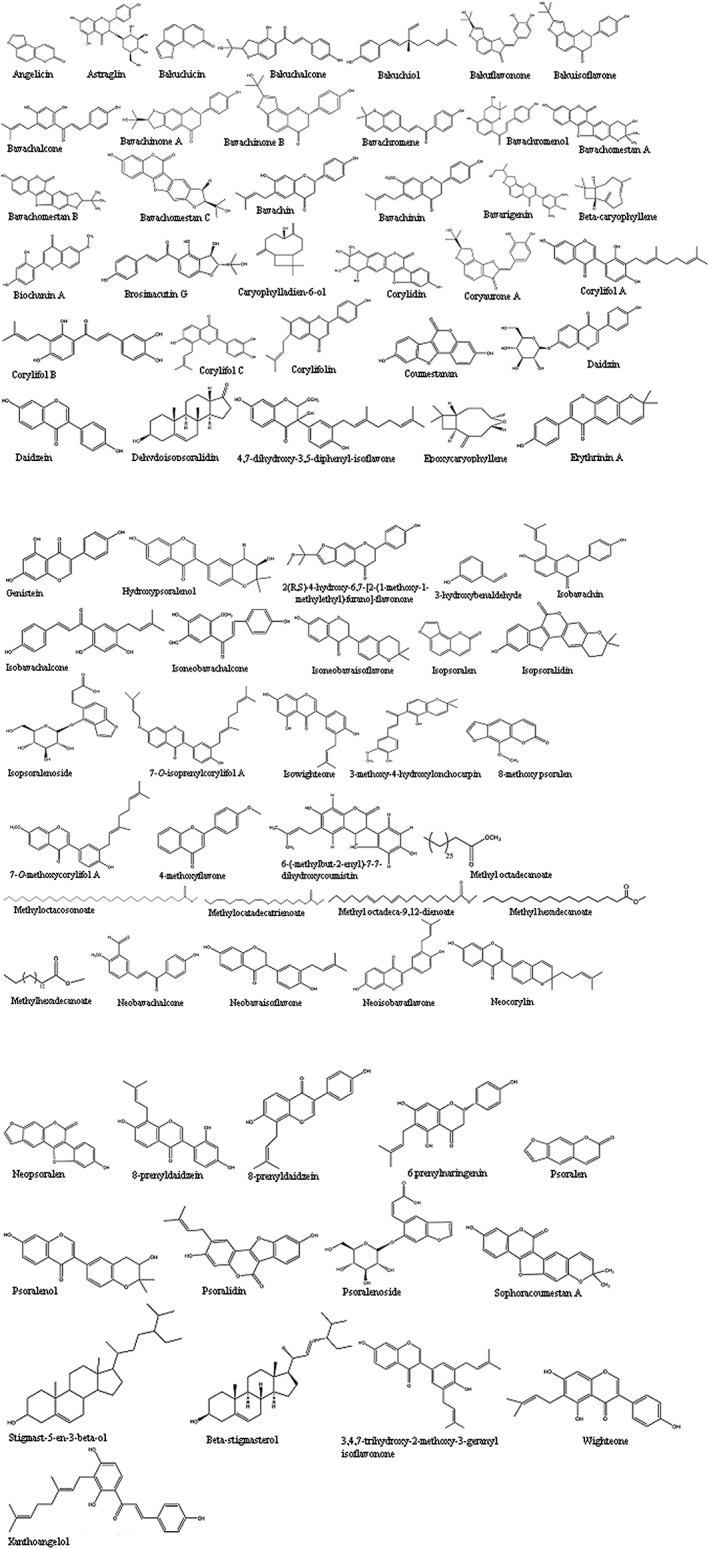
References
-
- Acharya, M. , Singh, T. , & Patgiri, B. (2015). Anti microbial activity of different dosage forms of Bakuchi (Psoralea corylifolia Linn.) taila, an Ayurvedic formulation. International Journal of Ayurvedic Medicine, 6(3).
-
- Agharkar, S. (1991). Medicinal plants of Bombay presidency. Medicinal plants of Bombay Presidency.
-
- Aiyaz, M. , Divakara, S. T. , Chandranayaka, S. , & Niranjana, S. R. (2015). Efficacy of seed hydropriming with phytoextracts on plant growth promotion and antifungal activity in maize. International Journal of Pest Management, 61(2), 153–160.
-
- Ali, J. , Akhtar, N. , Sultana, Y. , Baboota, S. , & Ahuja, A. (2008). Antipsoriatic microemulsion gel formulations for topical drug delivery of babchi oil (Psoralea corylifolia). Methods and Findings in Experimental and Clinical Pharmacology, 30(4), 277–285. - PubMed
-
- Ali, S. T. , Anwar, H. , Ali, S. K. , Perwaiz, S. , Mujahid, T. Y. , Wahab, A. , & Subhan, S. A. (2015). Phytochemical studies and antimicrobial screening of non/less‐polar fraction of Psoralea corylifolia by using GC‐MS. Journal of Basic & Applied Sciences, 11, 159.
Publication types
MeSH terms
Substances
LinkOut - more resources
Full Text Sources
Other Literature Sources
