


Endometriosis-associated malignant transformation in abdominal surgical scar: A PRISMA-compliant systematic review
- PMID: 29245355
- PMCID: PMC5728970
- DOI: 10.1097/MD.0000000000009136
Endometriosis-associated malignant transformation in abdominal surgical scar: A PRISMA-compliant systematic review
Abstract
Background: Endometriosis-associated malignant transformation in abdominal surgical scar (EAMTAS) is a very rare and aggressive phenomenon. Our current article aims to provide a clinical overview, focusing on risk factors affecting survival.
Methods: We performed a Preferred Reporting Items for Systematic Reviews and Meta-Analyses-compliant systematic review based on prior reviews and case reports regarding the phenomenon published as abstracts in English, from January 1980 to November 2016. Overall, we identified 47 cases, and we included another case from our institution. We further contacted previous investigators to receive updated follow-up regarding their patients. We analyzed the data, focusing on risk factors that might affect overall survival.
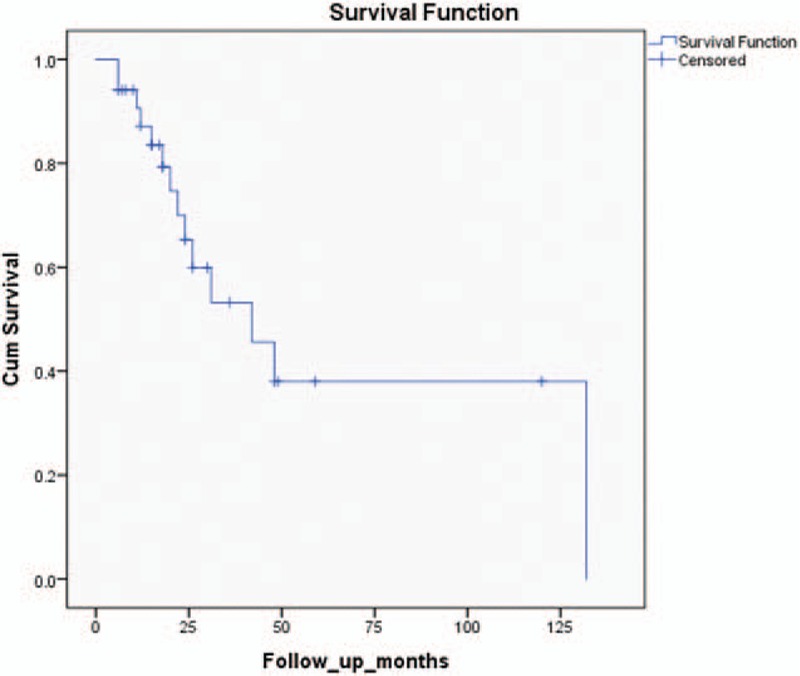
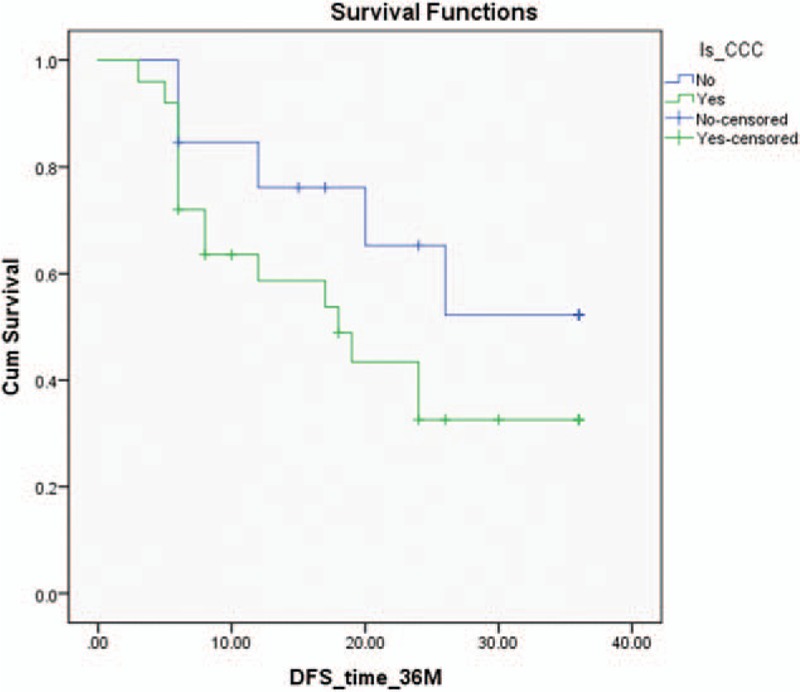
Results: All the patients reported in the literature had a uterine surgery, mainly caesarean section. The median time-lag from first surgery to the diagnosis of cancer was about 19 years. Clear-cell carcinoma (CCC) was the most prevalent histology (67%), followed by endometrioid adenocarcinoma (15%). Most of the patients were treated by extensive surgery and chemotherapy and/or radiation. Overall 5 years survival was about 40%. Median overall survival was 42 months (95% confidence interval of [18.7, 65.3]). Although our review is currently the largest in the literature, we cannot draw any statistical significant results due to the limited number of patients reported. According to univariate Cox-regression models, a tendency toward worse prognosis was shown for 3-year disease-free survival clear cell histologic-type (P = .169), and tumor diameter ≥8 cm in nonclear-cell histology, 18 months postdiagnosis (P = .06).
Conclusion: EAMTAS is a rare and aggressive disease. It is mostly related to cesarean section scars and is diagnosed many years postsurgery. Clear-cell histology tends to endure from the worse prognosis. The treatment is mainly extensive surgery and adjuvant chemotherapy and/or radiotherapy.
Conflict of interest statement
The authors have no funding and conflicts of interest to disclose.
Figures
References
-
- Horak S, Olejek A. Chaudhury K, Chaudhury B. Endometrial tumors in postoperative scars-pathogenesis, diagnostics and treatment, Cardiovascular pharmacology. Endometriosis – Basic Concepts and Current Research Trends. Poland: InTech; 2012. 85–100.
-
- Van Gorp T, Amant F, Neven P, et al. Endometriosis and the development of malignant tumours of the pelvis. A review of literature. Best Pract Res Clin Obstet Gynaecol 2004;18:349–71. - PubMed
-
- Teng CC, Yang HM, Chen KF, et al. Abdominal wall endometriosis: an overlooked but possibly preventable complication. Taiwan J Obstet Gynecol 2008;47:42–8. - PubMed
-
- Sampson JA. Endometrial carcinoma of ovary rising in endometrial tissue in that organ. Arch Surg 1925;10:1–72.
Publication types
MeSH terms
LinkOut - more resources
Full Text Sources
Other Literature Sources
Medical
