


Intervention to improve the appropriate use of polypharmacy for older patients with hip fractures: an observational study
- PMID: 29246247
- PMCID: PMC5732518
- DOI: 10.1186/s12877-017-0681-3
Intervention to improve the appropriate use of polypharmacy for older patients with hip fractures: an observational study
Abstract
Background: Polypharmacy is frequently observed in hip fracture patients. Although it is associated with an increased risk of hip fracture, polypharmacy often continues after hip fracture recovery. This study aimed to evaluate the effectiveness of an intervention to improve appropriate polypharmacy for elderly patients admitted to the hospital for hip fractures.
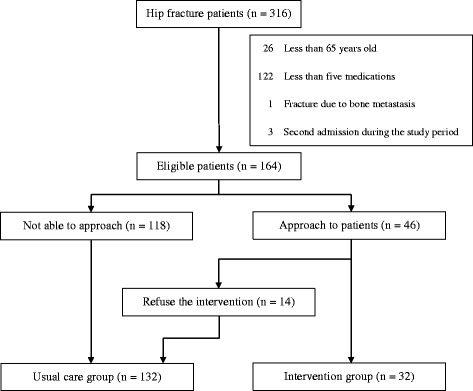
Methods: We conducted a retrospective observational study to compare the outcomes of patients receiving the intervention (n = 32) with those of patients who received usual care (n = 132). All hip fracture patients aged 65 years or older and prescribed 5 or more medications at admission from January 2015 to December 2016 were included in the study. The intervention consisted of an assessment by internal medicine physicians of the appropriateness of polypharmacy and the de-prescription of any unnecessary medications during the patients' hospital stay. The primary composite outcome was death or the first occurrence of any new fracture. Comparisons between the intervention and usual care groups were analyzed using binary logistic regression.
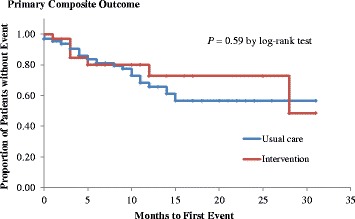
Results: A total of 164 patients were included in the study. The mean patient age was 84.8 years, and the mean numbers of prescribed medications and potentially inappropriate medications at admission were 8.0 and 1.3, respectively. The mean follow-up period was 8.0 months. The primary composite outcome occurred in 35 (21.3%) patients. The total number of potentially inappropriate medications at discharge was significantly lower in the intervention group than in the usual care group (0.8 ± 0.8 for the intervention group vs 1.1 ± 1.0 for the usual care group; p = 0.03). However, no significant differences in the primary composite outcome were found between the intervention and usual care groups (7 in the intervention group and 28 in the usual care group, odds ratio 1.04, 95% CI 0.41-2.65; p = 1.00).
Conclusions: The intervention to improve appropriate polypharmacy was associated with a reduction in potentially inappropriate medications but not an improvement in clinical outcomes. This intervention, which focused only on polypharmacy, may not effectively improve outcomes for elderly patients with hip fractures.
Trial registration: UMIN-CTR UMIN000025495 . Retrospectively registered 2 January 2017.
Keywords: Comorbidity; De-prescription; Hip fractures; Polypharmacy; Potentially inappropriate medication.
Conflict of interest statement
Ethics approval and consent to participate
This study was approved by the Medical Ethical Committee of the National Hospital Organization Tochigi Medical Center. This study was conducted in accordance with the Ethical Guidelines for Epidemiological Research in Japan. We were not required to obtain individual informed consent because we used de-identified data from medical records and did not contact the patients. However, we did display a poster in the waiting room of the hospital to provide information about the collection and use of data for this study and the protection of personal information.
Consent for publication
Not applicable.
Competing interests
The authors declare that they have no competing interests.
Publisher’s Note
Springer Nature remains neutral with regard to jurisdictional claims in published maps and institutional affiliations.
Figures
References
Publication types
MeSH terms
Associated data
LinkOut - more resources
Full Text Sources
Other Literature Sources
Medical
