


Proteomic Characterization of Prostate Cancer to Distinguish Nonmetastasizing and Metastasizing Primary Tumors and Lymph Node Metastases
- PMID: 29248718
- PMCID: PMC5735259
- DOI: 10.1016/j.neo.2017.10.009
Proteomic Characterization of Prostate Cancer to Distinguish Nonmetastasizing and Metastasizing Primary Tumors and Lymph Node Metastases
Abstract
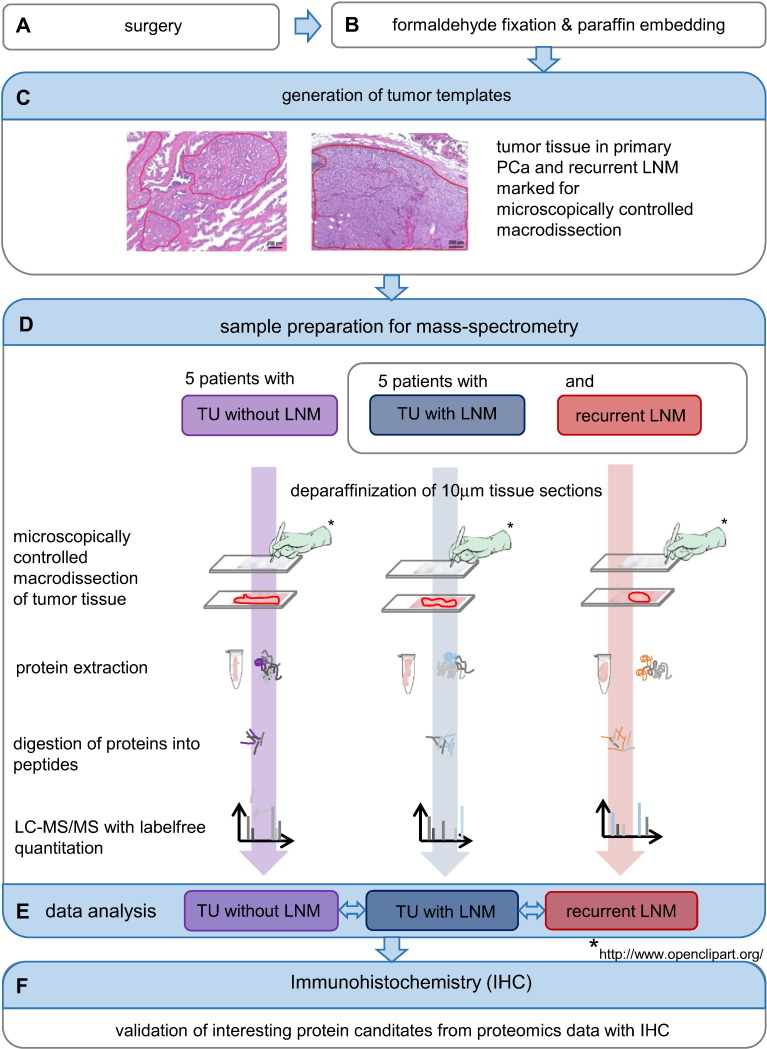
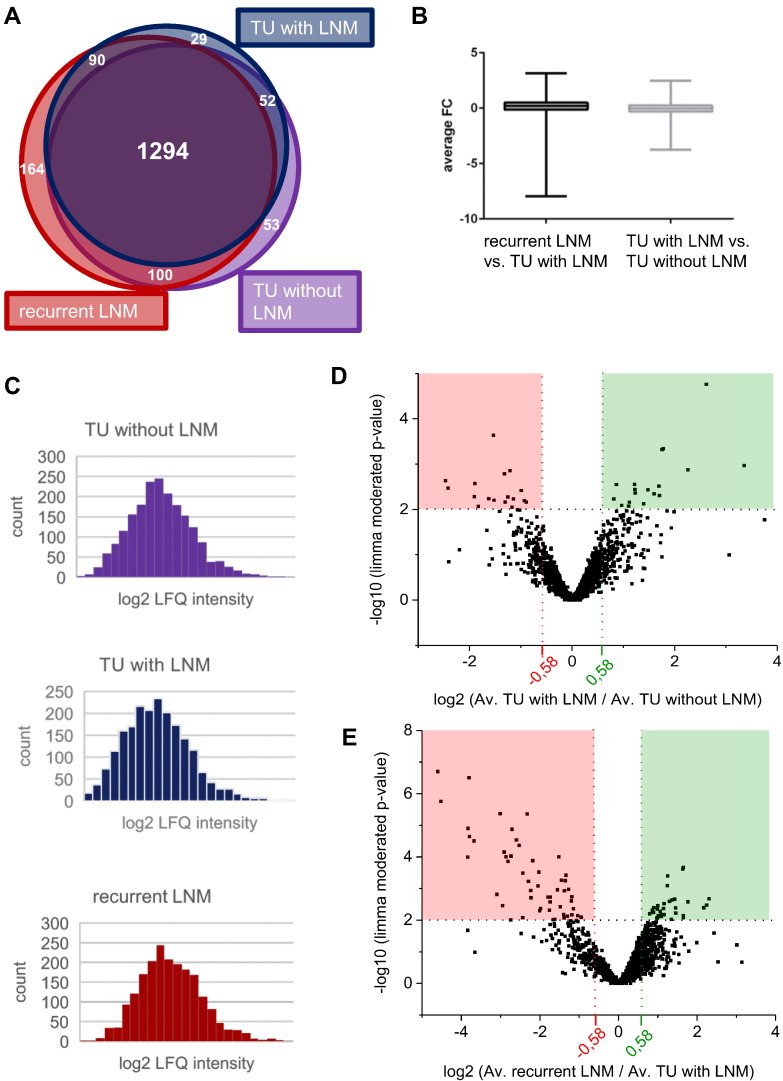
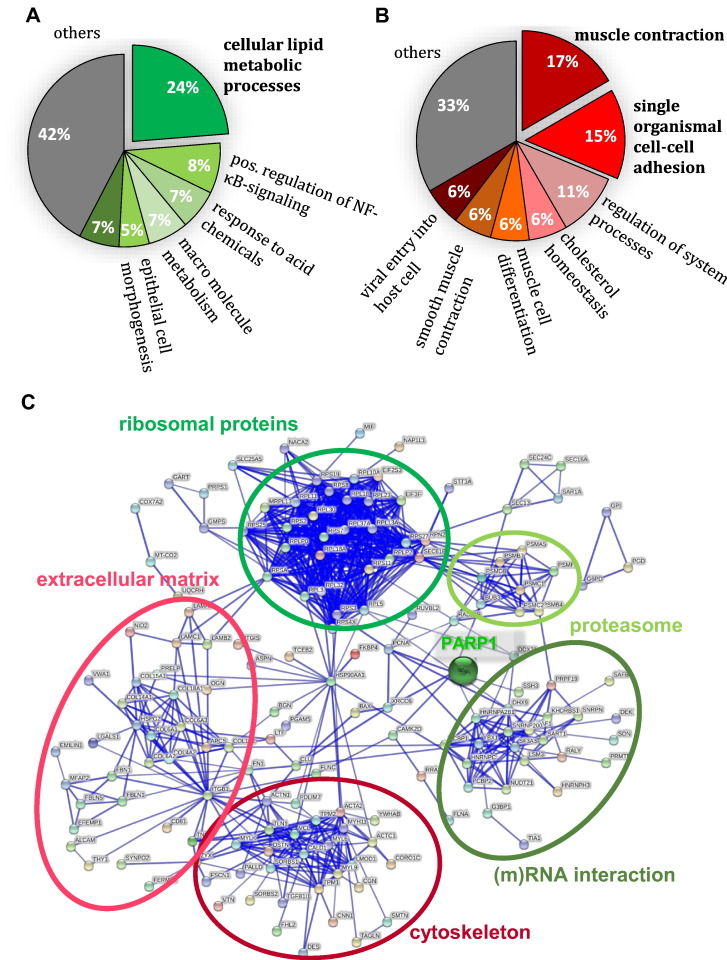
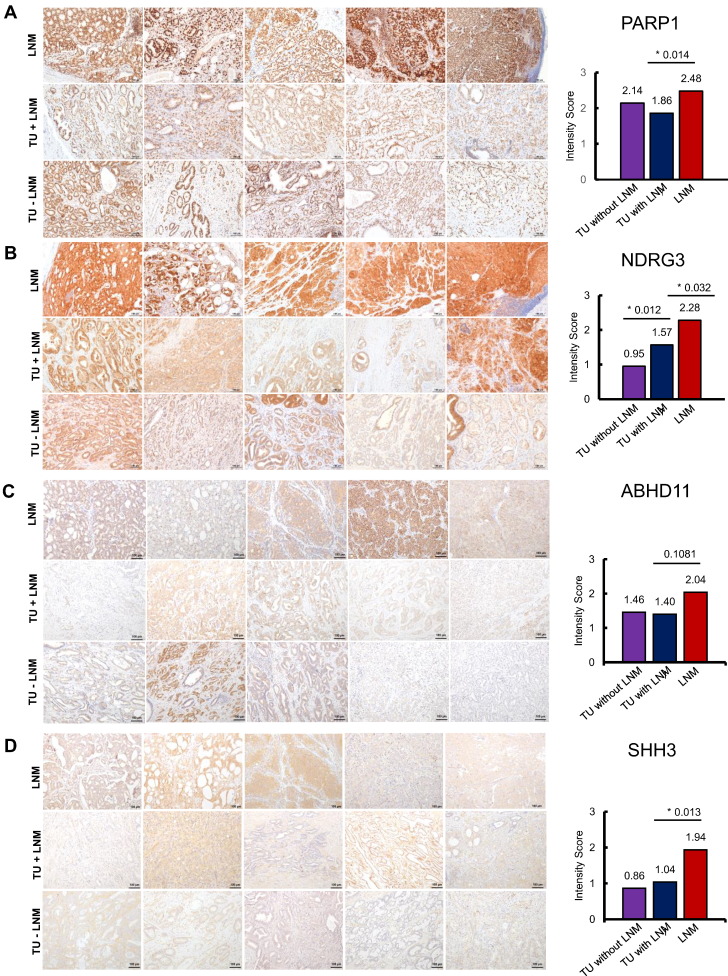
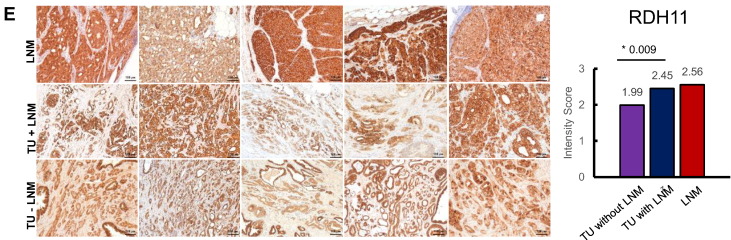
Patients with metastatic prostate cancer (PCa) have a poorer prognosis than patients with organ-confined tumors. We strove to uncover the proteome signature of primary PCa and associated lymph node metastases (LNMs) in order to identify proteins that may indicate or potentially promote metastases formation. We performed a proteomic comparative profiling of PCa tissue from radical prostatectomy (RPE) of patients without nodal metastases or relapse at the time of surgical resection (n=5) to PCa tissue from RPE of patients who suffered from nodal relapse (n=5). For the latter group, we also included patient-matched tissue of the nodal metastases. All samples were formalin fixed and paraffin embedded. We identified and quantified more than 1200 proteins by liquid chromatography tandem mass spectrometry with subsequent label-free quantification. An increase of ribosomal or proteasomal proteins in LNM (compared to corresponding PCa) became apparent, while extracellular matrix components rather decreased. Immunohistochemistry (IHC) corroborated accumulation of poly-(ADP-ribose)-polymerase 1 and N-myc-downstream-regulated-gene 3, alpha/beta hydrolase domain-containing protein 11, and protein phosphatase slingshot homolog 3 in LNM. These findings strengthen the present interest in examining PARP inhibitors for the treatment of aggressive PCa. IHC also corroborated increased abundance of retinol dehydrogenase 11 in metastasized primary PCa compared to organ-confined PCa. Generally, metastasizing primary tumors were characterized by an enrichment of proteins involved in cellular lipid metabolic processes with concomitant decrease of cell adhesion proteins. This study highlights the usefulness of a combined proteomic-IHC approach to explore novel aspects in tumor biology. Our initial results open novel opportunities for follow-up studies.
Copyright © 2018 The Authors. Published by Elsevier Inc. All rights reserved.
Figures
References
-
- American Cancer Society . 2017. Cancer Facts & Figures 2017.
-
- Wirth M, Weißbach L, Ackermann R, Alberti W, Albrecht C, Wolff J, Wörmann B. Interdisziplinäre Leitlinie der Qualität S3 zur Früherkennung, Diagnose und Therapie der verschiedenen Stadien des Prostatakarzinoms. Therapie. 2009:1–620. - PubMed
-
- Han M, Partin AW, Zahkurak M, Piantadosi S, Epstein JI, Walsh PC. Biochemical (prostate specific antigen) recurrence probability following radical prostatectomy for clinically localized prostate cancer. J Urol. 2003;169(2):517–523. - PubMed
-
- Hodson R. Small organ, big reach. Nature. 2015;528(7582):S118–S119. - PubMed
-
- Jilg CA, Rischke HC, Reske SN, Henne K, Grosu AL, Weber W, Drendel V, Schwardt M, Jandausch A, Schultze-Seemann W. Salvage lymph node dissection with adjuvant radiotherapy for nodal recurrence of prostate cancer. J Urol. 2012;188(6):2190–2197. - PubMed
Publication types
MeSH terms
Substances
LinkOut - more resources
Full Text Sources
Other Literature Sources
Medical
Molecular Biology Databases
