


The monetary value of human lives lost due to neglected tropical diseases in Africa
- PMID: 29249201
- PMCID: PMC5733961
- DOI: 10.1186/s40249-017-0379-y
The monetary value of human lives lost due to neglected tropical diseases in Africa
Abstract
Background: Neglected tropical diseases (NTDs) are an important cause of death and disability in Africa. This study estimates the monetary value of human lives lost due to NTDs in the continent in 2015.
Methods: The lost output or human capital approach was used to evaluate the years of life lost due to premature deaths from NTDs among 10 high/upper-middle-income (Group 1), 17 middle-income (Group 2) and 27 low-income (Group 3) countries in Africa. The future losses were discounted to their present values at a 3% discount rate. The model was re-analysed using 5% and 10% discount rates to assess the impact on the estimated total value of human lives lost.
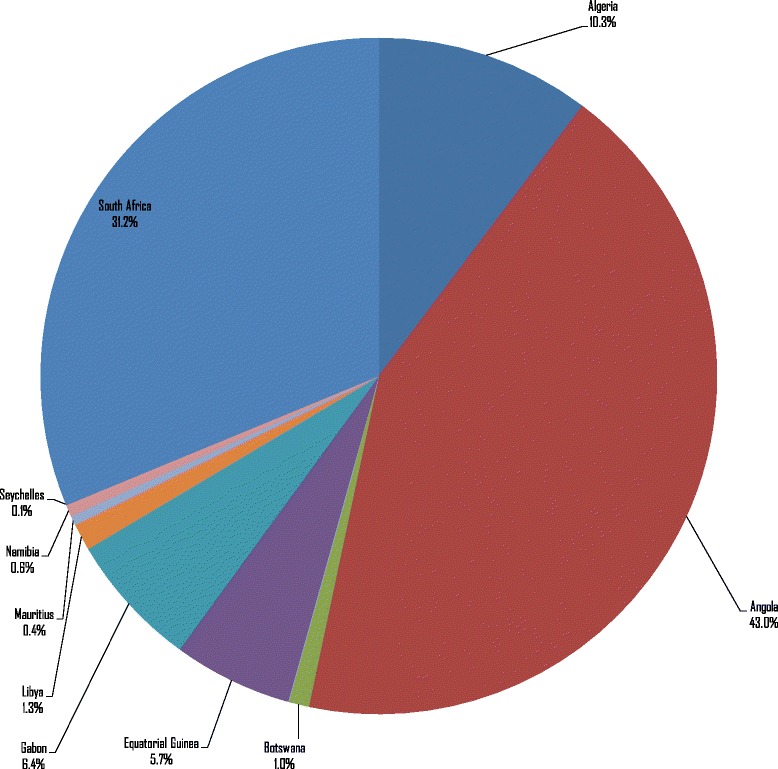
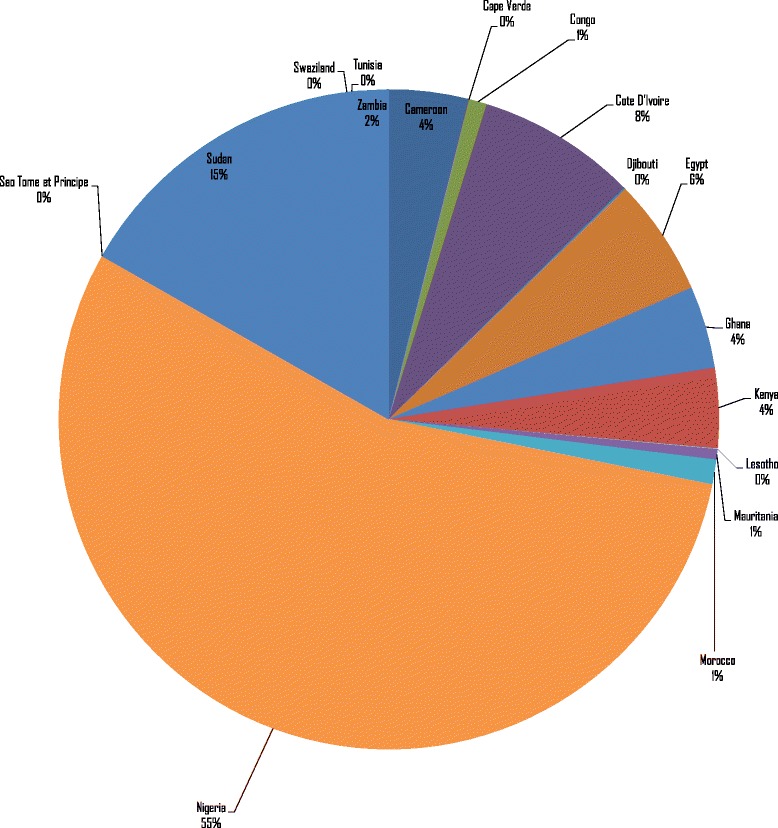
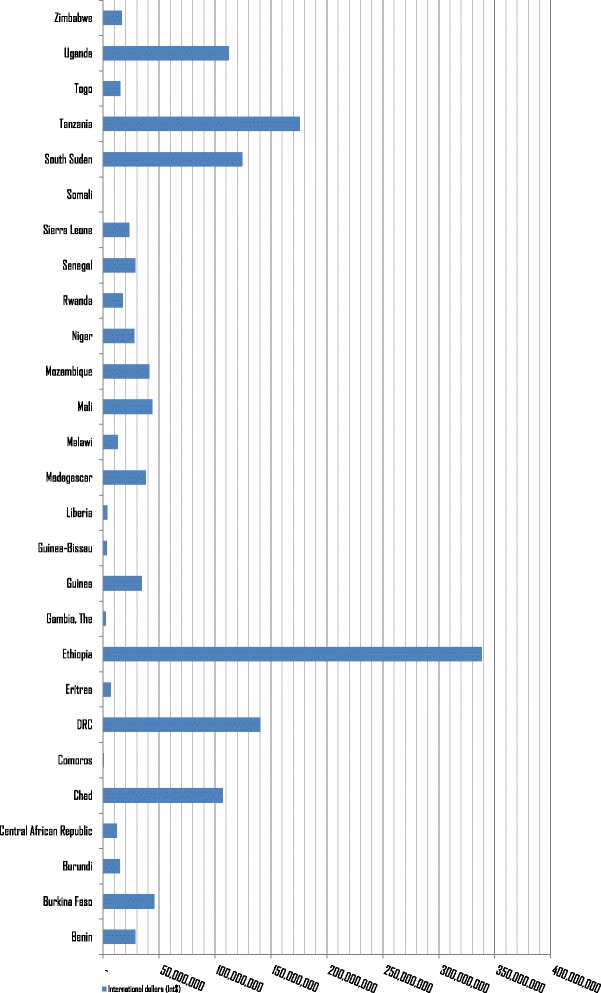
Results: The estimated value of 67 860 human lives lost in 2015 due to NTDs was Int$ 5 112 472 607. Out of that, 14.6% was borne by Group 1, 57.7% by Group 2 and 27.7% by Group 3 countries. The mean value of human life lost per NTD death was Int$ 231 278, Int$ 109 771 and Int$ 37 489 for Group 1, Group 2 and Group 3 countries, respectively. The estimated value of human lives lost in 2015 due to NTDs was equivalent to 0.1% of the cumulative gross domestic product of the 53 continental African countries.
Conclusions: Even though NTDs are not a major cause of death, they impact negatively on the productivity of those affected throughout their life-course. Thus, the case for investing in NTDs control should also be influenced by the value of NTD morbidity, availability of effective donated medicines, human rights arguments, and need to achieve the NTD-related target 3.3 of the United Nations Sustainable Development Goal 3 (on health) by 2030.
Keywords: Africa; Human capital approach; Lost output approach; Neglected tropical diseases; Non-health gross domestic product loss; Value of life.
Conflict of interest statement
Ethics approval and consent to participate
Not applicable. This study did not involve the use of any animal or human data or tissue. It was based completely on secondary statistical data published on the WHO and IMF websites.
Consent for publication
Not applicable.
Competing interests
The authors declare that they have no competing interests.
Figures
References
-
- World Bank. Country and lending groups – country classification. Washington, D.C. 2016. https://datahelpdesk.worldbank.org/knowledgebase/articles/906519-world-b.... Accessed 30 Nov 2016.
-
- World Health Organization (WHO) World Health Statistics 2016. Geneva: WHO; 2016.
-
- International Monetary Fund (IMF). World Economic Outlook Database. Washington, D.C. 2016. http://www.imf.org/external/pubs/ft/weo/2015/02/weodata/weorept.aspx? Accessed 7 Feb 2017.
-
- WHO. Global Health estimates 2015: Deaths by cause, age, sex, by country and by region, 2000-2005. Geneva: WHO; 2016.
-
- Remme JHF, Feenstra P, Lever PR, Medici AC, Morel CM, Noma M, et al. Tropical diseases targeted for elimination: Chagas disease, lymphatic Filariasis, Onchocerciasis, and leprosy. In: Jamison DT, Breman JG, Measham AR, Alleyne G, Claeson M, Evans DB, Jha P, Mills A, Musgrove P, et al., editors. Disease control priorities in developing countries. 2. New York: Oxford University Press; 2006. pp. 433–450.
MeSH terms
LinkOut - more resources
Full Text Sources
Other Literature Sources
