


Bovine tuberculosis in Ethiopia: A systematic review and meta-analysis
- PMID: 29254713
- PMCID: PMC5739073
- DOI: 10.1016/j.prevetmed.2017.09.006
Bovine tuberculosis in Ethiopia: A systematic review and meta-analysis
Abstract
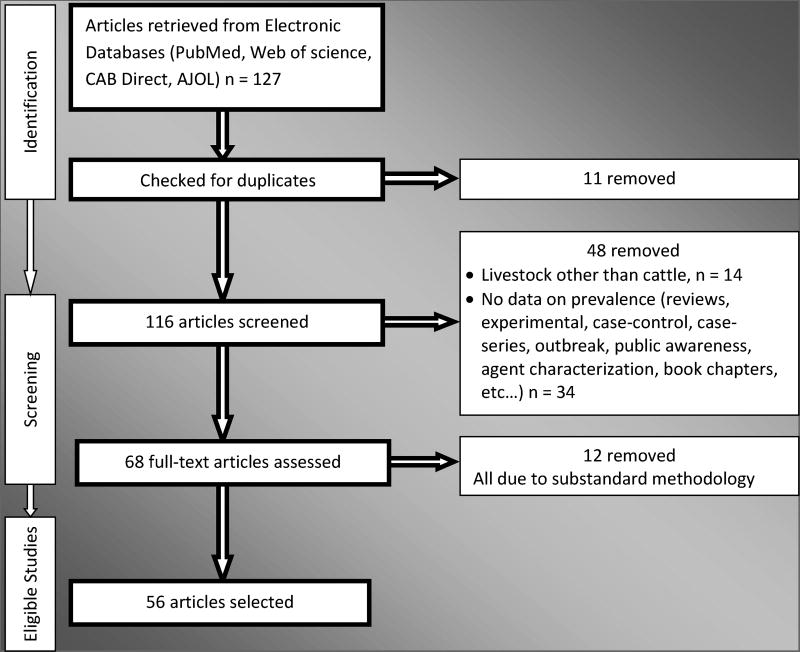
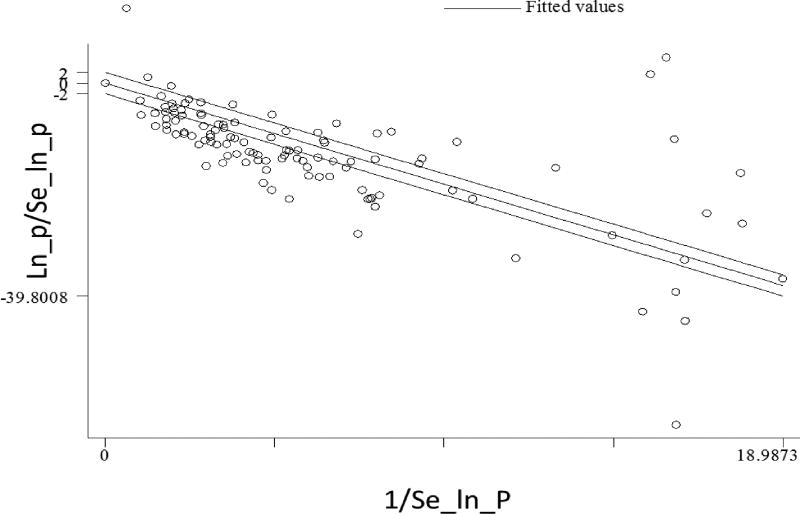
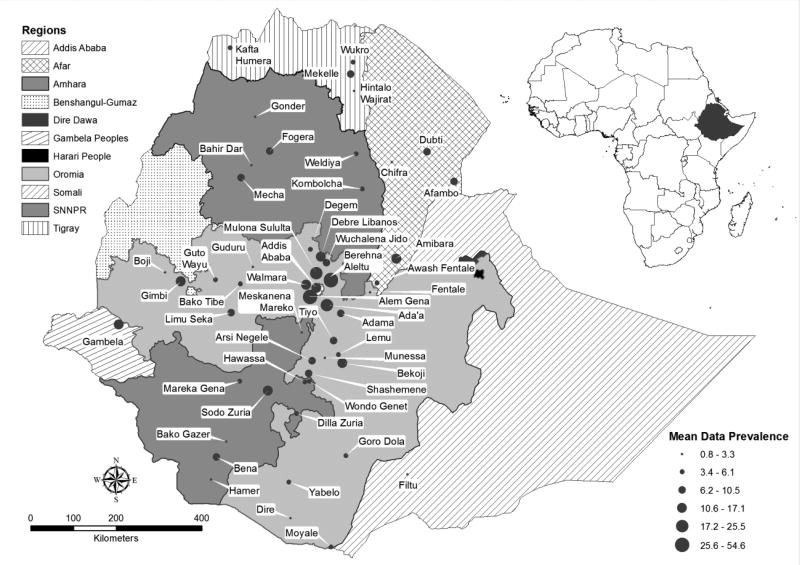
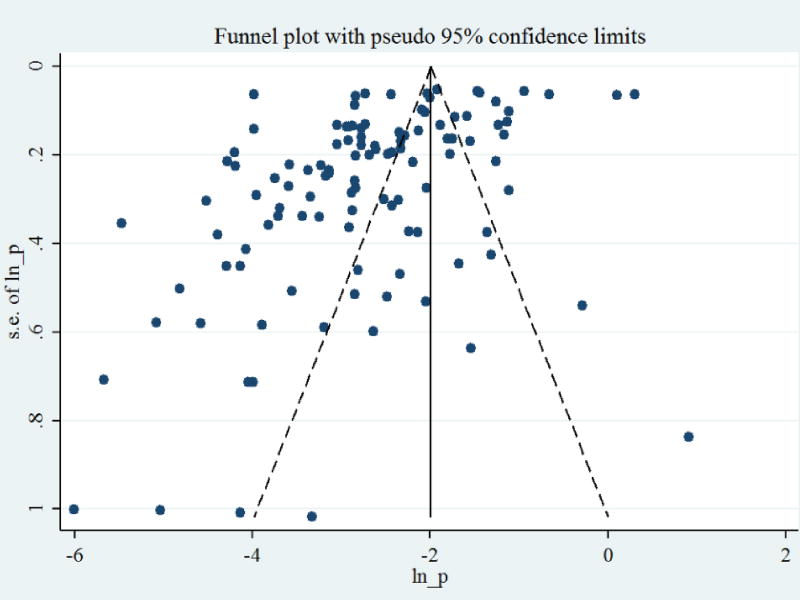
Bovine tuberculosis (bTB) is a known endemic disease of cattle in Ethiopia; however, there is lack of a comprehensive information on the status and distribution of the disease in the country. The objectives of this systematic review and meta-analysis were to provide a pooled prevalence estimate of bTB at a national level, assess the level of in-between variance among study reports and illustrate the spatial distribution pattern in the country. Articles published on bTB from January 2000 to December, 2016 in English language were included in the review. Pubmed, CAB direct, AJOL and Web of Science were the databases used in electronic search. A total of 127 articles were retrieved from online sources, of which 56 articles were selected for data extraction based on the specified inclusion criteria. From these selected published articles, 114 animal level data were extracted for quantitative analysis. A pooled prevalence estimate of bovine tuberculosis in Ethiopia was found to be 5.8% (95% CI: 4.5, 7.5). In a multivariable meta-regression analysis, breed and production system explained 40.9% of the explainable proportion of the in-between study variance computed. The prevalence of bovine tuberculosis in Holstein-Friesians, 21.6% (95% CI: 14.7-30.7), was higher than the prevalence in local zebus 4.1 (95% CI: 3.4-4.9). Cattle kept under intensive and semi-intensive production systems had higher prevalence, 16.6% (95% CI: 12.4-21.6), of bTB than those kept in extensive livestock production system, 4.6 (95% CI: 3.4-6.2). Bovine tuberculosis is widely distributed across major livestock producing regions of Ethiopia. However, no valid data could be retrieved from Benishanul-Gumuz, Harari and Dire Dawa. Data obtained on bTB from Somali and Gambella regional states are also few and further studies are suggested in these regions. In conclusion, this review showed that bTB in cattle in Ethiopia is widespread with high prevalence in intensive and semi-intensive management systsems that keep exotic breeds and their crosses in urban and peri-urban areas. Thus, it is suggested that the design and implementation of bTB control strategies in Ethiopia should prioritize these hotspots in order to reduce the impact of the disease on the growing dairy sector.
Keywords: Bovine tuberculosis; Breed; Cattle husbandry; Ethiopia; Geographic distribution.
Copyright © 2017 Elsevier B.V. All rights reserved.
Conflict of interest statement
None
Figures
References
-
- Ahmed MAM, Ehui S, Assefa Y. Dairy Development in Ethiopia. EPTD Discussion Paper No. 123. International Food Policy Research Institute 2033 K Street, NW Washington; DC 20006 U.S.A: 2004. p. 73.
-
- Alemu B, Nazir S, Tintagu T, Teklu A. Diagnostic efficacy of abattoir meat inspection for detecting bovine tuberculosis at Adama municipal abattoir, Ethiopia. Comp. Clin. Pathol. 2016b;25(4):885–893.
-
- Alemu J, Mamo G, Ameni G, Pal M. Molecular Epidemiology of Bovine Tuberculosis in Cattle and its Public Health Implications in Gambella Region, Ethiopia. Molecular Microbiology Research. 2016a;6(1):1–15.
-
- Ameni G, Regasa A. Survey on bovine tuberculosis in cattle and its public health implications to cattle raising families in WolaitaSoddo, southern Ethiopia. Ethiopian J Anim. Prod. 2001;1:55–62.
-
- Ameni G, Erkihun A. Bovine tuberculosis on small-scale dairy farms in Adama town, central Ethiopia, and farmer awareness of the disease. Rev. Sci. Tech. 2007;26(3):711–719. - PubMed
Publication types
MeSH terms
Grants and funding
LinkOut - more resources
Full Text Sources
Other Literature Sources
