


Childhood and Adolescent Adversity and Cardiometabolic Outcomes: A Scientific Statement From the American Heart Association
- PMID: 29254928
- PMCID: PMC7792566
- DOI: 10.1161/CIR.0000000000000536
Childhood and Adolescent Adversity and Cardiometabolic Outcomes: A Scientific Statement From the American Heart Association
Abstract
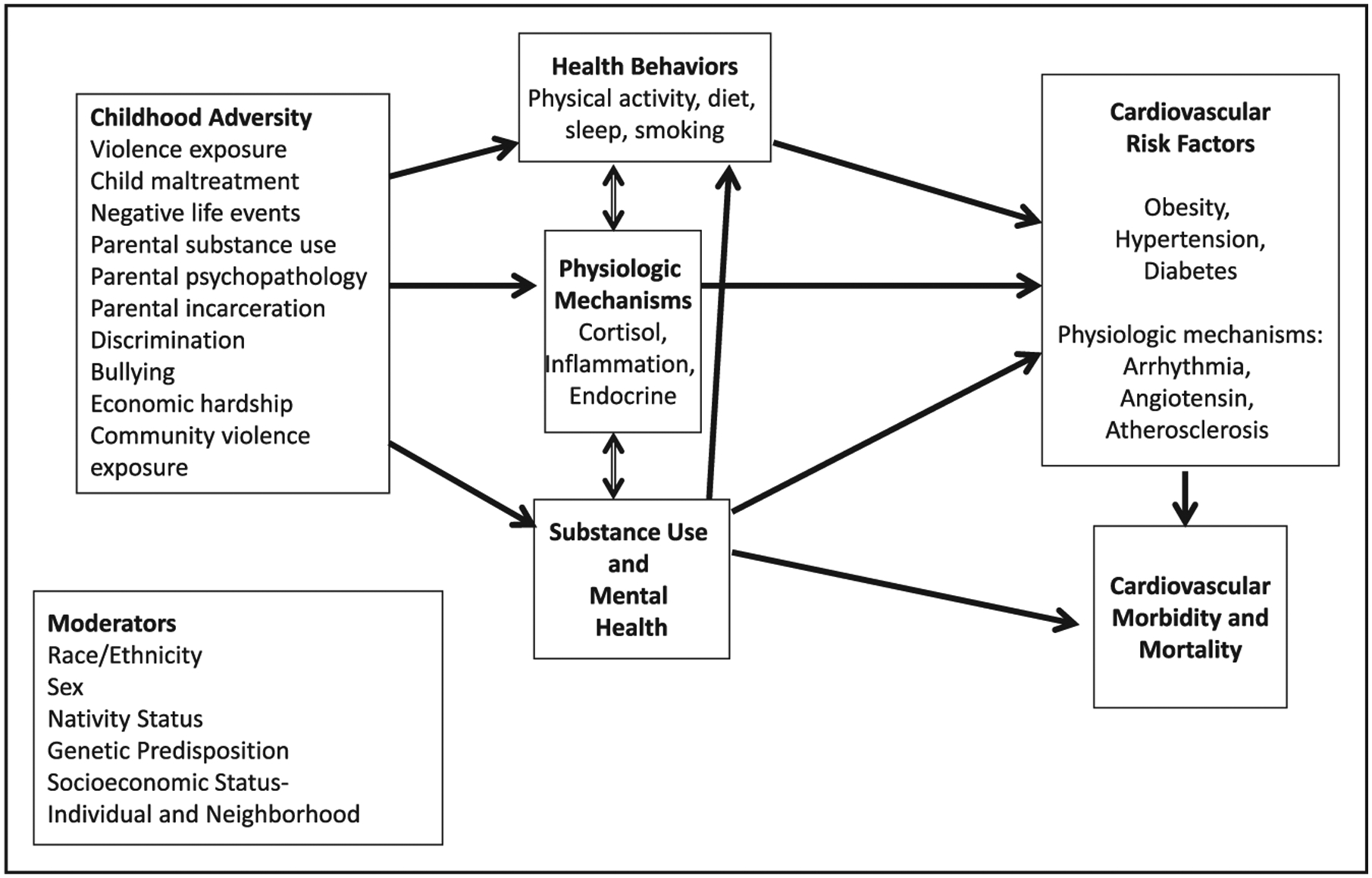
Adverse experiences in childhood and adolescence, defined as subjectively perceived threats to the safety or security of the child's bodily integrity, family, or social structures, are known to be associated with cardiometabolic outcomes over the life course into adulthood. This American Heart Association scientific statement reviews the scientific literature on the influence of childhood adversity on cardiometabolic outcomes that constitute the greatest public health burden in the United States, including obesity, hypertension, type 2 diabetes mellitus, and cardiovascular disease. This statement also conceptually outlines pathways linking adversity to cardiometabolic health, identifies evidence gaps, and provides suggestions for future research to inform practice and policy. We note that, despite a lack of objective agreement on what subjectively qualifies as exposure to childhood adversity and a dearth of prospective studies, substantial evidence documents an association between childhood adversity and cardiometabolic outcomes across the life course. Future studies that focus on mechanisms, resiliency, and vulnerability factors would further strengthen the evidence and provide much-needed information on targets for effective interventions. Given that childhood adversities affect cardiometabolic health and multiple health domains across the life course, interventions that ameliorate these initial upstream exposures may be more appropriate than interventions remediating downstream cardiovascular disease risk factor effects later in life.
Keywords: AHA Scientific Statements; adolescent; cardiovascular diseases; child; diabetes mellitus; hypertension; obesity; stress; trauma.
© 2017 American Heart Association, Inc.
Conflict of interest statement
The American Heart Association makes every effort to avoid any actual or potential conflicts of interest that may arise as a result of an outside relationship or a personal, professional, or business interest of a member of the writing panel. Specifically, all members of the writing group are required to complete and submit a Disclosure Questionnaire showing all such relationships that might be perceived as real or potential conflicts of interest.
Figures
References
-
- Shonkoff JP, Garner AS; Committee on Psychosocial Aspects of Child and Family Health; Committee on Early Childhood, Adoption, and Dependent Care; Section on Developmental and Behavioral Pediatrics. The lifelong effects of early childhood adversity and toxic stress. Pediatrics. 2012;129:e232–e246. doi: 10.1542/peds.2011-2663. - DOI - PubMed
-
- Felitti VJ, Anda RF, Nordenberg D, Williamson DF, Spitz AM, Edwards V, Koss MP, Marks JS. Relationship of childhood abuse and household dysfunction to many of the leading causes of death in adults: the Adverse Childhood Experiences (ACE) Study. Am J Prev Med. 1998;14:245–258. - PubMed
Publication types
MeSH terms
Grants and funding
LinkOut - more resources
Full Text Sources
Other Literature Sources
Medical
