


Patients with a Kabuki syndrome phenotype demonstrate DNA methylation abnormalities
- PMID: 29255178
- PMCID: PMC5865196
- DOI: 10.1038/s41431-017-0023-0
Patients with a Kabuki syndrome phenotype demonstrate DNA methylation abnormalities
Abstract
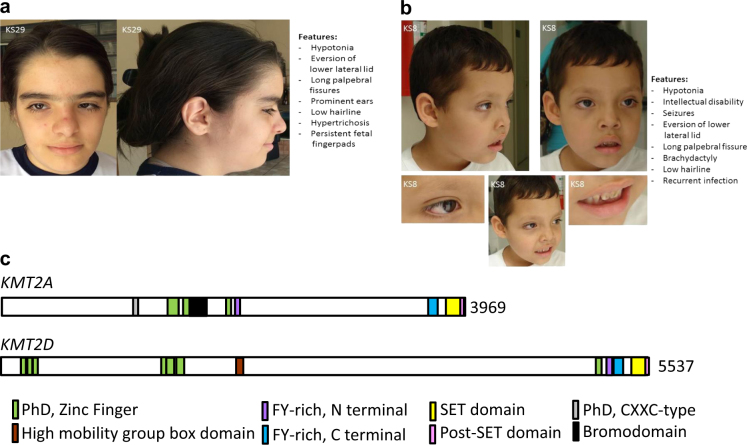
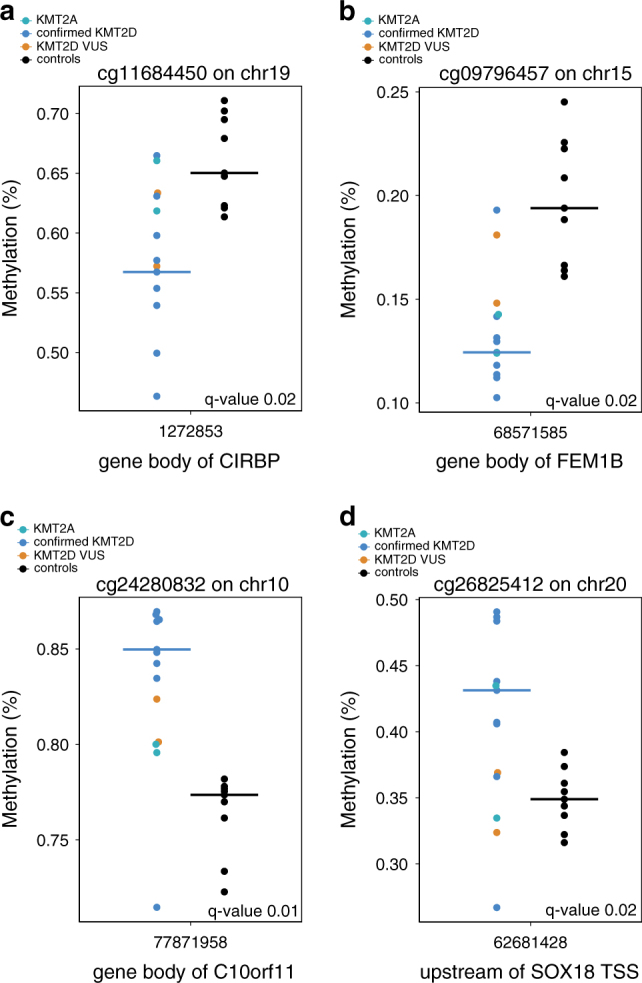
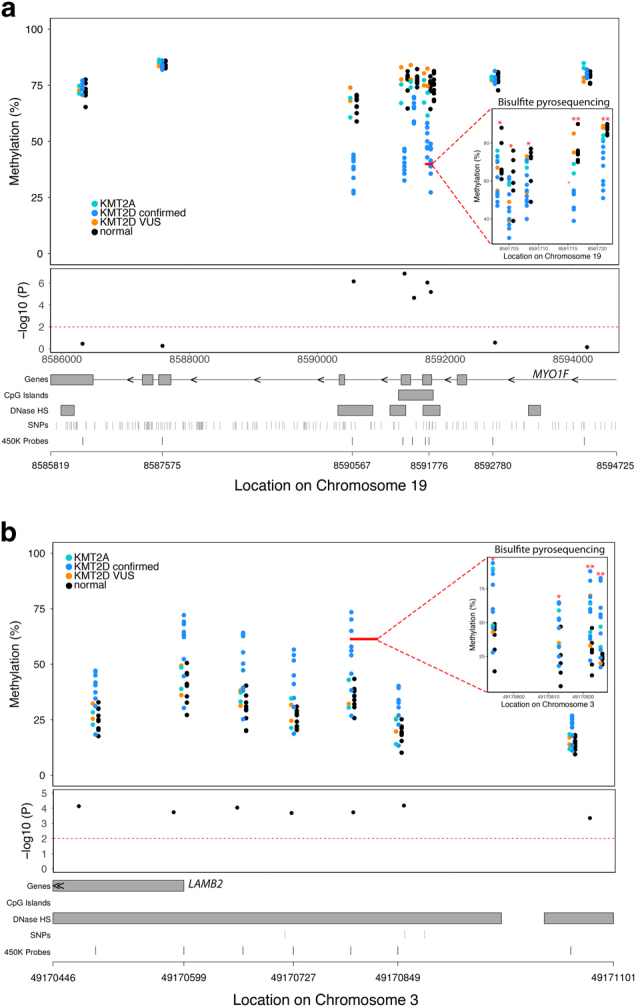
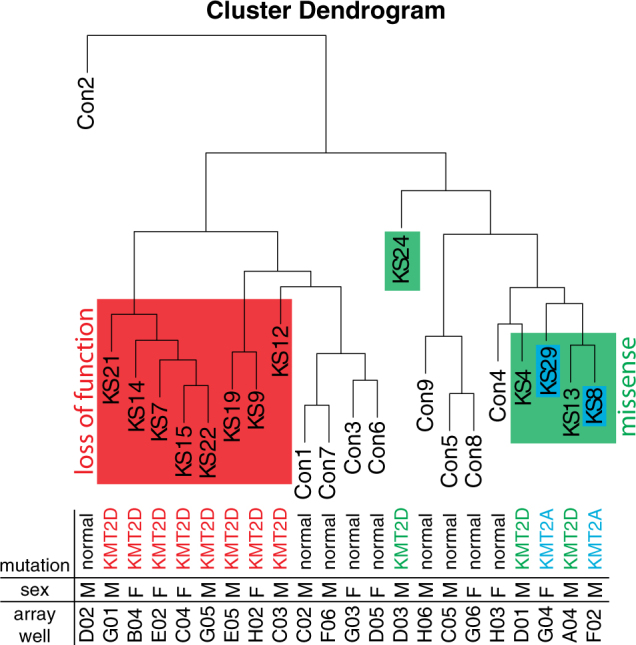
Kabuki syndrome is a monogenic disorder caused by loss of function variants in either of two genes encoding histone-modifying enzymes. We performed targeted sequencing in a cohort of 27 probands with a clinical diagnosis of Kabuki syndrome. Of these, 12 had causative variants in the two known Kabuki syndrome genes. In 2, we identified presumptive loss of function de novo variants in KMT2A (missense and splice site variants), a gene that encodes another histone modifying enzyme previously exclusively associated with Wiedermann-Steiner syndrome. Although Kabuki syndrome is a disorder of histone modification, we also find alterations in DNA methylation among individuals with a Kabuki syndrome diagnosis relative to matched normal controls, regardless of whether they carry a variant in KMT2A or KMT2D or not. Furthermore, we observed characteristic global abnormalities of DNA methylation that distinguished patients with a loss of function variant in KMT2D or missense or splice site variants in either KMT2D or KMT2A from normal controls. Our results provide new insights into the relationship of genotype to epigenotype and phenotype and indicate cross-talk between histone and DNA methylation machineries exposed by inborn errors of the epigenetic apparatus.
Conflict of interest statement
The authors declare that they have no competing interests.
Figures
References
MeSH terms
Substances
Supplementary concepts
Grants and funding
LinkOut - more resources
Full Text Sources
Other Literature Sources
Medical
Molecular Biology Databases
Miscellaneous
