


Hepatitis B virus x protein induces epithelial-mesenchymal transition of hepatocellular carcinoma cells by regulating long non-coding RNA
- PMID: 29258558
- PMCID: PMC5735895
- DOI: 10.1186/s12985-017-0903-5
Hepatitis B virus x protein induces epithelial-mesenchymal transition of hepatocellular carcinoma cells by regulating long non-coding RNA
Abstract
Background: It has been widely accepted that hepatitis B virus X protein (HBx) plays an important role in hepatocellular carcinoma (HCC). This study aimed to explore the function of long non-coding RNAs (lncRNAs) in the epithelial-mesenchymal transition (EMT) induced by HBx.
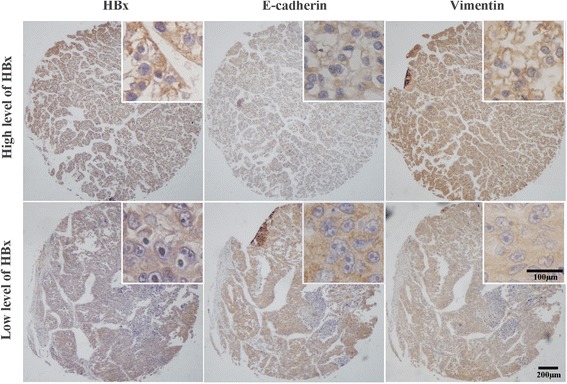
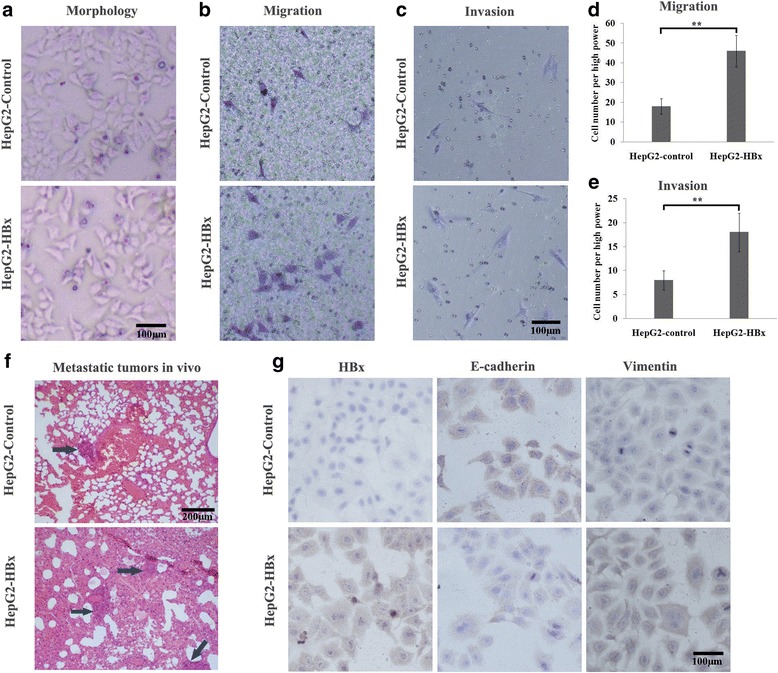
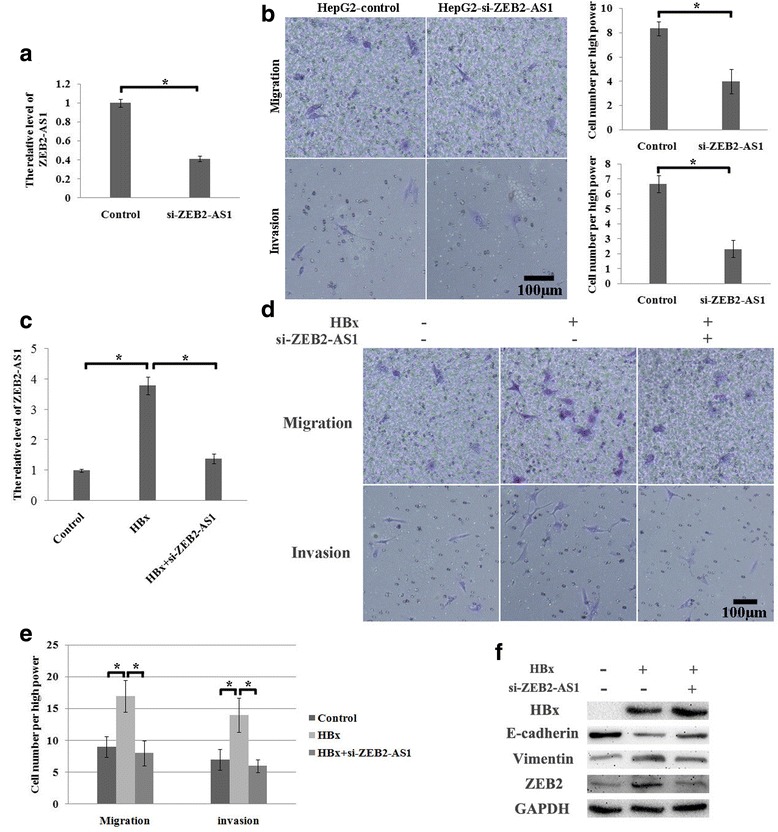
Methods: The association between HBx and EMT markers was detected using immunohistochemistry in HCC tissues. The effect of HBx on HCC EMT was assessed through morphological analysis, transwell assay, metastatic in vivo study and detection of EMT markers. LncRNA microarray was used to screen the differently expressed lncRNAs. Small interfering RNA and Western blot were used to analyse the function and mechanism of the locked lncRNA.
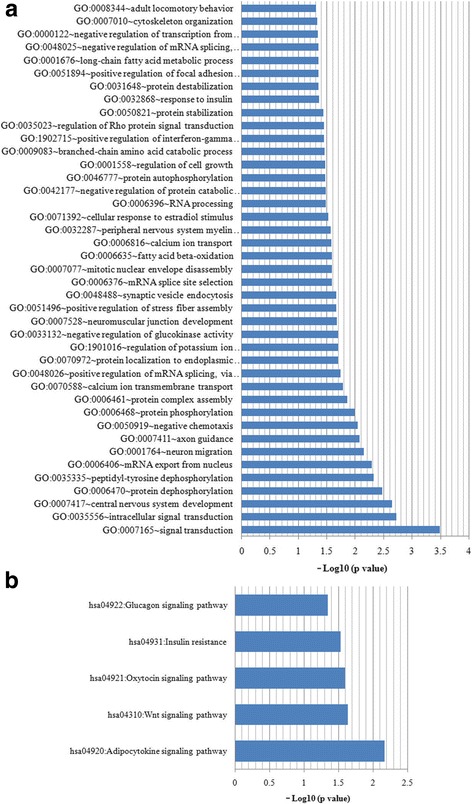
Results: HBx was negatively correlated with the epithelial marker E-cadherin but positively correlated with the mesenchymal marker vimentin in HCC tissues. HBx induced the mesenchymal phenotype and improved the metastatic ability of HCC cells. Meanwhile, HBx down-regulated E-cadherin, whereas it up-regulated vimentin. In HCC cells, HBx altered the expression of 2002 lncRNAs by more than 2-fold. One of them was ZEB2-AS1. Inhibition of ZEB2-AS1 can compensate for the EMT phenotype and reverse the expression of EMT markers regulated by HBx. Additionally, HBx affected the Wnt signalling pathway.
Conclusions: HBx promotes HCC cell metastasis by inducing EMT, which is at least partly mediated by lncRNAs.
Keywords: Epithelial-mesenchymal transition; Hepatitis B virus x protein; Hepatocellular carcinoma; Long non-coding RNA; Metastasis.
Conflict of interest statement
Ethics approval and consent to participate
All patients gave their informed consent prior to their inclusion in the study. This study was approved by the ethics committee of Harbin Medical University (reference numbers: HMUIRB20130089). This study was carried out in accordance with the National Institutes of Health guide for the care and use of Laboratory animals (NIH Publications No. 8023, revised 1978).
Consent for publication
Not applicable.
Competing interests
The authors declare that they have no competing interests.
Publisher’s Note
Springer Nature remains neutral with regard to jurisdictional claims in published maps and institutional affiliations.
Figures
References
-
- Nanashima A, et al. Clinicopathological characteristics of patients with hepatocellular carcinoma after hepatectomy: relationship with status of viral hepatitis. J SurgOncol. 2007;96(6):487–492. - PubMed
-
- Tanaka K, et al. Clinical characteristics and surgical outcome in hepatocellular carcinoma without hepatitis B virus surface antigen or hepatitis C virus antibody. Ann SurgOncol. 2007;14(3):1170–1181. - PubMed
MeSH terms
Substances
LinkOut - more resources
Full Text Sources
Other Literature Sources
Medical
Research Materials
Miscellaneous
