


Analysis of chromatin accessibility in decidualizing human endometrial stromal cells
- PMID: 29259032
- PMCID: PMC6040682
- DOI: 10.1096/fj.201701098R
Analysis of chromatin accessibility in decidualizing human endometrial stromal cells
Abstract
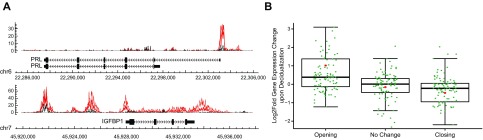
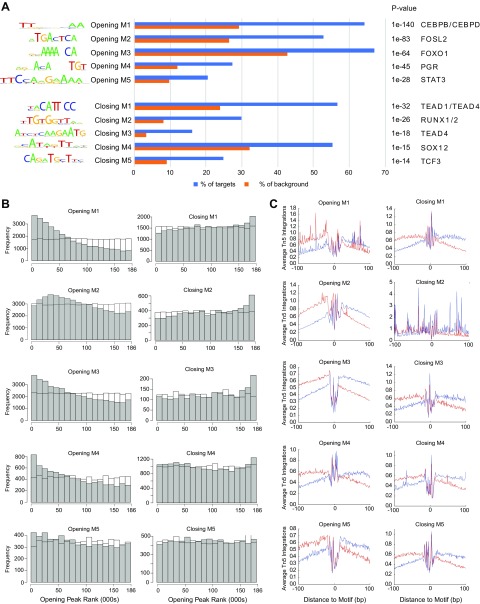
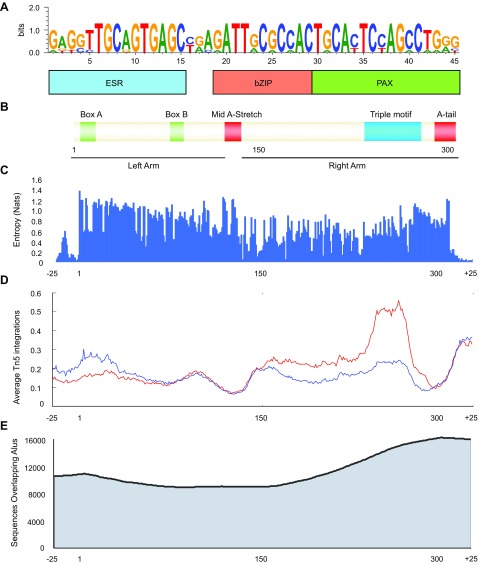
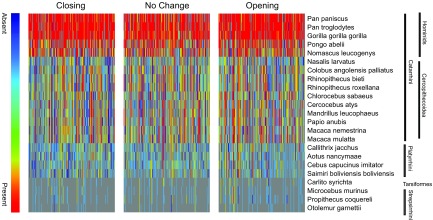
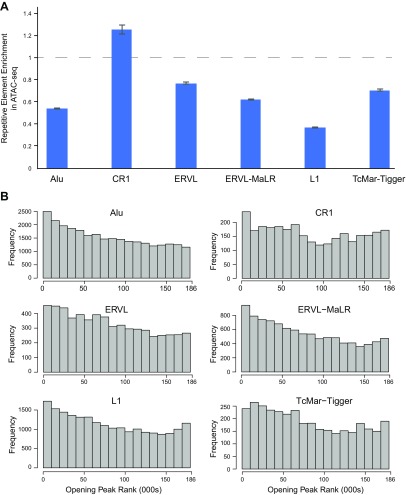
Spontaneous decidualization of the endometrium in response to progesterone signaling is confined to menstruating species, including humans and other higher primates. During this process, endometrial stromal cells (EnSCs) differentiate into specialized decidual cells that control embryo implantation. We subjected undifferentiated and decidualizing human EnSCs to an assay for transposase accessible chromatin with sequencing (ATAC-seq) to map the underlying chromatin changes. A total of 185,084 open DNA loci were mapped accurately in EnSCs. Altered chromatin accessibility upon decidualization was strongly associated with differential gene expression. Analysis of 1533 opening and closing chromatin regions revealed over-representation of DNA binding motifs for known decidual transcription factors (TFs) and identified putative new regulators. ATAC-seq footprint analysis provided evidence of TF binding at specific motifs. One of the largest footprints involved the most enriched motif-basic leucine zipper-as part of a triple motif that also comprised the estrogen receptor and Pax domain binding sites. Without exception, triple motifs were located within Alu elements, which suggests a role for this primate-specific transposable element (TE) in the evolution of decidual genes. Although other TEs were generally under-represented in open chromatin of undifferentiated EnSCs, several classes contributed to the regulatory DNA landscape that underpins decidual gene expression.-Vrljicak, P., Lucas, E. S., Lansdowne, L., Lucciola, R., Muter, J., Dyer, N. P., Brosens, J. J., Ott, S. Analysis of chromatin accessibility in decidualizing human endometrial stromal cells.
Keywords: decidualization; endometrium; gene regulation; open chromatin; transposable elements.
Conflict of interest statement
The authors thank Angela Oliveira Pisco (King’s College London, London, United Kingdom) for technical advice. The authors also thank patients attending the Implantation Clinic for contributing their endometrial tissue to research. This work was supported by the Biomedical Research Unit in Reproductive Health, a joint initiative between University Hospitals Coventry and Warwickshire National Health Service (NHS) Trust and Warwick Medical School. E.S.L., P.V., and J.J.B. are funded by Tommy’s National Centre for Miscarriage Research. L.L. was funded by the Midlands Integrative Biosciences Training Partnership. The authors declare no conflicts of interest.
Figures
References
-
- Leitao B., Jones M. C., Fusi L., Higham J., Lee Y., Takano M., Goto T., Christian M., Lam E. W., Brosens J. J. (2010) Silencing of the JNK pathway maintains progesterone receptor activity in decidualizing human endometrial stromal cells exposed to oxidative stress signals. FASEB J. 24, 1541–1551 10.1096/fj.09-149153 - DOI - PMC - PubMed
-
- Muter J., Brighton P. J., Lucas E. S., Lacey L., Shmygol A., Quenby S., Blanks A. M., Brosens J. J. (2016) Progesterone-dependent induction of phospholipase C-related catalytically inactive protein 1 (PRIP-1) in decidualizing human endometrial stromal cells. Endocrinology 157, 2883–2893 10.1210/en.2015-1914 - DOI - PMC - PubMed
Publication types
MeSH terms
Substances
LinkOut - more resources
Full Text Sources
Other Literature Sources
Molecular Biology Databases
Miscellaneous
