


The pesticide flupyradifurone impairs olfactory learning in Asian honey bees (Apis cerana) exposed as larvae or as adults
- PMID: 29259229
- PMCID: PMC5736693
- DOI: 10.1038/s41598-017-18060-z
The pesticide flupyradifurone impairs olfactory learning in Asian honey bees (Apis cerana) exposed as larvae or as adults
Abstract
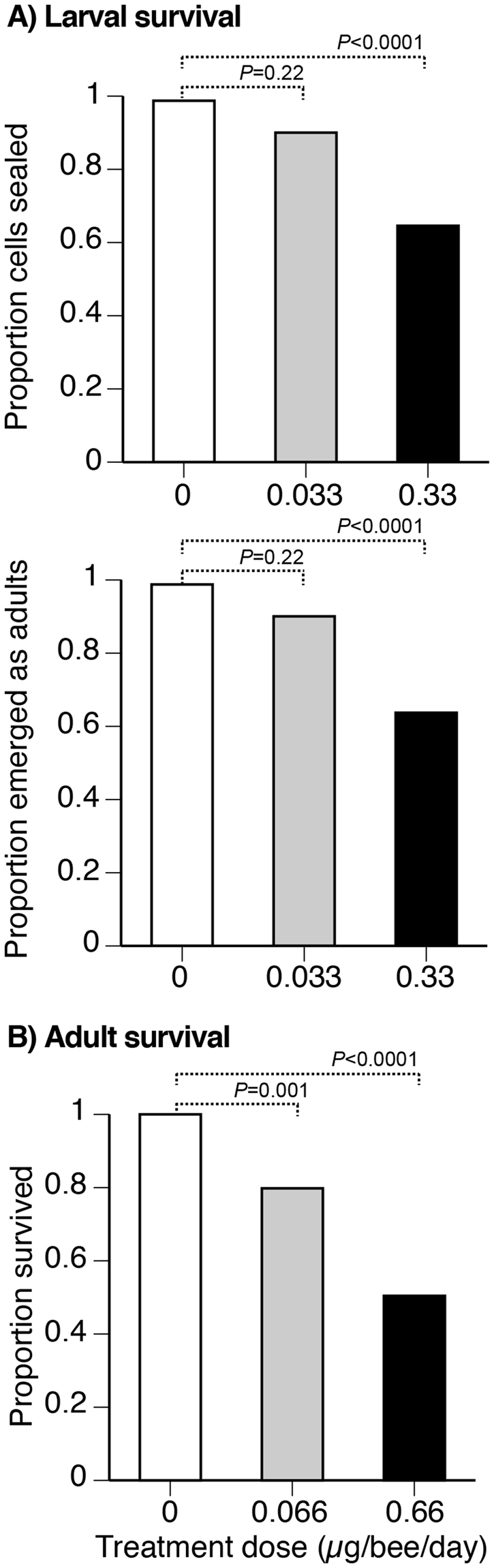
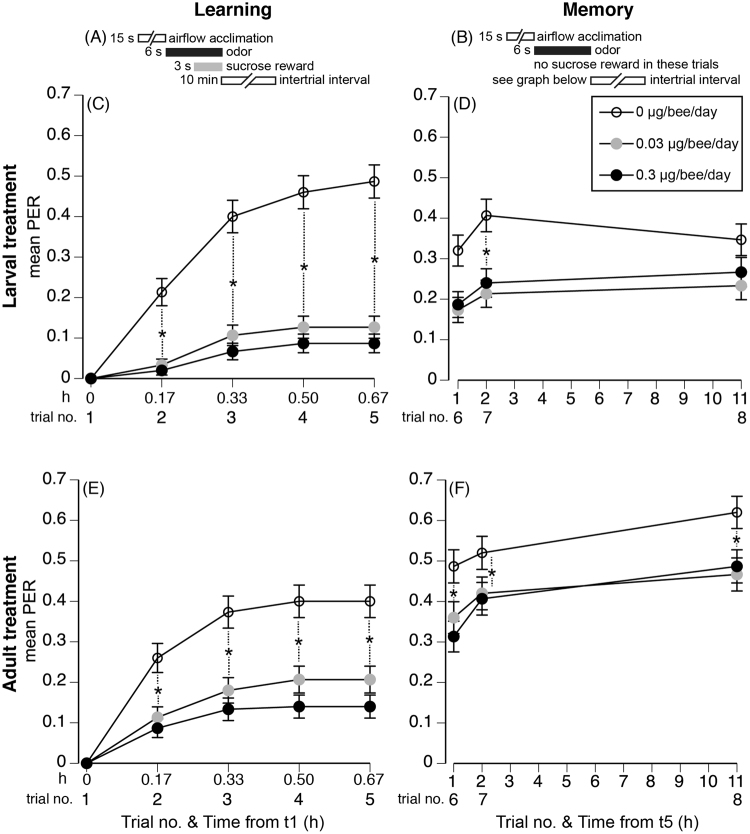
Relatively little attention has focused on how pesticides may affect Asian honey bees, which provide vital crop pollination services and are key native pollinators. We therefore studied the effects of a relatively new pesticide, flupyradifurone (FLU), which has been developed, in part, because it appears safer for honey bees than neonicotinoids. We tested the effects of FLU on Apis cerana olfactory learning in larvae (lower dose of 0.033 µg/larvae/day over 6 days) and, in a separate experiment, adults (lower dose of 0.066 µg/adult bee/day) at sublethal, field-realistic doses given over 3 days. A worst-case field-realistic dose is 0.44 µg/bee/day. Learning was tested in adult bees. The lower larval dose did not increase mortality, but the lower adult dose resulted in 20% mortality. The lower FLU doses decreased average olfactory learning by 74% (larval treatment) and 48% (adult treatment) and reduced average memory by 48% (larval treatment) and 22% (adult treatment) as compared to controls. FLU at higher doses resulted in similar learning impairments. The effects of FLU, a pesticide that is reported to be safer than neonicotinoids for honey bees, thus deserve greater attention.
Conflict of interest statement
The authors declare that they have no competing financial interests.
Figures
References
-
- Goulson D. An overview of the environmental risks posed by neonicotinoid insecticides. J. Appl. Ecol. 2013;50:977–987. doi: 10.1111/1365-2664.12111. - DOI
Publication types
MeSH terms
Substances
LinkOut - more resources
Full Text Sources
Other Literature Sources
Molecular Biology Databases
